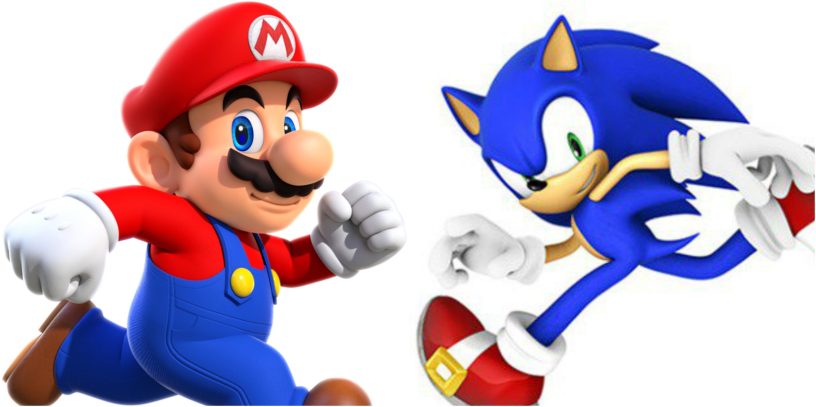
Those of us who grew up on the Atari 2600 and the NES, and then later on as teens in the early 1990s, watched the Super Nintendo and Sega Genesis battle it out in arguably the most brutal console war the video game industry has ever seen. Sonic vs. Mario was on the lips of every kid who had even a remote interest in video games – and as the video game industry gets older, books are being written about bygone console generations that document the history of the video game industry.
Console Wars by Blake J. Harris documents in detail what went on behind the scenes at Sega in their quest to slay Nintendo in the ’90s – and also how Nintendo reacted to Sega’s challenge to their video game throne.
Sega And Nintendo Really, Really Disliked Each Other
Sega of America and Nintendo of America sincerely detested each other. It wasn’t a marketing shtick, and it wasn’t just the fans that would argue about who was better. Sega of America and Nintendo of America’s rivalry was deep and bitter.
The animosity ran all the way up the executive level on both sides, sometimes resulting in name-calling and hostile shouting matches when executives from the two were in the same building. Nintendo of America’s president, Minoru Arakawa, refused to meet with Sega of America’s president Tom Kalinske in spite of several invitations from Kalinske during the ’90s.
Sega of America’s Biggest Enemy Was Sega of Japan
Even given how bitter the animosity between Nintendo and Sega was, Sega of America’s most dangerous enemy wasn’t Nintendo. It was Sega of Japan, who were more interested in not being outdone by their American counterparts in Sega of America than they were in defeating Nintendo.
The 32X and Sega CD never would have happened in America if Sega of Japan hadn’t stubbornly insisted on it. Sega of America was adamantly against it, and were constantly trying to warn Sega of Japan about Sony, and the danger they posed with their upcoming PlayStation console. It fell on deaf ears. It was Sega’s undoing and led to their eventual exit from being a console manufacturer.
Sega Knew Their “Blast Processing” Ad Campaign Was Phony
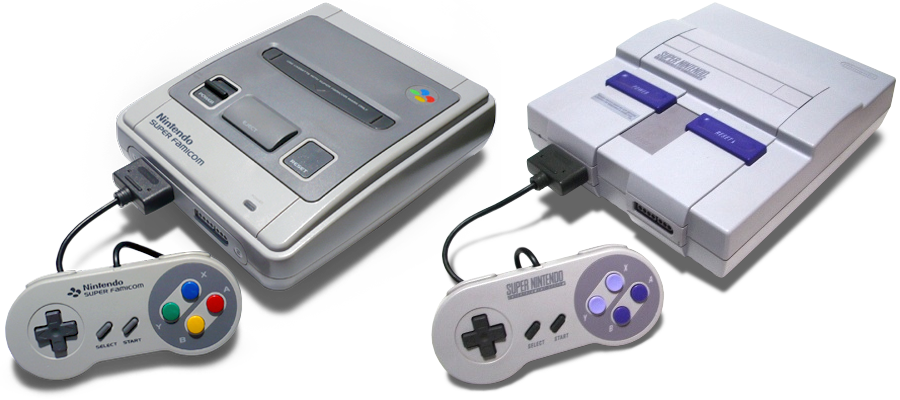
Sega’s “Blast Processing” ad campaign against Nintendo was a direct reaction to Nintendo’s Mode 7 technology in games like Super Mario Kart and F-Zero. Mode 7 allowed the Super Nintendo to play games in 3D, albeit crudely by today’s standards – but back in the 1990s, it was cutting-edge, and Nintendo was shouting it from the rooftops.
Sega closely monitored everything Nintendo said and did. When they realized they didn’t have anything like Mode 7 technology in the Genesis, they manufactured an ad campaign out of thin air. They found an obscure feature of the Genesis architecture that the Super Nintendo didn’t have and concocted an ad campaign out of it. They called it “Blast Processing” and used it to mock Nintendo in TV advertising.
It was brilliant marketing, but had zero substance behind it, and Sega knew it. Nintendo was aware of what Sega was doing as well, and were not happy about it.
Shigeru Miyamoto Had Nothing Bad To Say About The ‘Super Mario Bros.’ Movie
Even though Nintendo of America knew that the Super Mario Bros. movie was going to be an awful disaster that could possibly hurt their brand, they went ahead and let it come out in theaters anyway.
George Harrison from Nintendo of America was tasked by Nintendo of America president Minoru Arakawa to escort Super Mario creator Shigeru Miyamoto to an early screening of the film in America.
Harrison thought Miyamoto was going to be angry, given how bad the film was. However, Miyamoto was all smiles and laughs. He seemed to enjoy it, and when it was over, he had nothing bad to say about it. Harrison was quite surprised.
The Genesis Of Sonic The Hedgehog
The original design for what would become Sonic the Hedgehog was a hedgehog with a spiked collar, sharp fangs, an electric guitar, and a big-breasted, human female companion named Madonna (no joke).
Sega of Japan designed it, but Sega of America hated it and proposed changes. Sega of Japan was reluctant to accept the changes at first. They went so far as to propose two different versions of Sonic, one for Japan and one for the West.
Eventually Sega of Japan gave in, and the rest is history. Sonic was a runaway success for the Genesis, and we have the Sonic we have today.
Nintendo Didn’t Believe Westerners Could Make A Good Nintendo Game
Tony Harman, Nintendo of America president Minoru Arakawa’s right-hand man, went to Japan to personally request the funding from Nintendo president Hiroshi Yamauchi to make a hit game. When Yamauchi told him his top developers (including Shigeru Miyamoto) didn’t believe that someone who wasn’t Japanese could make a good Nintendo game, Harman asked for $3 million to prove them wrong.
Three million dollars was roughly the amount Nintendo would spend on one television commercial. Harman reasoned to Yamauchi that if the game failed, it would be no more of a financial loss than a commercial would be. Yamauchi gave him the money.
The game Harman eventually spearheaded with the money was Donkey Kong Country, which went on to sell nine million copies.
Nintendo Was As Amazed As Anyone By Donkey Kong Country
When Nintendo of America’s president, Minoru Arakawa, first saw an early build of the original Donkey Kong Country for Super Nintendo, he was amazed. In fact, he thought it was a Nintendo 64 game.
When he was told it was for Super Nintendo, he immediately scrapped all of Nintendo’s plans for the upcoming Consumer Electronics Show in order to make Donkey Kong Country the featured game, and blow Sega out of the water with it.
Rare’s Donkey Kong Country for Super Nintendo was the game for which Sega had no answer. The big ape was Nintendo’s death blow to the Genesis. The game was a monster hit for the Super Nintendo right when Nintendo needed it. Its success prolonged the life of the Super Nintendo, allowing Nintendo to delay the release of the Nintendo 64 all the way to 1996.
Meanwhile, Sega had nothing left in the tank for the Genesis and had to rush the Sega Saturn to market.

Ken Kutaragi, The Father Of The Super Nintendo Sound Chip
Many know that Sony created the sound chip for the Super Nintendo hardware. What many may not know is that it was Ken Kutaragi himself who developed that sound chip in secret and showed it to Nintendo, without the knowledge of his superiors at Sony.
When Kutaragi’s superiors learned what he had done, they were furious and almost fired him. However, when they saw what Nintendo was willing to pay for the sound chip Kutaragi made, they changed their minds.
Ken Kutaragi, The Father Of The PlayStation
When people say Ken Kutaragi is the father of the PlayStation, it is no exaggeration.
Sega of America and Sony’s American executives had tried to find a way to convince their respective Japanese counterparts to develop a console together to take on Nintendo. However, Sega and Sony’s philosophies in Japan didn’t mesh, and the whole thing fell through.
Kutaragi constructed the architecture for the PlayStation, but did it (once again) in secret from Sony’s top Japanese executives, who were not at all enthusiastic about creating a video game console and challenging Nintendo, even though Nintendo had humiliated Sony at CES by going behind their back and signing a CD hardware deal with Phillips after Nintendo signed a deal with Sony for the CD-ROM add-on for the Super Nintendo.
It took a lot of convincing on Kutaragi’s part, but Sony and Kutaragi eventually went on to develop the PlayStation to huge success. Sega went on to develop the Saturn which failed.
All that being said, Console Wars should be considered the definitive account of the Nintendo/Sega rivalry of the ’90s. It’s a fantastic retelling of the politics and back and forth between the two companies. Highly recommended.
 The Gamer's Standard