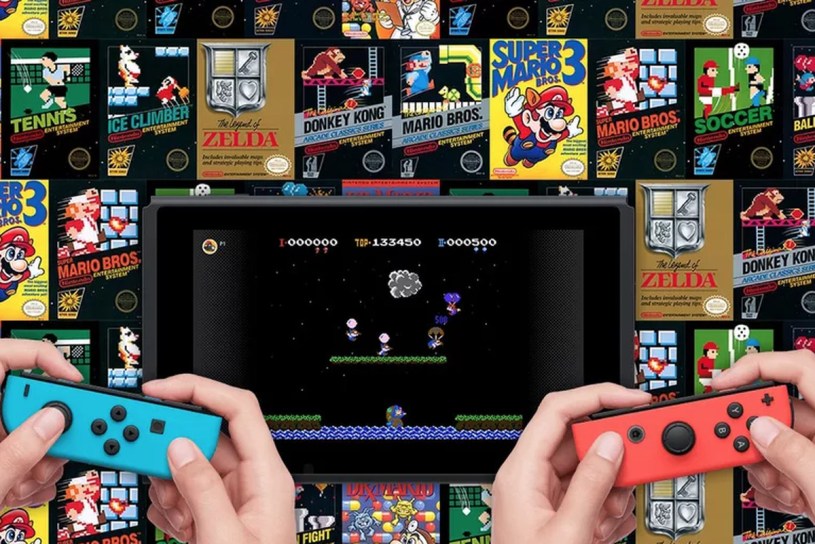
The reaction to the Switch’s online service, Nintendo Switch Online, has been subpar at best. Not many are excited about the service. Some are downright angry about it. A service that was originally supposed to be ready last year, that Switch owners were promised would be worth the wait, ends up being underwhelming at launch.
If you’re a Switch owner, or an owner of any Nintendo system, it’s a good idea to resign yourself to the fact that online gaming is not a priority for Nintendo. It never has been and likely never will be for the foreseeable future. Or be perpetually baffled and frustrated by their decisions. This has been Nintendo’s stance since the days of the GameCube in the early 2000s when online gaming began to catch on.
In 2003, Phantasy Star Online was a popular game on the Nintendo GameCube, and one of the only GameCube games you could play online. You could play it offline, but you were missing out if you did. A big part of owning Phantasy Star Online was to play it with other people on the internet. However, Nintendo didn’t have to support it. Phantasy Star is a Sega property, and they handled all the internet logistics for it back then.
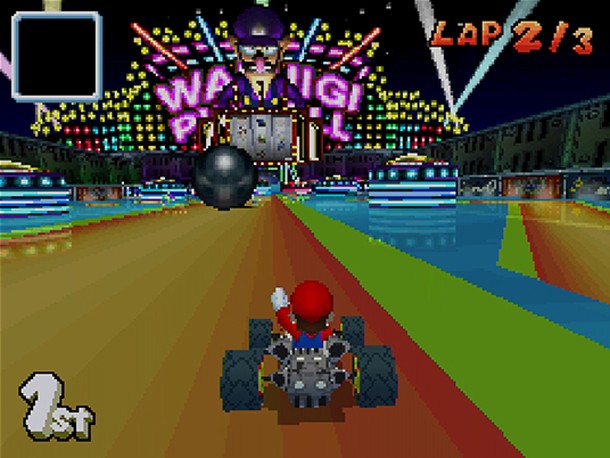
Even though Nintendo made the GameCube hardware internet-capable (with the purchase of a broadband adapter), Nintendo did nothing with online gaming on the GameCube throughout the whole life of the system. Nintendo’s first online game was Mario Kart DS for Nintendo DS in 2005, which was a sincere first effort, but still well short of what their competitors were doing.
Meanwhile in 2004, Microsoft launched Xbox Live and Halo 2 on the original Xbox. Halo 2 was one of the biggest launches in the history of video games. The primary reason being you could play Halo 2, and other Xbox games, online using Microsoft’s service. Xbox Live had voice-chat functionality out of the box, and Microsoft made sure everyone knew that with the massive marketing campaign they put together for it.
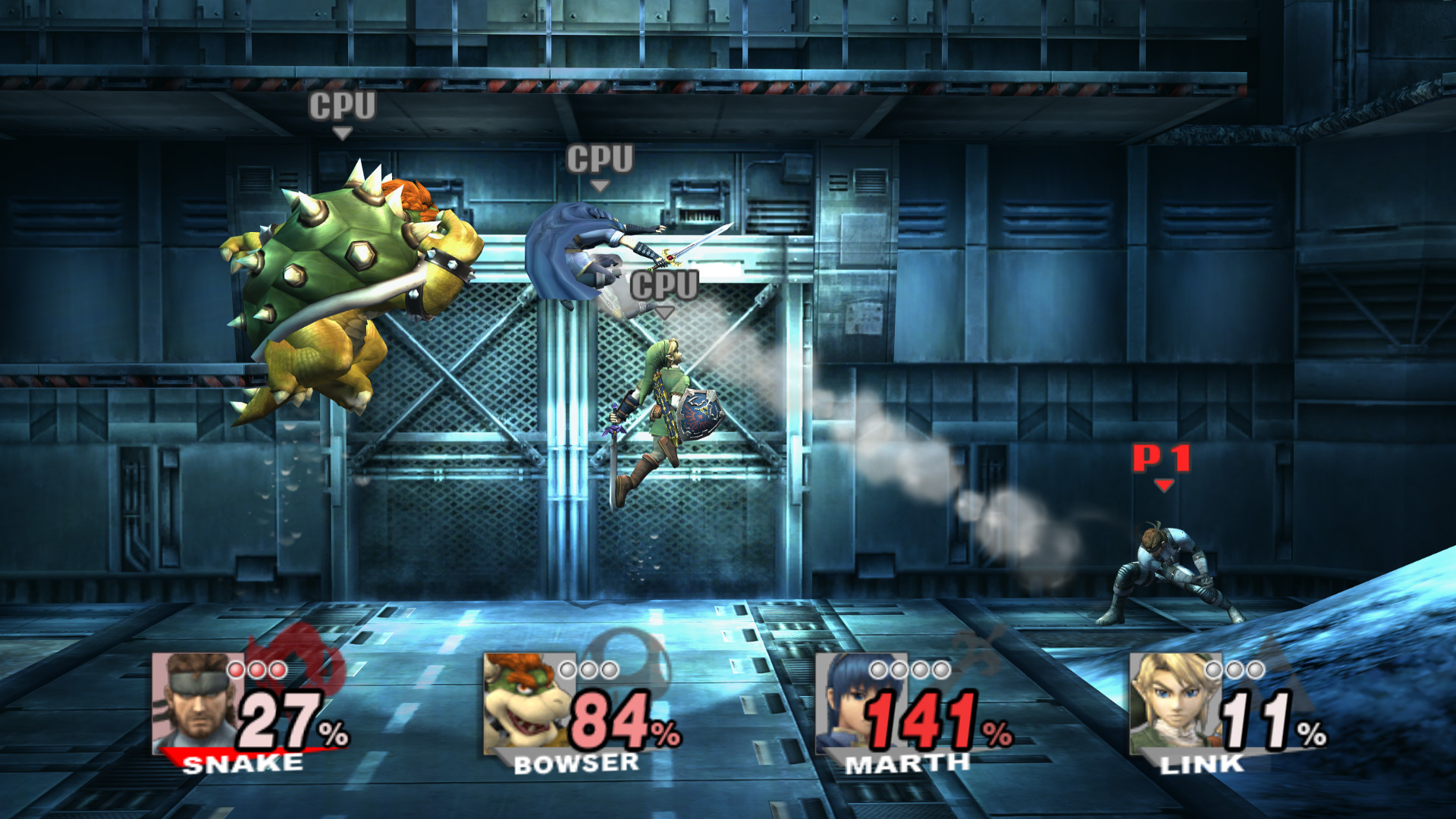
In 2008, Nintendo released Super Smash Bros. Brawl for the Wii. After months of insane hype and anticipation, Nintendo released the third installment of the Super Smash Bros. series into the waiting arms of their legions of fans, who were excited to be able to play a Smash Bros. game online for the first time. But when these fans went online to play, they quickly found that Brawl’s online functionality was pretty much broken. On a good day, it worked on a basic level. On a bad day, you didn’t make it out of the lobby. If you did, and got into a match after waiting sometimes up to 20 minutes to play, connection issues would usually kick you back out to the lobby again. Basic leaderboards and matchmaking were non-existent. Nintendo never issued an apology or any kind of fix for Brawl’s broken online functionality. Their reaction was basically a shoulder shrug, or to not acknowledge there was a problem at all.
Their voice-chat solution? Use Skype. Masahiro Sakurai, the creator and director of the Super Smash Bros. series, actually said that in an interview, although apologetically, to his credit.
Meanwhile in 2008, Xbox Live had gone on to become the #1 online gaming service in the world. The Xbox 360 and Xbox Live became the place to play Call of Duty and Halo. Microsoft’s achievement system on Xbox Live was very popular as well, and was soon copied by Sony for the PlayStation Network.
The point being, the contrast between Nintendo and Microsoft and their approach to online gaming has always been glaring, and not very defensible on Nintendo’s part. It’s not that Nintendo is incapable of having online functionality that rivals what Sony and Microsoft do, but for reasons that no one can really grasp, Nintendo’s relationship with online gaming is tepid – and that’s putting it nicely. Saying they’re lazy and maybe even antagonistic towards online gaming at times, given their perpetual, unexplainable apathy towards it, wouldn’t be inaccurate.
For example, Nintendo’s voice chat solution for the Switch is terrible. Nintendo expects gamers to download a smartphone app for basic voice chat functions while playing Switch games online. This is the 2018 version of expecting Wii owners to go out and buy Wii Speak to be able to voice-chat while playing games online on the Wii in 2008.
Voice chat is a basic function of playing video games online that has been a given in console video games since 2004. There’s no reason for Nintendo not to have it running natively on their Switch games 14 years later. The Switch is more than capable of voice chat, but again, for reasons no really understands, Nintendo isn’t interested, even though their fans have been begging for it for years.
Given how creative and innovative Nintendo is, their attitude towards online gaming, and the internet in general, is unfortunate. If there’s a video game company out there who could do something fresh and new with online gaming that no one has seen before, it seems like Nintendo would be that company. Their disinterest and apathy is hard to understand.
Although Nintendo’s attitude towards online gaming seems to be unexplainable, we can venture some educated guesses.
First, Nintendo is still in love with local multiplayer.
Nintendo reluctantly embraces online gaming (at times), but it’s unlikely to ever replace their passion for local multiplayer games. Some of their most important and successful franchises like Mario Kart and Super Smash Bros. have been built on the back of having people in the same room playing together on one TV. It’s part of Nintendo’s DNA as a company. It fits perfectly with their family-friendly, video games are for everyone, approach to making games. Which is great. No one wants Nintendo to abandon making creative games with local multiplayer in them. We love local multiplayer too – but why does this have to come at the expense of online multiplayer? Nintendo is years behind their competitors in this area, and it’s a never-ending source of frustration for so many of their fans.
If you don’t believe it, go back and watch the original reveal trailer for the Switch. Notice the emphasis on people playing Switch games together locally. Not one shot in the whole three and a half minute trailer of anyone playing a Switch game online.
Second, Nintendo’s paranoia about kids playing online and chatting with strangers on their service.
This is a real thing with Nintendo. It’s what inspired the widely disliked friend codes that Wii, Wii U, and 3DS owners had to deal with for years, and still do to a limited extent. It was somewhat understandable when online gaming, and the internet in general, were still somewhat new 15 years ago – but that’s not the case anymore. Kids playing video games online is a regular thing, and as we now know, many of them are not the innocent, naive babes Nintendo believes them to be.
Nintendo’s concern for kids playing their games and using their services is admirable, but in doing so, they alienate many of their older fans who deeply resent being parented by a company they feel isn’t listening to them about online gaming. Nintendo needs to strike a balance between their concern for their younger fans, while not alienating their older ones.
To Nintendo’s credit, they are improving, albeit slowly. The reliability of their online network is significantly improved from ten years ago and the Super Smash Bros. Brawl days, especially the Mario Kart games. The announcement of cloud saves on the Switch was also a nice surprise and a good step forward. Being able to play NES games online is not something gamers were asking for, but pretty cool nonetheless.
However, as it always is with Nintendo and the internet, it’s two steps forward, one step back.
For example, the announcement for cloud saves for the Switch was great – but then later on we find out that not all Switch games will have cloud save functionality. Nintendo’s explanation for this is they don’t want people using their cloud saves to cheat in games like Splatoon 2. Which seems like a reasonable explanation, except for the fact that cheaters have been running rampant in Splatoon 2 for months and Nintendo has done little about it.
Being able to remap your controller buttons to play NES games on Nintendo Switch Online is also missing, which is a feature that existed for the Wii U Virtual Console. This becomes more suspect when Nintendo is pushing their new wireless retro-NES controllers for $60 a pair, but which can only be used for Nintendo Switch Online games. Not to mention you can only purchase the controllers through Nintendo, and Nintendo won’t even sell them to you unless you have a Nintendo Switch Online account.
Not being able to buy games on the service is another absent feature. Nintendo has relegated their classic game support for Nintendo Switch Online to a Netflix-like, rental-only status. If you want to actually own and play these games without having to connect to the internet every seven days, Nintendo Switch Online isn’t for you.
Nintendo is promising that the classic game library for Nintendo Switch Online will increase over time, which is the same line we heard about the Virtual Console – a service that got worse and worse over time. Given Nintendo’s track record of classic game support on their previous systems, it’s hard to be excited for the future of classic games on Nintendo’s online service. Their support always starts out strong and eventually dwindles to nothing.
For the launch of Nintendo Switch Online, we have 20 NES games to choose from. Where are the GameCube games? The Wii games? Are they coming? We know Nintendo has these games running on the Switch’s hardware. We’ve seen it. Gamers in China who own Nvidia’s Shield tablet can play Super Mario Galaxy and The Legend of Zelda: Twilight Princess in 1080p, but not Switch owners. Switch owners get to play NES Soccer and NES Tennis. Nice additions, but games no one was asking for.

The Switch has been on the market for a year and a half, and Nintendo has had plenty of time since the launch of the system to get more classic games ready to go for the launch of their online service. Not to mention the months before the Switch launched when Nintendo refused to talk about the system in any detail until two months before its launch. There’s no excuse for it.
The Switch will be Nintendo’s fourth video game system with classic game support. With the success of the NES Classic Mini and Super Nintendo Classic Mini, it looks like Nintendo is trying to replicate that experience with Nintendo Switch Online, which is not a bad thing. However, they need to provide consistent game support for the service throughout the whole life of the Switch. Like what happened with the Virtual Console, subscribers better not have to endure going weeks and months at a time with no new games being added to the service. Giving players the option to buy the games instead of just renting them would be nice as well.
If gamers are paying a monthly fee for the service, Nintendo losing interest in supporting the service can’t happen. The Switch is capable of emulation, or ports of games, from every system they’ve ever released, from the NES through the Wii U. They’ve done a good job bringing over the Wii U ports to the Switch so far. Hopefully that approach will continue with Nintendo Switch Online, and a year from now, we’ll be on our way to the robust library of classic games we’ve always wanted.
More games and better variety of games from all of Nintendo’s systems – which means not just the obvious choices: Mario, Zelda, Metroid, etc., but a big variety of 3rd-party games as well. The Switch is the perfect platform for classic games from every era. Fingers crossed Nintendo gets it right this time.
 The Gamer's Standard