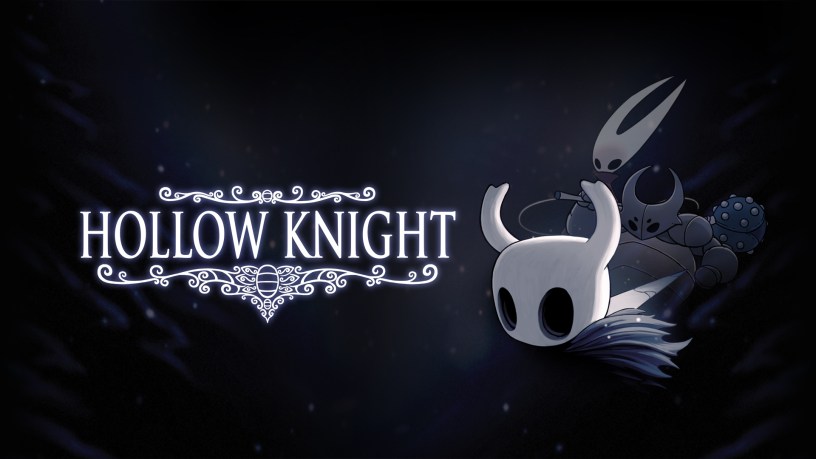
The Switch has become the go-to system for indie games with a plethora of indie titles to choose from. Almost too many. With about 2500 games on the Switch, many of which are indies, the number of choices can be overwhelming.
There are bad indie games, there are good indie games, and there are great indie games. Hollow Knight falls into the last category.
Hollow Knight is an indie 2D action-platformer directly descended from the Metroid and Castlevania series. Its overall aesthetic takes its nod from Metroid: the loneliness, the sense of isolation, the sense of claustrophobia in an underground world that is exotic, beautiful, yet deadly. However, the overall combat is more reminiscent of Castlevania.
Metroid is made by Nintendo, and Castlevania by Konami, but either of them would be hard-pressed to make something on-par with what Team Cherry accomplished with Hollow Knight. In fact, given that Team Cherry is only a three-man team, Hollow Knight is astonishing.
The gameplay follows in the footsteps of the 2D action-platformers that came before it. You play as the Knight, who explores the beautiful world of Hallownest fighting enemies with his Nail while attaining money and power-ups that allow him access to other parts of the world. His increasing strength allows him to take on the game’s numerous bosses and platforming challenges.
Hollow Knight takes place in the world of bugs. While that may not sound very compelling, the way it’s presented makes it so, as the game has a story and extensive lore. I wish I could say I understood more of it as I spent dozens of hours exploring and battling in the world of Hallownest, but alas, I didn’t. It’s not told through cutscenes or a lot of exposition. Some of it is told through talking to NPCs and some through lore. Much like the Metroid Prime games, the story is there if you want it. If you don’t, it’s not force-fed to you. You can ignore all of it if you want.
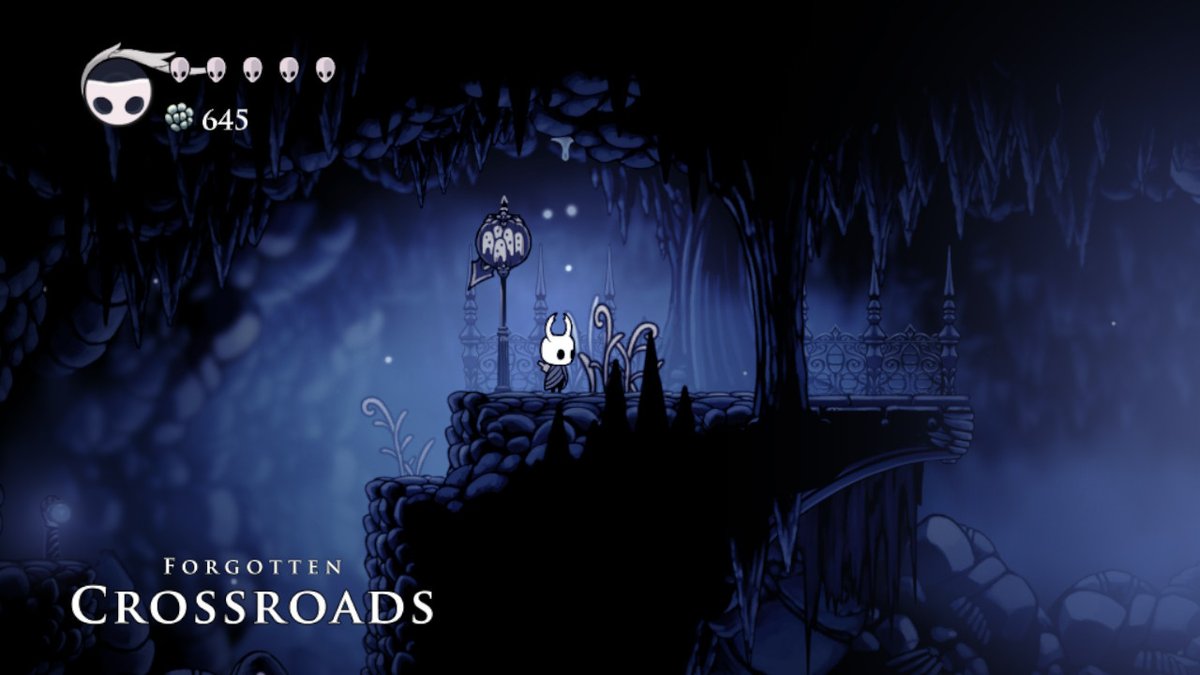
What I was able to understand of the narrative was interesting and compelling. There are undertones of religion and a lost underground civilization. Loss and sadness permeate the world.
Calling a hard game ‘the Dark Souls’ of a given genre has become a tired way of describing its difficulty, but Hollow Knight does seem to fit that description. You’re going to die. At times you will die frequently. The game will make demands on you, more so than most action-platformers do. However, nothing feels unattainable.
Death is handled in a similar way to Diablo and Dark Souls. If you die, you lose all your money. If you want to retrieve your currency, you have to revisit the place where you died and defeat your ghost that is now inhabiting that place. If you’re unsuccessful and die in the attempt, you’ll go back to your last save point again, and any coin you were carrying is now gone forever. I learned this the hard way several times and lost thousands of Geo doing it.
The game tricks you. The world of Hallownest is beautiful and inviting, but it’s a deceptively difficult game, it doesn’t always play fair, and is unapologetic about it. Hollow Knight is a game with teeth and doesn’t hold your hand.
It was refreshing to play an action-platformer with some bite, a game that isn’t afraid to let you get lost and die in a dark, claustrophobic, underground labyrinth full of hostile creatures and monsters who attack you on sight. Hollow Knight isn’t afraid to punch you in the mouth, but it always looks beautiful doing it, as the world is gorgeous. Team Cherry definitely went in with an artistic vision for Hallownest, as it’s one of the most artistically impressive games I’ve seen in years.
There are dozens of boss fights, and they come without warning. One second you’re poking around, exploring, and enjoying the scenery, the next second, you wander into a room, the door slams shut behind you, and you’re fighting for your life – and as you die (which you almost always will the first time fighting almost any boss), you’ll be trying to remember when the last time you saved your game was, and how far you’ll have to travel to get back to retrieve your ghost. The bosses come often, and when they do, they come hard and fast. Hollow Knight’s bosses are lethal.
In fact, if there’s a 2D game with more boss fights, I’d like to know what it is – and if you want the best ending, none of them are optional. In fact, most of them, if not all of them, you have to fight twice. It gets to the point that sometimes the game feels like a giant boss rush, with the rest of the game being filler breaks in-between. The game’s Godseeker expansion focuses exclusively on the dozens of different bosses, in both their Attuned form (normal) and their Ascended form (hard).
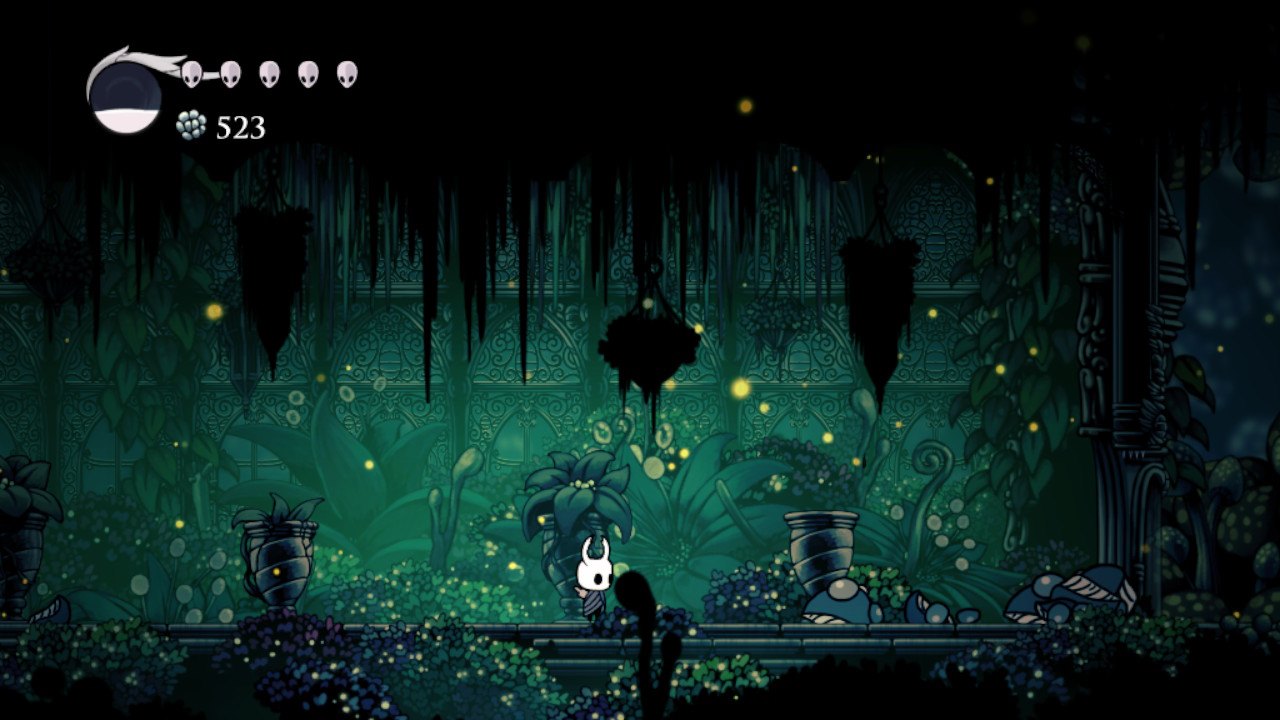
The world of Hallownest is massive. Every time I thought I had reached its outskirts, I would discover a new area to explore. It’s easily the largest 2D game I’ve ever played that’s not an RPG. Hollow Knight is a game you can put dozens of hours into on one playthrough. The game design is such that, not only is it not afraid to let you get lost, it’s designed in a way to ensure that you will get lost. While you do encounter an NPC who will sell you a map in every region you explore, even then, it’s only a partial map of the area. You have to chart the rest yourself.
There doesn’t seem to be one aspect of the world of Hallownest that lacks attention to detail or was done thoughtlessly. Everything about Hollow Knight has a hand-crafted feel to it. Every design decision feels thoughtful in its implementation.
I have to admit, I’m somewhat in awe of Hollow Knight. How a game of this scale, density, intricacy, and beauty was made by only three guys is impressive to say the least. Its visual presentation is a twelve out of ten. The soundtrack is superb. The controls are tight. The combat is punchy and satisfying. The exploration never gets old. The game is huge. The enemies and bosses keep you on your toes, stretch you, and have you playing right on the edge of your skill level at times.
Everything about Hollow Knight feels like a developer who wanted to take the 2D action-platformer genre and formula to the next level. While you can see the subtle nods and influences from past games in the genre, it’s done in a world that is beautiful, compelling, and wholly unique. It does more than mimic the standard action-platformer formula. It has much more going for it than being yet another disposable 10-12 hour Super Metroid imitator. Team Cherry crafted a game and experience that stands apart, not only in the action-platformer genre, but any genre. For those critics who say video games aren’t art, they haven’t played a game like Hollow Knight.
The art direction and beauty of the world Team Cherry created is compelling enough that getting that next power-up, or getting access to that next area isn’t all that keeps you coming back. Like Zelda: Breath of the Wild, Hollow Knight’s visual presentation and overall aesthetic is so strong, that existing in the world seems like a means unto itself. As deadly as the world can be, it’s one you want to be in and interact with.
Unfortunately, many players might not be aware of all the content packed into Hollow Knight, as some of it is not easy to access. Team Cherry went to the trouble of making a massive game, with expansions to boot, but made accessing some of that content obtuse. If you want to experience everything in Hollow Knight, you’re likely going to need a guide your first time through.
Hollow Knight looks and runs great on the Switch. In handheld mode, it runs at a steady 60 FPS at 720p resolution. I didn’t notice any stutters or slowdown. I started the game using the left analog stick for movement, but when the difficulty ramped up, I switched to the buttons, as it feels more familiar for me when playing a difficult 2D action-platformer. It did make a difference in improving my play, but your mileage may vary.

VERDICT:
I was unprepared for how good, how dense, and how extensive Hollow Knight is. I bought it almost on a whim during an eShop sale. To say it exceeded my expectations would be a massive understatement. Between its core game, its expansions, and its unlockable difficulties, this is a game you can put dozen of hours into, if not hundreds. That’s unheard of for a game in this genre.
Hollow Knight is the new 2D Metroid game Nintendo should’ve made years ago. Team Cherry has succeeded in filling the action-platformer space that Nintendo created, and then abandoned. In 20 years, there’s a good chance we’ll be talking about Hollow Knight in the same way we talk about Super Metroid and Castlevania: Symphony of the Night today.
If there’s a better 2D action-platformer on the Switch, I haven’t heard of it. Not only is Hollow Knight the best of its genre on the Switch, it’s one of the best of the genre on any system, and it’s one of the best games on Switch – not just indie games, but the whole Switch library up to this point.
Hollow Knight deserves to be mentioned right alongside Shovel Knight, Stardew Valley, Super Meat Boy, and others as one of the great indie titles of all time. It’s absolutely stellar and raises the bar for the action-platformer genre. It’s a must-play game, and every Metroid and Castlevania fan should consider it essential.
 The Gamer's Standard