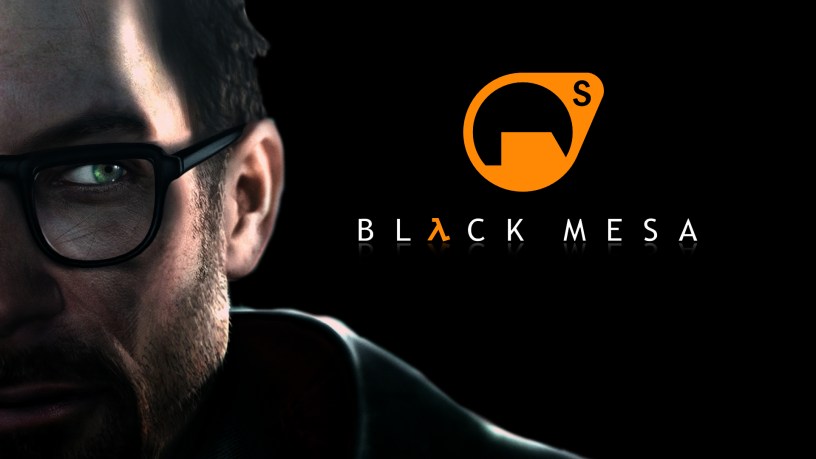
The original Half-Life came out in 1998 and was a huge step forward in the FPS genre. It marked the beginning of the second generation of first-person shooters. Whereas other popular FPS games of the late ’90s (Wolfenstein, Doom, Quake, Duke Nukem) were violent and let you shoot lots of bad guys and monsters, they didn’t tell much of a story. Half-Life changed that – but it didn’t do it through cut-scenes, lore, or anyone talking to you in an earpiece. It was mostly told through NPC dialogue and what is now referred to as ‘environmental storytelling’. Half-Life also required the player to be more thoughtful in how they played and progressed. Brute force wasn’t always the answer to every enemy and obstacle.
Black Mesa is a full remake of the original Half-Life, rebuilt from the ground-up and running on a new engine. You play as low-level scientist Gordon Freeman working at the Black Mesa Research Facility. What he thinks is just another day at his job turns into a situation that becomes quite dire.
Maybe the primary reason the Half-Life games excel is their expert pacing. As linear as the games are, you would think they would eventually get repetitive and tedious, but they always subtly lead you in the right direction, while pushing your gaming skills just enough to always keep you engaged, but not pushing too hard so you become discouraged and stop playing. That’s the genius of Half-Life. There are few games that are as expertly paced.
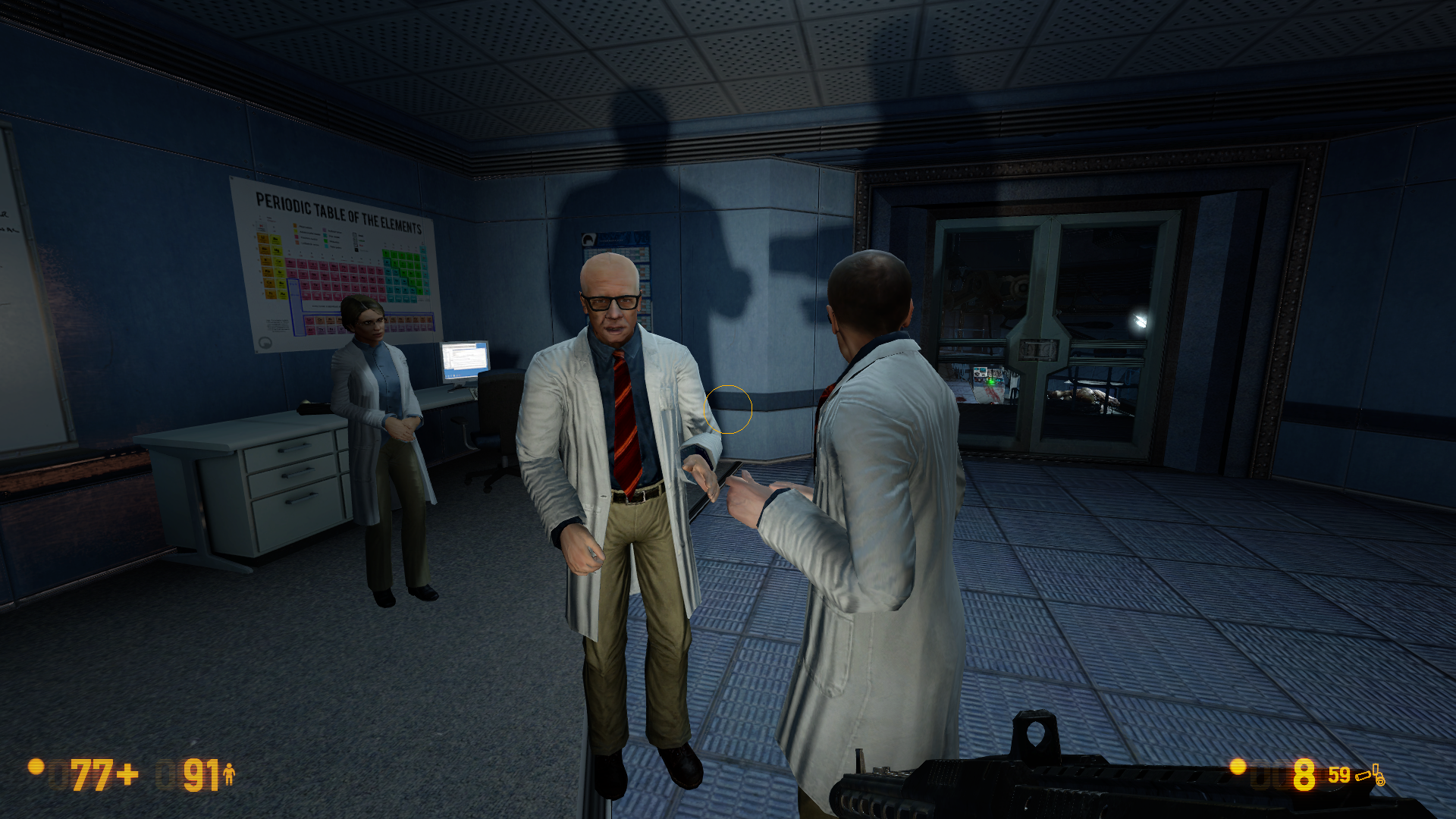
Enemies can be slow and easy to kill, but others can be incredibly light on their feet. Most of the enemies you encounter at the beginning aren’t as threatening as they appear, and can mostly be taken out with your trusty crowbar. You don’t even really need your gun until a few chapters into the game when the enemies become more of a threat. Half-Life has plenty of gunplay, but it’s not strictly a run-and-gun affair. You have to think your way through situations.
The original Half-Life’s major flaw was the awful jumping mechanics. The annoying jumping sections are still present in Black Mesa, but they’re vastly improved from the original, or even the Source engine version of the game. To say they were clunky in the original would be an understatement. You had to make sure to autosave before attempting any dangerous jump. The Source engine version of Half-Life fixed this somewhat, but in Black Mesa it’s no longer an issue. That’s not to say I never died on big jumps, but it never felt like it was from poor jumping mechanics or controls, which are much more fluid and usable now.
That being said, there is still way too much platforming in Half-Life. In fact, I’d go so far to say that it has almost as much platforming as any of the Metroid Prime games, which aren’t even true first-person shooters, and are built for lots of jumping.
Black Mesa feels like two different games. There’s the game they remade (the original Half-Life), and there’s the content that was added in, mostly in the second half of the game. The first half feels like the Half-Life we all know and love. The second half plays more like a first-person platformer/adventure game. There’s an obvious shift in tone in the world, but also in what is being demanded from the player. Overall, it’s not as polished or well-paced as what came before it.
The strongest aspect of the added content is the visuals. It’s gorgeous – however, the amount of platforming gets out of control. It feels like Crowbar Collective got bored with making a first-person shooter and decided they wanted the rest of the game to be a first-person platformer instead. It’s not necessarily bad at what it does, but it’s not as compelling as the first half of the game. You do a lot more running, jumping, and puzzle-solving than shooting, and there’s a big difficulty spike as well, which ties in to its pacing issues. Maybe it was me being not very good at the game, but I found myself dying a lot. I’m far from a Half-Life or FPS neophyte, but dying over and over again because I didn’t know exactly what to do in situation after situation, and when to do it, got tedious and frustrating.
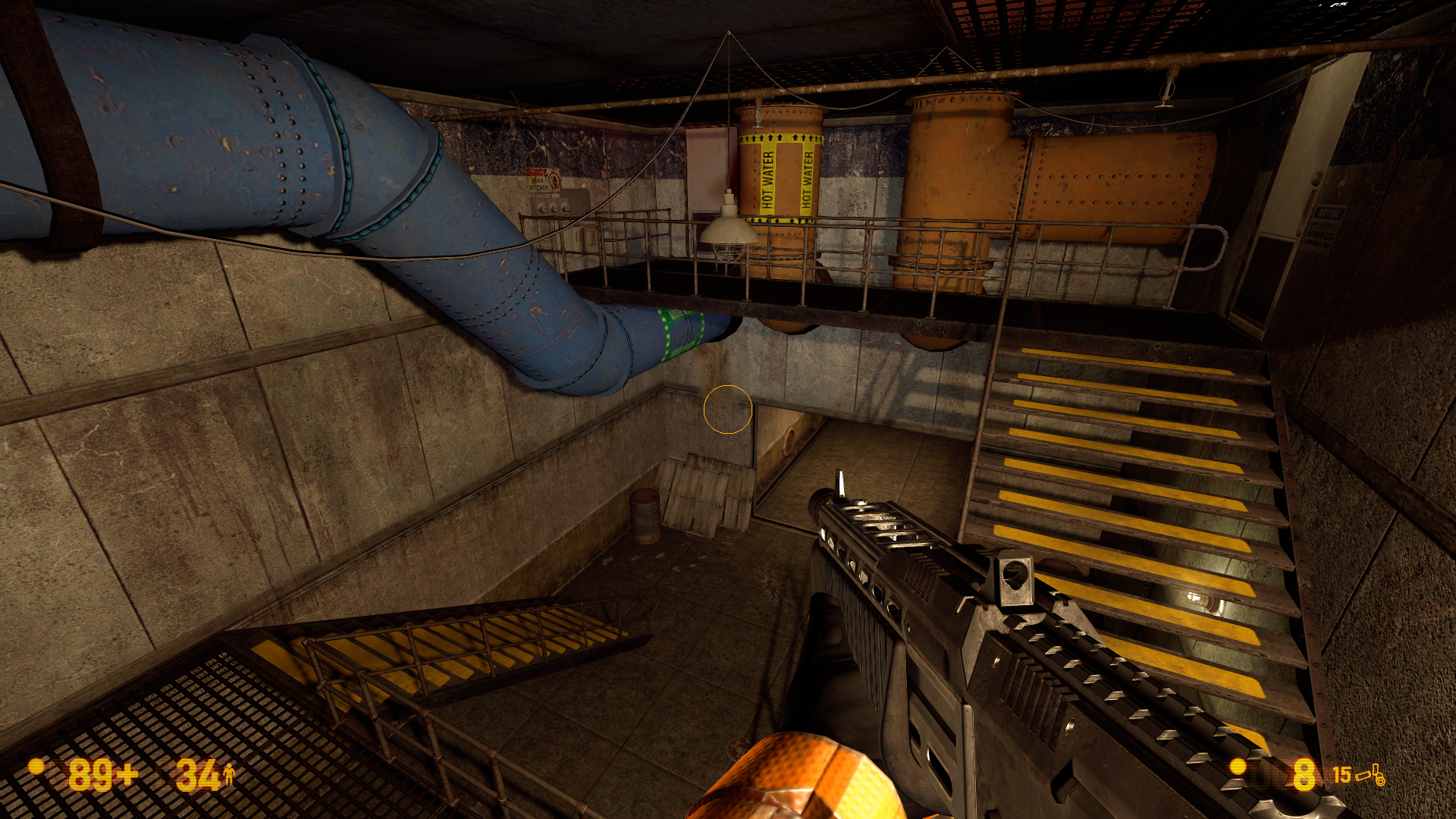
Also, the auto-save system in the second half was borderline broken at times. Frequently, the game would auto-save in the worst possible places. Then if I died, it would place me in a position where I had little to no chance of survival, which required me to quick-save often. There were times I could sit there with my hands not touching the keyboard and watch the game kill me and reload the autosave, kill me and reload the autosave, kill me and reload, etc., in an endless cycle. I don’t know what the developers were thinking when they play-tested the auto-save system because it’s glaringly awful in places. To make it worse, the game erases its own autosaves. So if the game autosaved at a certain point, it didn’t mean I would be able to use it a few minutes later. It made the game unnecessarily more difficult.
The second half of the game doesn’t perform as well either. I ran into some huge framerate issues in certain parts. The game even crashed on me at one point.
However, Half-Life was, and still is, a masterclass in environmental storytelling. The world of Half-Life and the Black Mesa Research Facility, the sights and sounds of the game, tell you everything you need to know about what’s going on. Its story is told through what you hear, what you see, and talking to NPCs. Its use of environmental storytelling was way ahead of its time, and it’s still not used in a lot of FPS games to the same extent today. There’s never anyone barking in your earpiece telling you what to do, or where to go next. You’re on your own. You are the Freeman.
How Half-Life utilized music is a great example. There isn’t a lot of music underscoring the action at any point. Black Mesa uses it to underscore important events and sequences in the game. However, it never lasts long, and before you know it, you’re back in the lonely world of the Black Mesa Research Facility with only the sounds of the environment to keep you company.
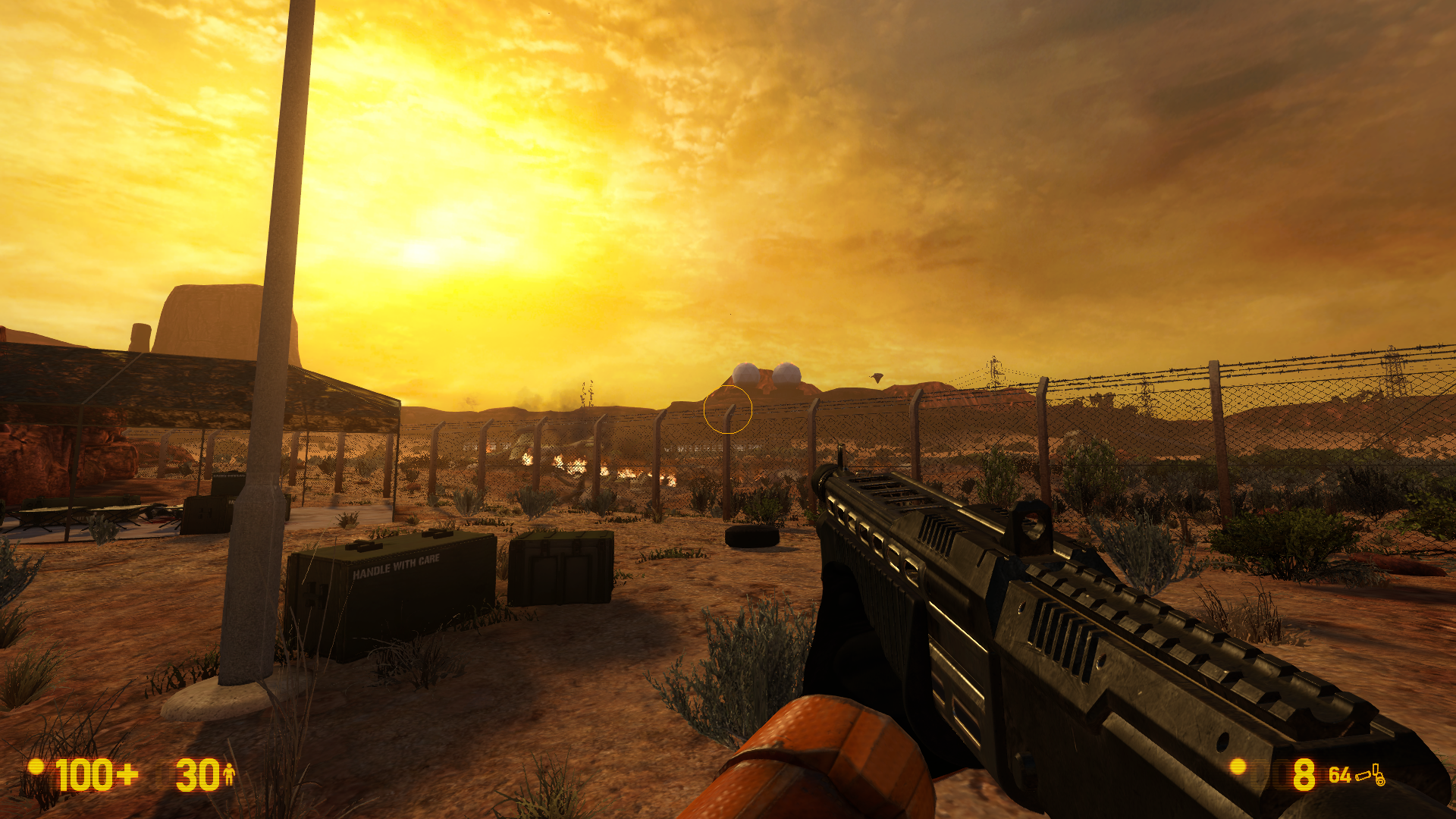
Black Mesa takes some small liberties with the characters. They had the same voice actor voice different NPCs who are having conversations with each other, which can be confusing since it makes it hard to figure out who is talking. However, including Eli Vance is a great addition. We know from Half-Life 2 that he worked at Black Mesa, and having him there as a talking NPC at the beginning of Black Mesa adds cohesion between the two games.
VERDICT
The events and world of Half-Life are now considered classic, seminal moments in gaming, and Crowbar Collective’s remake modernizes the whole experience. Black Mesa is, without a doubt, the definitive version of Valve’s classic FPS, and was made with their blessing. Despite its excessive platforming and auto-save and pacing issues in the added content, it’s still an amazing experience, and the Black Mesa remake is superb. Maybe the best compliment I can give it is that it’s Half-Life to its core.
This is the best Half-Life has ever played, and by far the best it’s ever looked. It’s aged very well and, with this release, maintains its status as one of the greatest single-player FPS games ever made, and is absolutely worth its $20 price tag. It’s a Steam PC exclusive, but doesn’t require a powerful rig to run. If you’ve never played the original Half-Life, playing Black Mesa would be a great place to start.
 The Gamer's Standard