
The Legend of Zelda: Breath of the Wild is Nintendo’s first attempt at a true 3D open-world. Nintendo used the six years between the release of Zelda: Skyward Sword in 2011 and the release of Breath of the Wild in 2017 to rethink the Zelda formula, taking the series back to its roots in many ways, while simultaneously progressing the series into uncharted territory. The result is a landmark title that will serve as the new template for Zelda games for the foreseeable future. Breath of the Wild is one of the best titles Nintendo has ever produced, and their biggest launch title since Super Mario 64. For it being their first open-world title, the game is an astonishing accomplishment.
The main protagonist of Breath of the Wild is Link, but the star of Breath of the Wild is the world of Hyrule. The Hyrule that Nintendo created for Breath of the Wild far exceeds any overworld that’s been seen in a Zelda game before. It feels so alive that it becomes mesmerizing while you play. Nintendo captured the feeling of being in the outdoors completely.
There’s nothing in Breath of the Wild you see that can’t be gotten to. If you climb up a giant rock face and look back down, you might see clusters of trees on the ground that look impossibly far away. You might see wild horses grazing and running around far below as well – and then you might realize you were just down there running around with those same horses a couple hours ago, exploring and fighting Bokoblins, and that you can go back down there anytime you want. Breath of the Wild gives a sense of freedom and scale that not many games can replicate, if any.
The world is colossal. The beautiful vistas of mountains in the distance you can see far in the distance aren’t pre-rendered backdrop the developers put in for show. It exists in the game, and you can go there. The world isn’t just expansive, it’s vertical as well. Link is a world-class rock climber, and he can scale just about anything. You can walk and climb around for hours looking at things, picking up resources, fighting any enemies that cross your path, finding Korok seeds, and completing shrines.

There’s a relaxing, inviting quality to Breath of the Wild’s Hyrule. Interacting with the world on any level is compelling, even if you’re not working towards any objective. Just existing in the world seems to be a means unto itself.
You’ll be overwhelmed with places to go and things to see. There is a heavy emphasis on exploration, with dozens of shrines and hundreds of Korok seeds to find. Not to mention the small towns and other outposts with NPCs to talk to and the wild animals that you can interact with if you can get close to them. Explore, explore, explore.
If you’re an older fan who thinks that recent Zelda games have been too easy, you’ll be happy to know that Nintendo has put some definite bite into Breath of the Wild. It’s easily the most difficult of the 3D Zelda games, at least as far as the amount of damage you can take from enemies. Majora’s Mask still has the more difficult puzzles and dungeons (since that whole game is basically a puzzle), but Breath of the Wild has enemies that will one-hit you, laugh in your face, and then do it again when you come back for more. It’s much more reminiscent of the NES Zelda titles in that sense, which is exactly what Nintendo was going for: getting back to the roots of what Zelda is, difficulty included.
There’s no gating at all. If you venture into a region or area with enemies you’re not ready for, there’s nothing there to stop you. You’ll likely find out the hard way, but it gives you a satisfying feeling of accomplishment when you get stronger and destroy those same enemies. There’s a long arc of slowly getting better gear, powered-up gear, different items and abilities to mix and match to fight with, and just getting better at the game.
Breath of the Wild takes place 10,000 years in the future of the other games in the series. The pure fantasy/fairy tale aesthetic of past Zelda games has evolved. While still a fantasy game, it has elements of technology that are new to the series. A “futuristic Zelda” is something fans have been talking about for years, and this is the first small step in that direction we’ve seen.
For the first time ever in a Zelda game, we have voice-acting – but only in the animated cut-scenes. Counting the DLC, there are about two dozen of them in total that you gradually watch throughout the course of Link’s adventure as he learns more about his mission and his past. Every character in these cut-scenes has spoken dialogue, except Link himself. Nintendo changed a lot in Breath of the Wild from previous Zelda games, but Link not speaking wasn’t one of them. While the reaction to the animated cut-scenes has been mixed, I found them to be one of the highlights of the game. It was refreshing to finally hear actual spoken dialogue. The voice-acting and cut-scenes do a great job of giving personality to the characters and fleshing out the story.
Also, for the first time, Nintendo implemented a full weather system, complete with snow, wind, rain, and sunshine. However, while it adds tons of life to the world, the way it operates is very unbalanced – the reason being it’s always raining. As in, just about every day. It would be interesting to see what Hyrule’s annual rainfall is because it would likely dwarf any region or country here on Earth. It wouldn’t be a big deal if the rain didn’t affect gameplay, but unfortunately, it does.
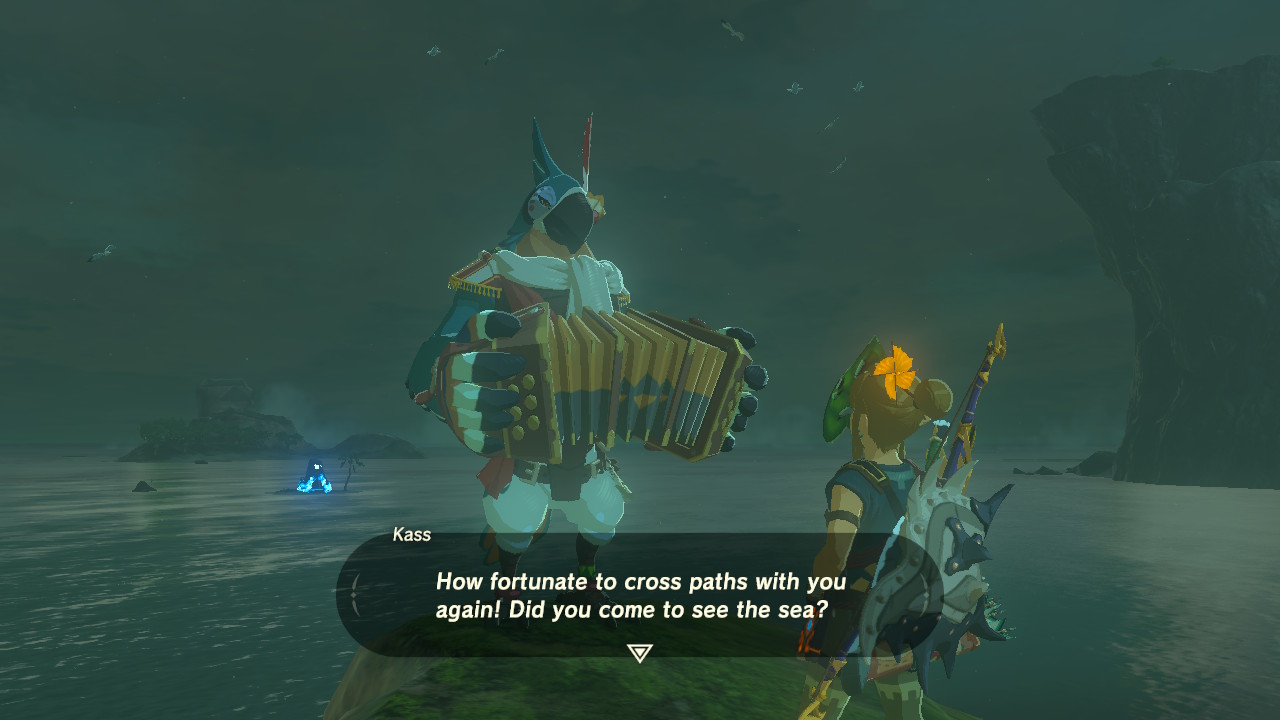
Nintendo thought it would be a great idea if it not only rained a lot, but to handicap Link’s ability to climb whenever it’s doing so. Given how much it rains, and given how climbing is an integral part of the gameplay and Link’s skillset, having to stand around doing nothing while you wait for water to stop falling out of the sky so you can climb a rock face that’s in your way is not uncommon. It’s surprising that Nintendo thought this was a good mechanic because it makes you want to tear your hair out whenever it happens.
If you’re climbing anything and it even starts to sprinkle, Link will climb for a few seconds and then slide down while his stamina meter continues to fall. It makes it almost impossible to climb unless the weather is almost perfect.
The game will not go very long before deluging Link in water for at least a few minutes. The only exceptions are if he happens to be in an arid or snowy region. If you need to do any climbing (which you frequently do throughout the game), hope it doesn’t rain in the middle of your climb, or right before you start, because Link won’t be going anywhere if your climb lasts longer than a few seconds. He’ll slide back down the rock.
It would be helpful if Nintendo scaled back the insane amount of rain Hyrule gets by about half in Breath of the Wild’s sequel. Obviously, don’t cut it out completely, but just ease it back. If they don’t want to lessen the amount of rain Hyrule gets, then Link’s climbing abilities need to be enhanced with the ability to climb on wet surfaces, because otherwise, it’s an infuriating mechanic that does nothing to make the game better.
Rain can interfere in other ways, too. For example, once while I was exploring, Link’s Korok mask started to make noise, which meant there was a Korok seed in the area. After a few minutes of searching, I found a pile of leaves where I thought the Korok might’ve been hiding. I pulled out my fire arrows to burn the leaves. Right as I did, light drops fell out of the sky, and it immediately started raining within a matter of seconds. I shot the fire arrow into the pile of leaves to burn them, but to no avail. The rain put the fire out and I had to stand around and wait. Finally, 5-10 minutes later, the rain stopped and I was able to burn the leaves and get the Korok seed. Wasted time. Rainfall interrupting the flow of gameplay happens much more often than it should, and it’s the biggest issue I have with the game. It’s frustrating every time and is a bizarre design decision by Nintendo.
Breath of the Wild was the first Zelda game to have weapons that break with use, which wasn’t a popular mechanic with some players. It seems odd and out of place that there isn’t one blacksmith or shop who sells traditional weapons anywhere in Hyrule. The weapon shops you find only sell arrows. Nintendo always puts gameplay first in their games, and I can see how Nintendo might have thought having weapons break makes sense from a gameplay perspective. However, from a story and world-building perspective, it makes zero sense and seems somewhat absurd for Link’s weapons to be so flimsy and breaking as often as they do.
In this vast land of Hyrule, how can there not be anyone who makes swords, shields, spears, and bows and sells them? If there are no blacksmiths in Hyrule, where are all the weapons coming from that you’re picking up from enemies and finding in chests? Somebody has to be making these weapons, and it seems odd that Link never meets them during his travels. Also, if there are blacksmiths in Hyrule, how bad are they at their craft that their weapons break that often? It’s silly.
Getting a good weapon never feels as special or as valuable as it should because you know it’s going to break after one or two fights – which is unfortunate because the game has some cool weapons for Link to use. However, outside of the Guardian weapons which he can craft, Link’s choice of weapons is at the whim of whatever he happens to find lying around.
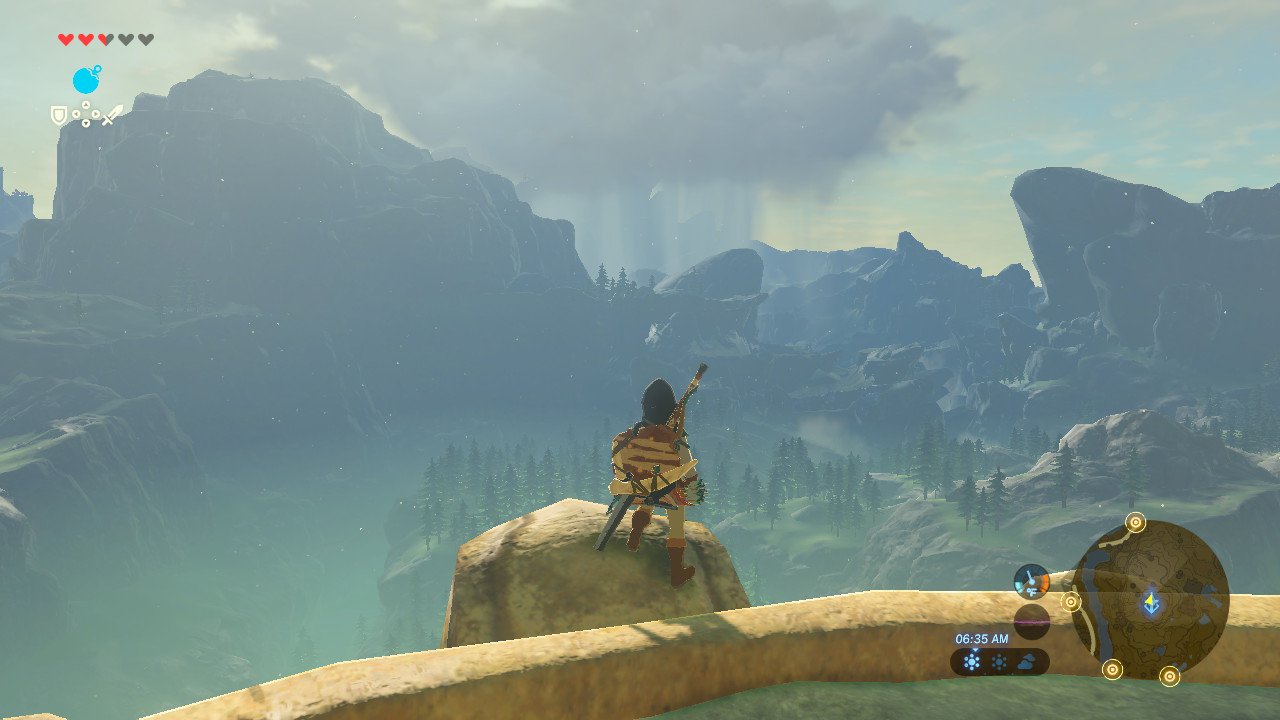
Nintendo needs to take the Guardian crafting system and apply it to all of Link’s weapons. Let players craft their weapons of choice from resources they pick up out in the world. You spend a lot of time collecting different kinds of resources in your travels, but what you can do with those resources is limited to making food dishes and elixirs. Also, have durability be an option for weapons you choose to craft, among other characteristics. It would make Link’s arsenal much more interesting and give the player more control and choice over the weapons they prefer to use.
There should be shops that sell weapons as well, because not being able to find a certain type of weapon when you need it is frustrating. For example, if you don’t have an axe when you need one for cutting down some trees, you either have to remember where you ran across an axe before, or run across one by accident.
Also, if breaking weapons is a game mechanic Nintendo wants to keep for Breath of the Wild 2, they should break less often, and Link should have the ability to repair them, because Link going through weapons at that rate never feels right in the context of the game world.
In total, as I write this, I’ve put over 375 hours into Breath of the Wild. For the first half of that time, weapon-breaking didn’t bother me. However, when you’re playing a game for that long, even small annoyances can become much bigger issues. By the end of the game, I was sick to death of going through weapons like Kleenex. Going through dozens, if not hundreds, of weapons in the course of your adventure is ridiculous.
Now about the combat:
Link’s archery skills are fantastic. While Link is supposed to be the best swordsman in Hyrule, I found he’s a much better archer than he is a swordsman. He can slow down time whenever he wants and fire off multiple shots with a variety of different types of bows and arrows. Being able to jump off your horse Jedi-style and take out an enemy in slow-motion is always satisfying. Bombs are surprisingly effective as well. You have an unlimited amount of them, and instead of detonating on their own like in past Zelda games, Link detonates them himself. I used this countless times on wolves that would attack me while exploring.
Unfortunately, Link’s sword skills aren’t nearly as impressive, and the melee combat never seems to completely hit its stride. Instead of the fluid combat Zelda fans had in past Zelda games, Breath of the Wild feels halfway between Monster Hunter and past 3D Zelda games. It’s obvious the Monster Hunter series was a big influence on Breath of the Wild in its resource-gathering and its combat, but it would’ve worked better without the constant breaking of weapons. You’re never able to get comfortable with any sword or spear you use in a battle. As soon as you do, the weapon is gone. As a result, the fighting has more of of a jilted feel to it. Link is supposed to be the greatest swordsman in Hyrule, but outside of his flurry rush counter, nothing he does is that impressive, or an improvement from past games in the series. Overall, the melee combat feels like a step back and ended up being one of my least favorite aspects of the game.
It becomes more absurd when the Master Sword, the all-powerful weapon that’s been in Zelda games since A Link To The Past on Super Nintendo – the sword that has sealed the darkness of Ganon in game after game – loses power when Link uses it. How does the Master Sword lose power just from Link using it and smiting evil? Nintendo shoe-horned their weapons-breaking game mechanic into Breath of the Wild without it making any sense in the context of the game world, or any fantasy game world.
I haven’t played Hyrule Warriors: Age of Calamity yet, but from what I’ve seen of it, Link’s arsenal of moves is vastly superior to what he can do in Breath of the Wild – nor do his weapons break. In fact, no one’s weapons break in Age of Calamity. I know it’s a different genre of game, but it’s the same characters in the same universe, only a hundred years earlier. Nintendo has touted it as being the official prequel to Breath of the Wild, and the whole game revolves around combat. The inconsistency is jarring and makes no sense.

Nintendo needs to seriously rethink the combat and weapon systems in Breath of the Wild’s sequel. More fluidity and depth in the fighting, and more choice for the player in what kind of weapons they can use would do wonders. Give players the choice in their weaponry instead of having them be stuck with whatever they happen to find out in the wilds of Hyrule. If Link is supposed to be a knight and a great swordsman, he should know something about crafting and repairing weapons. The game should reflect that.
Also, Link needs a larger inventory for weapons. I got so tired of having to go into my inventory and drop weapons every time I ran across something I liked – and give the player the ability to drop weapons from Link’s quick menu on the d-pad instead of having to go into the submenu to drop them. It becomes incredibly tedious having to do that over and over and over.
However, Breath of the Wild shines with its puzzles. Most of these are in the shrines and Divine Beasts, and there isn’t a bad one in the bunch. I wasn’t a huge fan of the motion-control puzzles (mainly because it caused me to have to detach my Joy-Con from my Switch in handheld mode), but they were all clever and put together well.
Not every Zelda game needs a plethora of dungeons. Majora’s Mask only had four. Wind Waker only had six. Breath of the Wild has 120 small shrines (not counting the DLC), or mini-dungeons, but only four Divine Beasts for Link to explore, which serve as the equivalent of full dungeons. The shrines are fun and compelling and do a great job of breaking up any monotony that comes with exploring its massive overworld. Some of the shrines have a little more meat to them than others, but all of them are short.
I remember playing Zelda: Twilight Princess and wishing there were less dungeons and more to do in the overworld. Breath of the Wild doesn’t have the egregious overworld/dungeon balancing issues Twilight Princess has, but two to three more large dungeons in its sequel could make its balance pitch-perfect.
Also, it would be helpful if there was an easier way to track down shrines that you’ve missed. The shrine detector in your Sheikah slate is helpful, but only when you’re in the vicinity of a shrine. As of writing this, I’ve gotten to the end of Breath of the Wild and I still having two shrines to track down, which seems like a monumental task in this massive open world. The only way I’ll find them is if I run across them by accident. Here’s hoping.
A shrine counter for each region of the game would’ve helped remedy this. Ocarina of Time has this for the Gold Skulltulas that are hidden in its world.
EDIT: I found the missing shrines using a very handy online map provided by zeldadungeon.net. I highly recommend it.
Breath of the Wild encourages you to experiment with different food combinations to make dishes. It’s a fun distraction, but you can’t keep track of anything you make. If you make a dish you like and want to make it again, you have to remember the recipe yourself. You can check the recipes of dishes you still have in your inventory waiting to be eaten, but that’s it. A full recipe system could add a new wrinkle to the sequel, and it would encourage players to experiment with cooking to fill out their recipe list. This can be extended to making elixirs as well.
I found myself cooking in Breath of the Wild because I needed food in my inventory. If Nintendo allowed players to keep track of their recipes in a recipe book, it could be a mini-game all of itself. Give players the incentive to make cooking a means unto itself instead of just a means to an end.
In past Zelda games, music has had a prominent place. The Zelda series is responsible for some of the most memorable and iconic tunes in the history of video games. While Breath of the Wild has some definite standout tracks, Nintendo went with a more minimalist approach with the music. For long stretches of gameplay, you won’t hear any music at all. The sounds of the world act as the soundtrack, and when you do hear music, it’s usually soft piano that compliments what you’re already hearing. It’s not often you hear a traditional music track. There are no sweeping heroic fanfares as you tromp through the wilderness and fell enemies beneath your feet. There’s a thread of quiet sadness that runs throughout much of the music as Link explores and tries to save a ruined Hyrule.
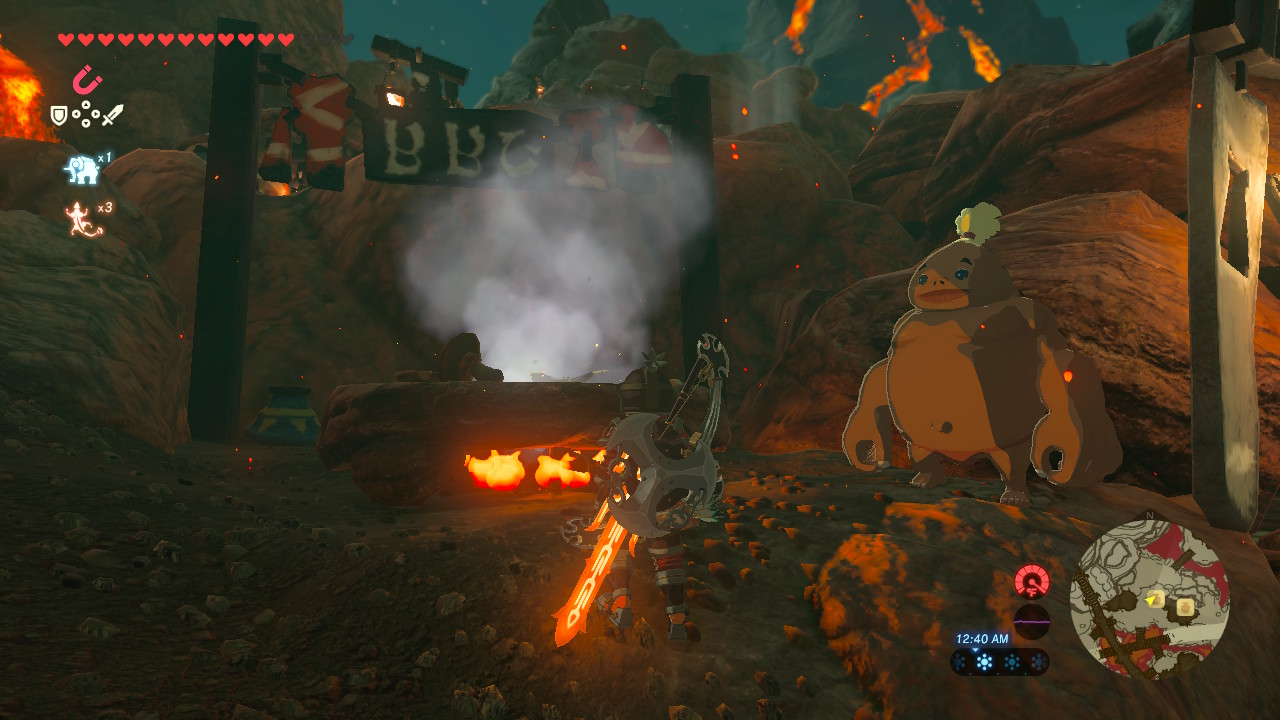
Visually, Breath of the Wild has a stunning art direction and aesthetic. It looks like a modified version of Wind Waker meets Skyward Sword. Character models all look and move great.
However, the textures look like they definitely come from a Wii U game. It’s especially noticeable if you just came from playing Super Mario Odyssey like I did originally, which had some fantastic texture-work. The tree models look really bad when you get close to them. Same with some of the rock textures up close. The pop-in on the grass can be very noticeable at times, but pretty much of all of its graphical shortcomings can be chalked up to the fact that it’s a Wii U port. It will be interesting to see what Nintendo’s Zelda team can do with a game that is built from the ground up graphically for the Switch because Breath of the Wild is a beautiful game to look at. On more capable hardware, it would be a landmark title visually.
Everything runs at mostly 30 FPS. The framerate does take very noticeable hits now and then. I’m not someone who is a stickler for super-consistent framerates, but there are times when even I can tell the game is chugging. If Nintendo can find any way to get the sequel to run at 60 FPS, it would be a dream.
The Champion’s Ballad DLC is basically more Breath of the Wild. It doesn’t deviate from the formula of the base game: more exploring the overworld to search for shrines, and then completing them. There are around sixteen more shrines to complete, with some trials to unlock those shrines on top of that, and then more trials on top of that. It will keep you busy for a few more hours.
One of the handiest features of Breath of the Wild’s DLC is its map upgrade. It charts your course and shows everywhere you’ve been on the map up to where you’re currently at. If you’re a Korok seed hunter, it’s very useful. You can see the nooks and crannies of where you haven’t been yet. Without it, it’s easy to leave large swathes of land unexplored. That being said, the map upgrade should’ve been included in the original game at launch. If the feature wasn’t ready for the launch of the game, it should’ve been a free update when it was ready.
Paid downloadable content should always be content-related, and Nintendo piggybacked this map upgrade into their paid DLC. Gating improved mechanical features and extra difficulty levels behind a pay-wall is a no-no. Nintendo usually gets this right, and they got away with it in Breath of the Wild because the overall quality of the game is so high. It’s a Game of the Generation title, and has a ridiculous amount of content even without the DLC, so it’s not a grievous sin on Nintendo’s part – but it raised some eyebrows nonetheless.
It almost seemed like Nintendo predetermined that they were going to charge $20 for the DLC no matter what. Much of Breath of the Wild’s DLC, and Nintendo’s excuse for its $20 price tag, is cosmetic. Nintendo threw in a bunch of new outfits for Link to wear, some of which are callbacks to past Zelda games, which tickles the nostalgia-feels. They threw in the improved map as well, but the actual content of the DLC is The Champion’s Ballad.
I don’t regret buying it, but a ten dollar asking price would’ve been more appropriate given the amount of actual content you’re getting in the DLC packs. More Breath of the Wild is always a good thing, and you get four more animated cutscenes as well, all of which are fantastic. However, I wish more reviewers had called Nintendo out on the map upgrade issue. It’s worrisome and could set a bad precedent for future DLC in Nintendo’s games.
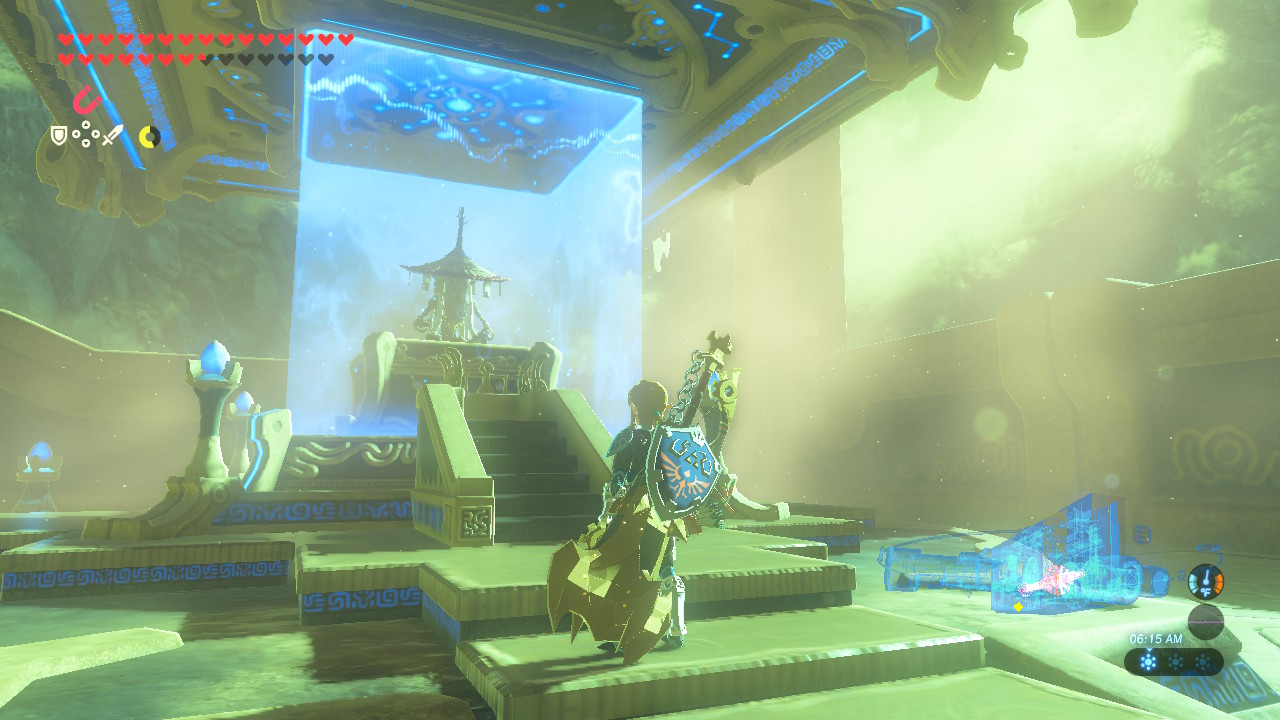
VERDICT
When Zelda games are at their best, they’re a perfect fusion of combat, puzzle-solving, and exploration. The great Zelda titles get better as you play until they hit this plateau of gaming bliss that few games are capable of replicating. Breath of the Wild hits that sweet-spot at times, but it’s never able to maintain it because of it being handicapped in some of its design decisions – namely melee combat and exploration, but mostly in the combat.
When Breath of the Wild is at its best, it’s one of the best games I’ve ever played. When it’s at its worst, it makes me want to tear my hair out. That’s unusual for a Zelda game, which don’t typically have these kinds of highs and lows. Breath of the Wild does, and while unfortunate, it’s also important to keep in mind that it’s Nintendo’s first open-world game. The real test will be if they recognize these flaws and do something about them in the sequel.
In spite of my gripes, complaints, and nitpicks, The Legend of Zelda: Breath of the Wild is one of the most compelling, engrossing, immersive, and magnificent video games I’ve played. It’s a good indicator that you really like a game when you’ve put in close to 400 hours on one play-through and aren’t sick of it. Not only am I not sick of Breath of the Wild, I’m already looking forward to playing it through again, and strategizing what I will do differently now that I’m so much more familiar with what it has to offer. As it stands right now, Breath of the Wild is arguably the best game on the Switch and one of the best titles Nintendo has ever produced.
 The Gamer's Standard