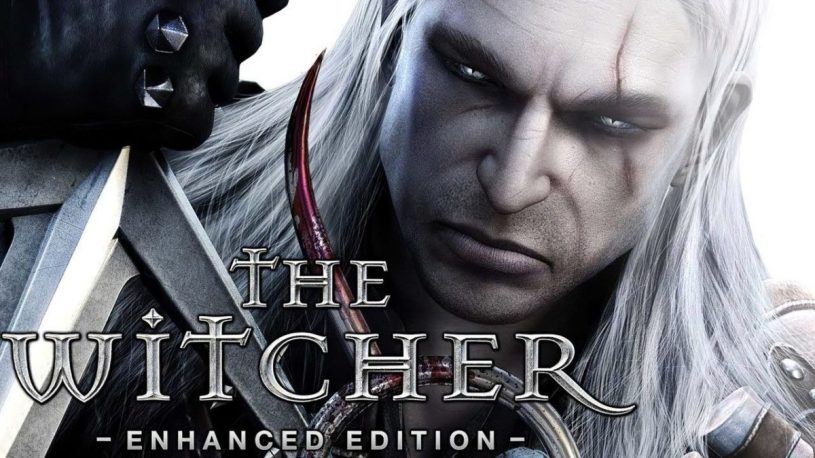
In 2007, The Witcher was CD Projekt Red’s first game they made as a developer, and they’re primarily responsible for the popularity the IP is enjoying today, which now consists of books, a successful video game series, and a TV show.
However, the series didn’t enjoy that popularity until The Witcher III released in 2015, which has gone on to be one of the most successful RPGs in recent memory. The first two games in the series have been almost forgotten by comparison, so let’s look back to where it all started with The Witcher: Enhanced Edition.
The game takes place in the kingdom of Temeria. You play as the now well-known character Geralt of Rivia, who is a witcher: an expert on various monsters, ghosts, and other beasties that are threatening men, elves, dwarves, druids, etc . You set out on an adventure in search of vengeance for friends of yours who were wronged. I won’t say much more than that because of spoilers, but I will say that the story is the strongest aspect of The Witcher. It’s the engine that makes it work in spite of its jankiness and bugs (which I’ll get into later). It’s a somewhat generic fantasy world on the surface, but the story and the characters make it work. As frustrated as I got with the game at times, seeing the story to completion was my primary motivation for pushing through.
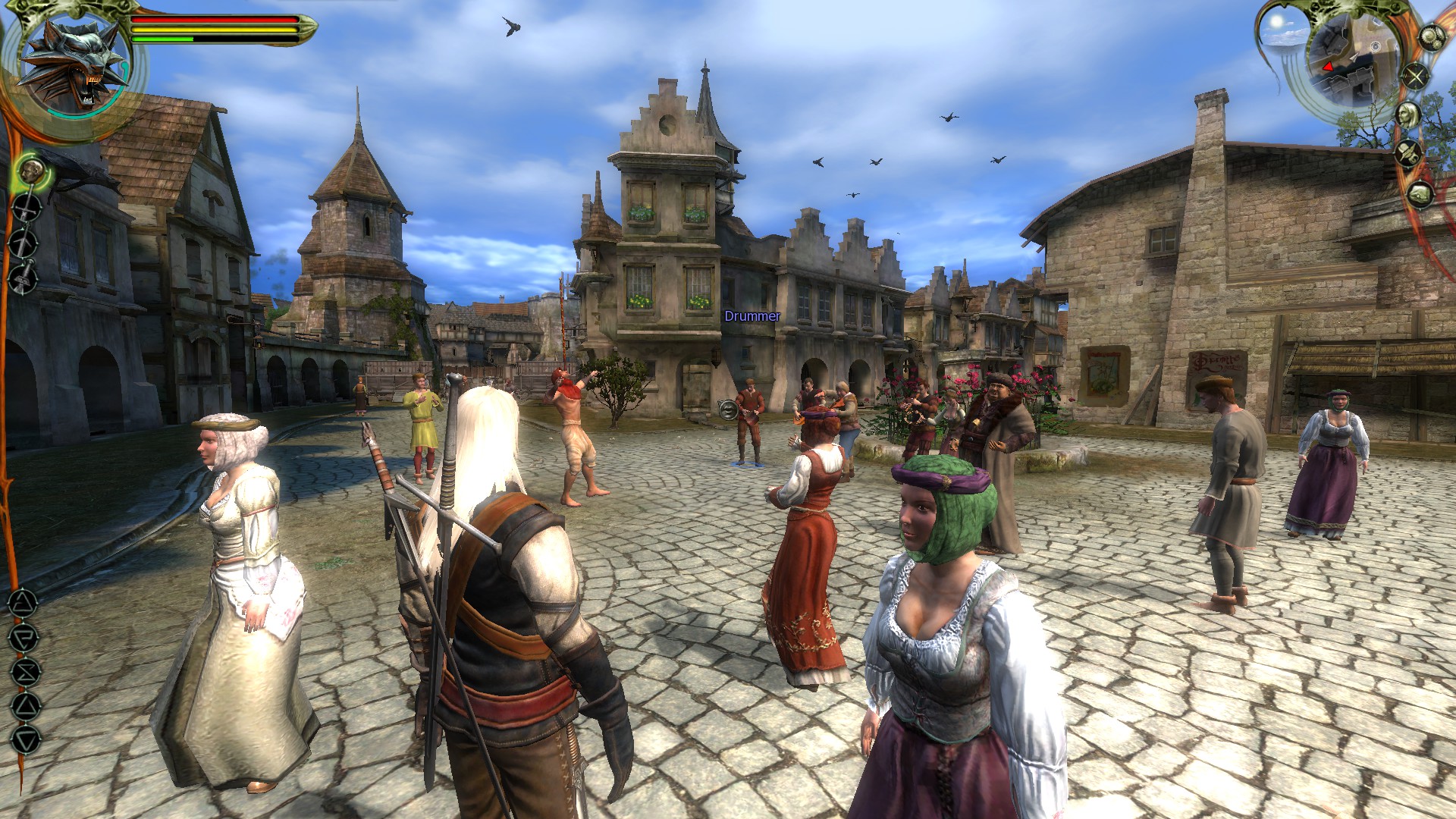
In fact, The Witcher is one of the most story-heavy games I’ve played. At times, it felt like I was in the middle of something that was half video game, half fantasy novel (which makes sense given that The Witcher games came from actual fantasy novels). You can go hours without fighting a single enemy and just immerse yourself in the story and characters.
For not being an open-world game, The Witcher has a lot of content. I didn’t like not being able to go back to earlier areas of the game, but once you get into an area, there is a lot to work through. The game is somewhat light with story in the first two chapters, but in the third chapter, it dumps a lot on you, along with a downpour of quests. At that point, I was still trying to get a handle on the systems and mechanics of the game, so it was a bit much, but I was able to wade through it okay. Not to mention there’s a ton of (mostly good) voice-acting. Everyone in The Witcher has something to say, even if it’s short and sweet.
The combat uses a real-time battle system that revolves around the sword stances of Geralt, and hitting the left mouse button at the right time. When you mouse over an enemy and hit the button, Geralt does a combo. At the end of the combo, flames will appear on your mouse cursor. When you see the flames, click on the enemy again, and Geralt will flow right into a second combo. Time it correctly again, and he’ll do a final combo. It’s compelling and fun, and is able to remain that way during the course of the game. You can also stun enemies using Signs (magic) and dramatically finish them off (more on that later).
Geralt has three different sword stances he can use depending on the enemies he’s fighting. If he’s fighting a big enemy, you can hit the Z-button on the keyboard for ‘strong style’. If he’s fighting a smaller, quicker enemy, you can hit the X-button for ‘fast style’, and if he’s facing multiple enemies at once, you can hit the C-button for ‘group style’. Switching between battle stances is an important mechanic in the battle system, and you’ll be doing it often depending on the type and number of enemies you’re fighting at any given time.
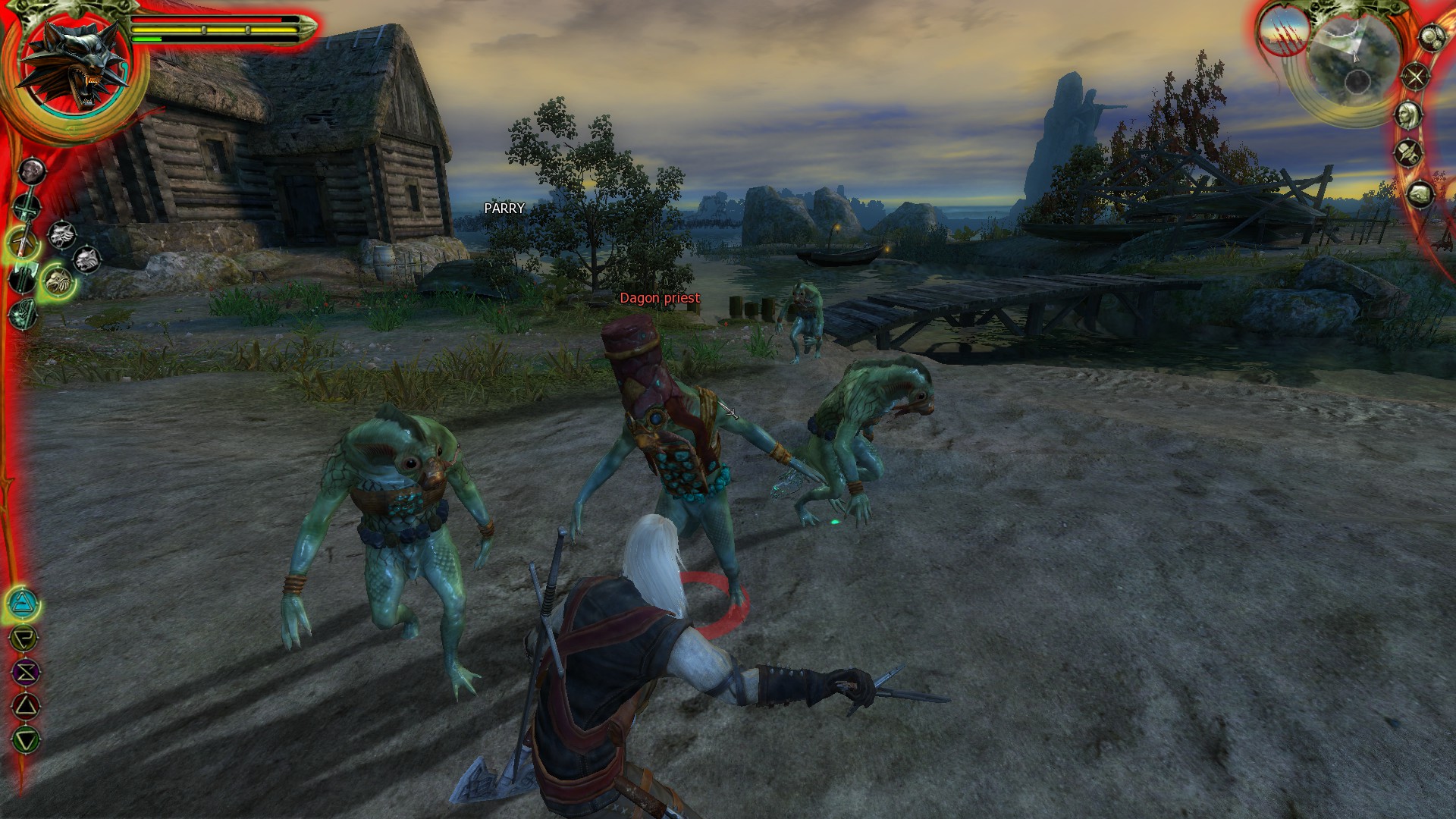
Geralt carries two swords with him: a steel sword for fighting humanoid creatures, and a silver sword for fighting monsters. You can try switching them up if you’re feeling adventurous, but it’s not recommended. Both swords can be upgraded with runes if you have enough gold. Or you can use upgrades like whetstones, grindstones, blade coatings, or pieces of meteor that allow Geralt to cut a little deeper for a short amount of time.
The Witcher’s battle system works for the most part, but can have some serious failings when Geralt is having to deal with a lot of foes at once. When he strikes out at stronger enemies, his blow can be dodged or parried. Of course, in a real sword fight with real swordsmen, blows get dodged and parried all the time – but in The Witcher, when one of Geralt’s sword strikes gets parried, he doesn’t flow into another sword strike like a real swordsman would do. Instead, he stands there and does nothing while taking damage from the enemy.
The whole gist of The Witcher’s battle system is Geralt’s fluidity and momentum as he moves from one combo to the next. Geralt standing there doing nothing with his sword drawn when he gets parried ruins that, and caused extreme frustration when dealing with a lot of enemies who can parry well. There was one particular sequence I had to repeat around twenty times because Geralt wouldn’t attack the nine enemies swarming him. As soon as one of his sword strikes got parried, he would stand there, and let the enemy gang up on him and kill him. It made the combat feel incredibly awkward when it happened.
However, to be fair, there was an aspect to the swordplay I hadn’t quite mastered yet that helped when I got into situations like that later in the game – which was using signs and potions.
Killing monsters allows Geralt to skin them for ingredients to make potions, which play a big role in the game. He can create potions to give himself an edge for almost any situation, whether it’s a simple healing potion, or something that grants him special abilities like ultra-fast combat, or seeing in the dark while exploring a dark crypt. He can also create blade coatings that can poison enemies, or do extra damage to specific types of enemies like insects or specters. There are dozens of different concoctions Geralt can make as long as he has the recipe and the ingredients to make them. Having an ample amount of potions, and knowing when and how to use them, is an integral part of getting through trouble spots in the game.
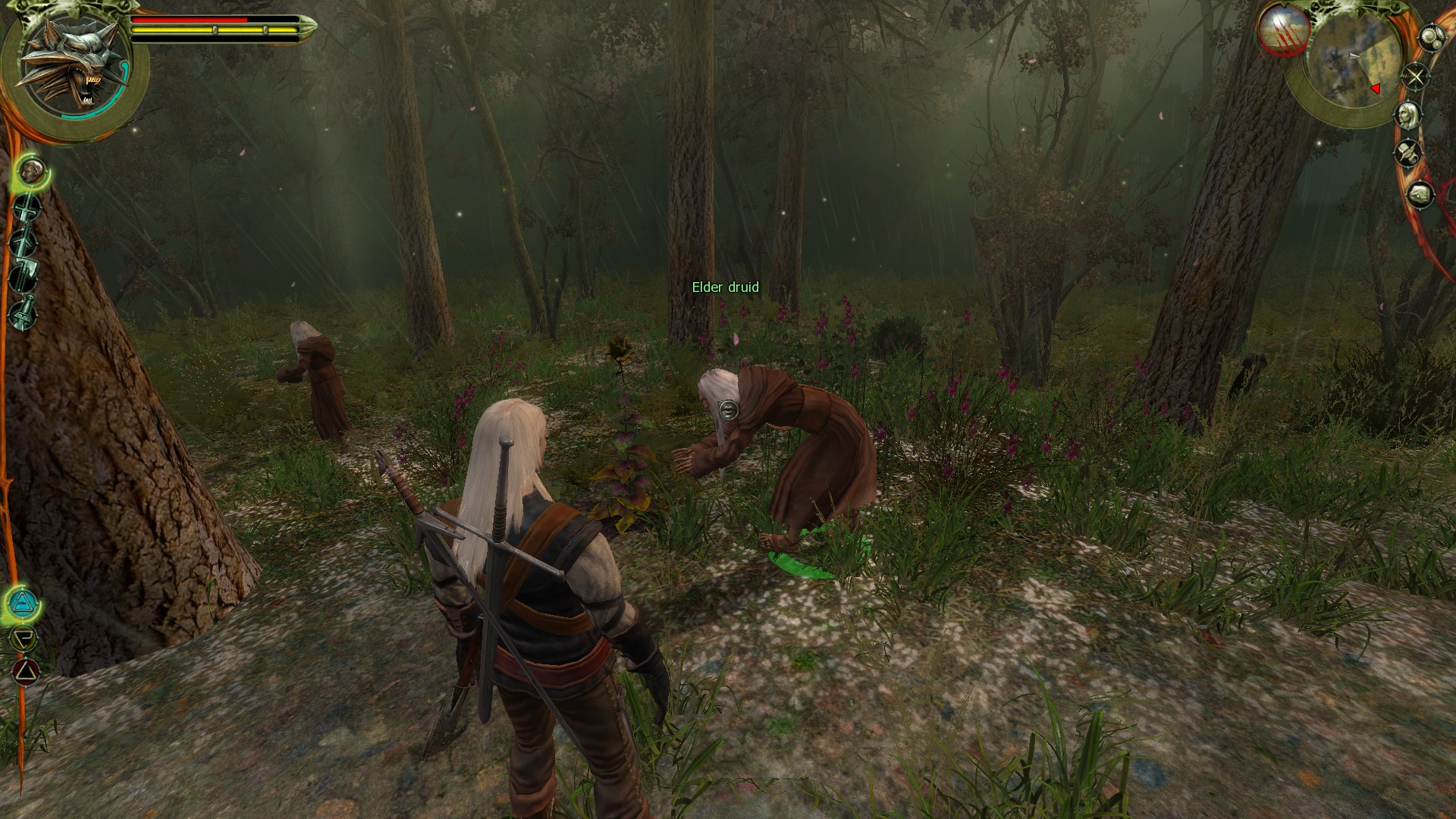
However, the game could do a much better job of teaching you the nuances of making potions. For example, in the tutorials at the beginning of the game, you’re told you need alcohol as a base to make any potion, but they don’t tell you that it has to be certain types of alcohol. If you happen to pick up some beer or wine during the course of your adventure, it won’t work. As a result, for almost the first half of the game, I was constantly being told I didn’t have the required ingredients to make the potions I wanted to make while having tons of alcohol in my inventory.
Signs are also an important part of the combat. This is basically magic that Geralt has command of that can be used to stun enemies, light them on fire, set traps for them, or hex them – but he also has an endurance meter that limits how often he can cast them. The Signs are part of his skill tree and can be powered-up with Talents. They’re a nice complement to Geralt’s sword abilities, and when used correctly, can give him the edge in combat when he’s facing down several enemies at once.
The Witcher is one of the most technically janky games I’ve played in awhile. Not as bad as Far Cry 2, but it crashed on me several times during my time with it. There’s a constant undercurrent of mechanical awkwardness throughout the whole game. You get used to its little quirks and idiosyncrasies as you play, but in certain situations, it can cause extreme frustration enough to want to quit and not come back.
I already talked about the awkward mechanic of enemies parrying Geralt’s attacks. I also ran into a bug which wouldn’t let him cast Signs. He was facing down around twelve strong enemies, and all of the sudden his ability to cast Signs was gone. After dying over and over trying to take them out, I finally had to look online to find out what was wrong. Apparently, if Geralt has consumed certain potions before going into battle, it can trigger a bug in the game that won’t let him cast Signs. Again, extremely frustrating.
However, some of the bugs are more amusing, like loading your save only to find Geralt’s face melted:
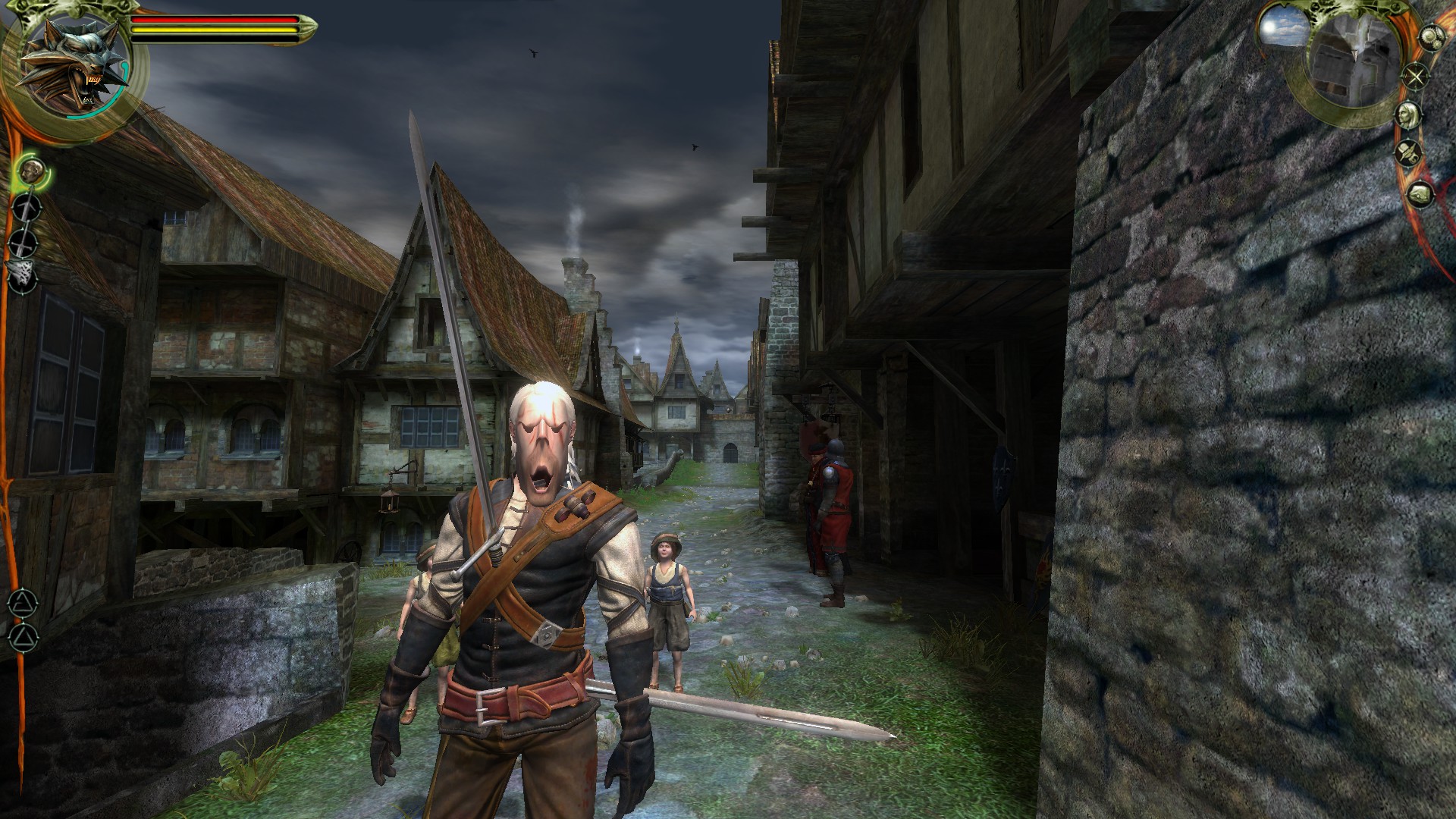
Also, after Geralt kills an enemy, having to click on the enemy’s corpse several times to collect my loot makes the combat that much more annoying and tedious. Collecting loot from a dead enemy shouldn’t be anywhere close to being that janky. Apparently, the guys at CD Projekt Red had never played a Diablo game before.
Or switching weapons on the fly, which takes too long. If Geralt is surrounded by several enemies and you need to change swords, he’s likely going to take some damage before he finishes doing it. It’s nowhere close to being as quick and snappy as it should be.
Most RPGs suffer from some amount of tedium. In J-RPGs, it usually revolves around the random battles and the slow nature of turn-based combat. In The Witcher, the tedium comes from the fetch-quest flavor of so many of the missions, like finding items in your inventory and the janky mouse-targeting to do simple stuff like picking up items. The game runs you ragged talking to people, solving problems, fighting monsters, fighting non-monsters, and doing a million other things in your quest log. It wasn’t enough to make me think about quitting, but coupled with the jankiness and bugs, it made the game more exhausting than it needed to be, and made me wish more of the side-quests felt more meaningful.
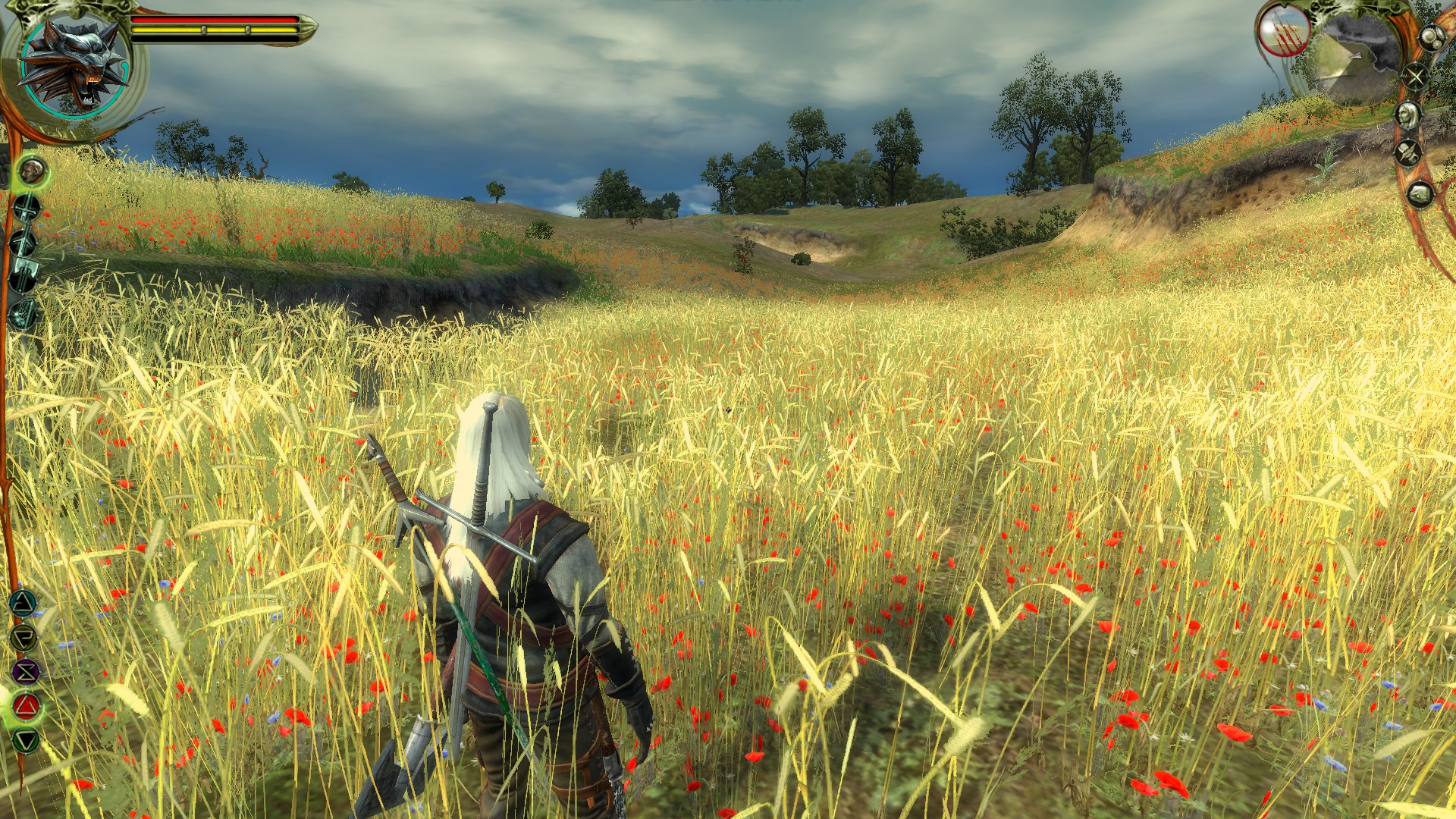
Visually, The Witcher looks like a game that came out in 2007. It’s not overly impressive, but it hasn’t aged poorly. Some vistas you run across look quite good. Character models of NPCs are reused a lot though. Any character in the game that doesn’t have a proper name has a stock, reused model that you see over and over throughout the game. It didn’t bother me, but running across an NPC that looks exactly like an NPC Geralt just finished talking to is something you definitely notice.
Not to mention the erratic framerate, which is all over the place. It regularly would go from well above 60 FPS to dropping below 50. I tried different settings on my PC and in the game’s settings to no avail. It’s just not a well-optimized game.
I don’t know how to describe The Witcher’s music other than to say it has a distinctly European and Celtic flavor to it. I don’t know if Celtic is the right descriptor, but that’s what I thought of when I heard it. Although the battle music gets repetitive anytime Geralt is close to an enemy, the score did a great job of setting the mood of the game.
VERDICT
It’s a good sign when you put 97 hours into a game, and when it’s over, you want to keep playing. If not for the janky mechanics and other bugs, The Witcher would be one of the best RPGs I’ve ever played.
However, as much as I appreciated my time with The Witcher, I can only recommend it if you have patience for awkward mechanics, bugs, and an inconsistent framerate. If your tolerance level for that is high, I can recommend it, especially if you’re curious about the origins of the series and really like action-RPGs like I do.
If not, then I can’t because it made me want to tear my hair out at times. It has a good heart and soul, with a great story and characters, but there’s a ton of room for mechanical and technical improvements that could be implemented. So while I loved it and would consider playing through it again someday, The Witcher: Enhanced Edition isn’t as enhanced as it needs to be. Now that CD Projekt Red is a more accomplished AAA video game developer and publisher, if they ever did a full remake, it would make a fantastic game.
 The Gamer's Standard