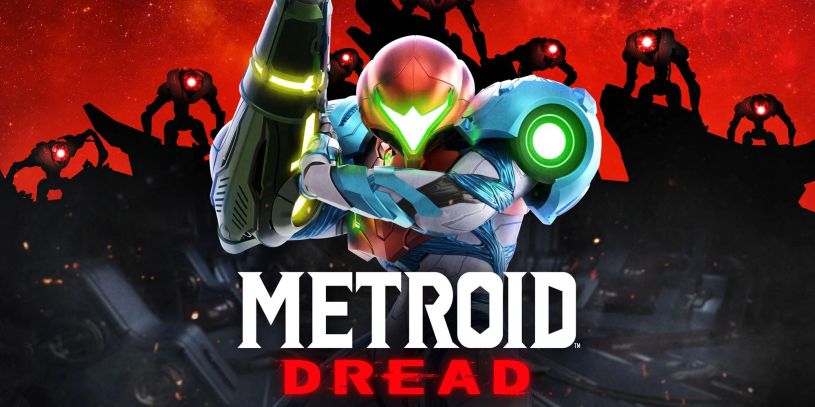
It finally happened. Nintendo released a new Metroid game. Not a remake, not a spinoff, but an actual brand-new, never before seen Metroid game made from the ground-up for the Switch. It’s been eleven years since Metroid: Other M, and 19 years since Metroid: Zero Mission, the last 2D entry in the series – but it finally arrived as an old project come back to life: Metroid Dread.
Metroid Dread had been rumored for years. There was internet buzz about it going back to 2006, and even a reference to it in 2007’s Metroid Prime 3 in one of Samus’ log entries. However, Nintendo never officially acknowledged its existence. Instead, we got Metroid: Other M on the Wii in 2010, a divisive game that was never fully accepted by the fan base.
Then the Dread rumors went silent. In fact, everything about Metroid went silent for years. Nintendo quietly resurrected the project after finding a development partner in Mercury Steam. They first made Metroid: Samus Returns for the 3DS, which was a reimagining of 1991’s Metroid: Return of Samus for the Game Boy. After that, bringing Dread back to life began in earnest, further proof that Nintendo doesn’t give up on a good game idea if they feel it has potential. Nintendo had Metroid Dread percolating for about 15 years before deciding it was time.
So how does a game that has been slow-roasting in development for a decade and a half play like?
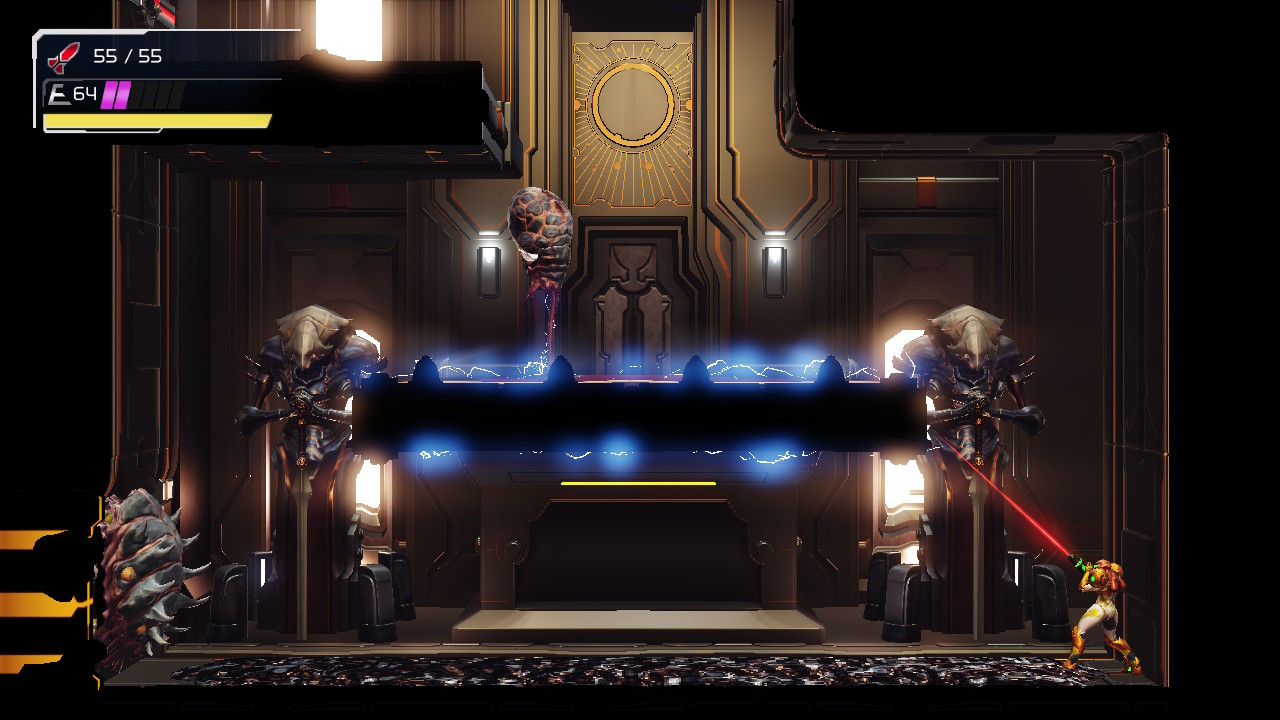
Dread starts off somewhat simply, but the world quickly becomes far more complex than anything we’ve seen in any Metroid game before, including the Metroid Prime series. The map is expansive and rivals Hollow Knight in sheer real-estate.
It’s unlikely you’ll get lost since the map is quite detailed and gives you a lot of info. You will always know where you are. Getting stuck and not knowing where to go next is more likely at some point, even though the exploration aspect of Dread is guided, and there is a linear path to follow. You’re free to go off the beaten path while you’re playing, but the game does a great job of guiding you along that path. However, missing the subtle guideposts the game throws in, and going down another path that may lead to a dead-end is a definite possibility. That happened to me a few times, but even while I was trying to figure out where I was supposed to go, I was getting power-ups and making progress and I eventually found my way.
Dread is easily the most difficult 2D game in the series. The E.M.M.I. sequences and the boss fights are especially tough, which have the same ‘firm but fair’ approach that you see all throughout Hollow Knight. When you make a mistake, you know it’s your fault, but you keep coming back for more because, not only can you feel yourself getting better at fighting them, the boss fights are just plain fun.
Samus can do pretty much everything she could do in past games, plus a couple things more. The pace of the game is quick and up-tempo and you can cover a lot of ground quickly. Samus’ basic mechanics are outstanding. It feels good to just move her around and play with her skillset. There seems to be an emphasis on the action aspect of Metroid’s action-adventure heritage. You can explore and look around, but the mechanics, combat, and overall movement is what Dread is about.
Other than a few of the boss battles, the E.M.M.I. sequences are the most difficult parts of Dread by far, and the most tense. They’re the ‘Dread’ part of Metroid Dread.

Unfortunately, the game doesn’t do a good job of communicating what it’s expecting from the player during these sequences. Am I supposed to stealth my way through? Or am I supposed to run for my life and hope for the best? Because if I’m supposed to stealth my way through, the game’s mechanics don’t lend itself well to stealth. The E.M.M.I. can detect your movement and will sometimes automatically start heading in your direction almost as soon as you enter its zone. Your only choice is to start moving away from it, which will cause it to keep following you even when it can’t see you. No matter what precautions you take, the E.M.M.I. has an incredible knack of knowing exactly where you are.
If you’re supposed to run for it and hope for the best, then it becomes more of a trial and error affair of racing through the zone and hoping you’re going in the right direction to get out. If you can see a door on your map, that makes it much more likely you’ll get out. If you can’t see a door on your map, many times your only choice is to hope you’re going in the right direction. If you’re not, you’ll probably die.
Trial and error gameplay doesn’t lend itself well to Metroid, but that’s essentially what you’re doing getting through the E.M.M.I. areas. It’s almost like the whole point of the E.M.M.I sequences is only to kill Samus over and over to make you feel powerless.
Samus is told at the beginning of the game that her primary objective when entering an E.M.M.I. zone is simple survival. The problem is that the game doesn’t do a good job of giving you the tools to do that, other than running for your life. If Nintendo was more interested in having Samus run away from an enemy that she has no hope of defeating, and fleeing being her only chance for survival, then they should’ve done away with all pretense of stealth and had chase-action sequences instead.
The E.M.M.I. sequences feel like stealth gameplay from a developer that doesn’t know how to do stealth gameplay. Like when a FPS developer puts clunky platforming into their FPS game. There are good 2D stealth games out there, but judging by what’s going on in Dread, Mercury Steam and Nintendo haven’t played them.
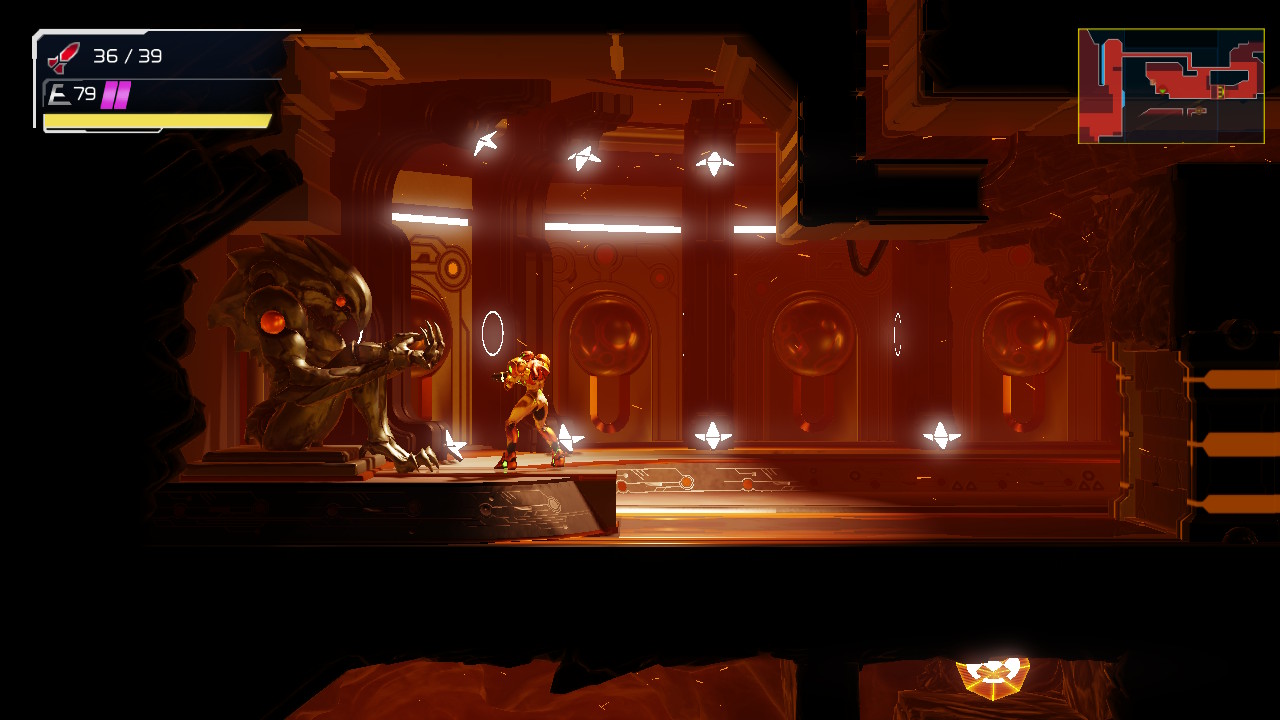
They should spend some time playing Mark of the Ninja if this is a direction they want to continue to go in future 2D Metroid games. There is a way to have tense stealth in an action game like Metroid. The first thing you need to do is make sure the player has the tools they need to succeed using patience and skill, as opposed to the trial and error gameplay that Dread utilizes. Great stealth in video games makes the player feel like a ghost, not a helpless victim.
I’m not opposed to having stealth in Metroid, but this isn’t how you do it. It’s not awful, and I found myself improving the more I played, but given how much Nintendo touted the E.M.M.I. and those sequences in the game, they’re never the high points of Dread – and it’s a game called ‘Metroid Dread‘, which is a reference to how tense and scary the E.M.M.I. sequences are supposed to be, and the very first thing Nintendo showed off in the game when they announced it at E3. They’re definitely tense, but also frustrating, and they break the pace of the game.
Thankfully, Nintendo and Mercury Steam seemed to be aware of the difficulty of the E.M.M.I sequences, because whenever you die, you restart the sequence from the beginning, as opposed to starting at your last save station. So it’s not a big penalty if you get caught by an E.M.M.I., and I was usually able to make it through after a few tries (sometimes more than a few), but I still found it frustrating getting caught no matter how careful I was.
Visually, Dread is a stunning game to look at. In fact, if it wasn’t for Hollow Knight, I would say that it’s the prettiest 2D game I’ve ever played. The background animations that Mercury Steam toyed with in Samus Returns are in full bloom in Dread. There’s a lot going on visually. I noticed some framerate hitches here and there, but it’s one of the best-looking games on the Switch.
The sound design is strong as well. Musically, it’s a step up from Samus Returns, but doesn’t reach the divine levels of the Metroid Prime soundtracks – admittedly a high bar. The music during the beginning portions of the game sound more like background music, but as you progress, you get some standout tracks. I wasn’t blown away by the overall score, but thought everything ranged from average to good.

Dread’s story is the last chapter of the five-part saga that started with the original Metroid game on the NES. It probably shouldn’t have taken Nintendo 35 years to tell this story, but it’s gripping right up to the end, and left this childhood Metroid fan feeling satisfied. The story goes all the way back to the very first game in the series, and does a pretty good job of recapping what happened in previous games. If you aren’t familiar with those stories, it might not be as meaningful, but you can play almost every game in the 2D Metroid saga on either 3DS or Switch for anyone interested in getting caught up.
VERDICT
Given that there’s much more to choose from in the genre now than there was in the early 2000s, I came into Metroid Dread cautiously optimistic as to whether Nintendo still had the development chops to deliver a good 2D Metroid game after so long. However, it feels like Nintendo and Mercury Steam really rolled up their sleeves with this game. Metroid Dread feels like it’s Nintendo flexing their muscle a little and showing everyone that, even after abandoning it for so long, the old master still knows how to make a good 2D action-platformer, a genre they pretty much invented.
It was very satisfying to finally play a new Metroid game again. We only had to wait three years between Samus Returns and Dread. Hopefully, this is an omen of good things to come, and Nintendo has faith in the Metroid IP again. We know Metroid Prime 4 is well into development and is on its way, but in the meantime, Metroid Dread is a strong return to the series’ roots. Recommended for fans of the series and fans of 2D action-platformers.
 The Gamer's Standard