
Fire Emblem Awakening was a rebirth for the Fire Emblem series that was long overdue. While other Nintendo IPs like Super Mario and The Legend of Zelda had gotten reinventions years before, Fire Emblem was growing stale. Its notorious difficulty didn’t do it any favors in winning over new fans, and the result was declining sales with each new installment. Fire Emblem Awakening for Nintendo 3DS was supposed to be the last game in the series, the swan song for an IP that Nintendo thought had run its course. With nothing to lose, developer Intelligent Systems threw everything they had into Awakening, believing it was the end. The result was the best-selling and most critically acclaimed game in the series’ history.
As a series, Fire Emblem’s gameplay has always had a reputation for demanding razor-sharp tactics. That being said, the games could be exhausting to play because of how much they ask from the player. If your tactics are less than perfect, the penalty was severe:
Perma-death.
Any character in your party that died was gone forever. They’re dead. You couldn’t resurrect them or give them a Phoenix Down to bring them back. Ever. Your only option was to go back to the beginning of the battle and start over to save your character, which could result in a lot of lost time and gameplay. As every Fire Emblem player knows, there’s nothing worse than getting to the very end of a battle and having one of your characters taken out. Not necessarily because the levels are hard, but because they take time to recomplete.
Fire Emblem’s finality when a character died was one of its defining characteristics that set it apart from other RPGs and strategy games, but also the primary reason for its limited appeal. So Intelligent Systems took the necessary steps to do what needed to be done: they made perma-death optional for Fire Emblem Awakening. They had no hope that the series was going to continue after Awakening, but they wanted to go out with a bang, and in doing so, gave Fire Emblem a new path and new life.

Fire Emblem has a more serious tone to it than most other S-RPGs, but not necessarily because of its story, but because of its gameplay. The perma-death mechanic makes the consequences of your decisions and actions matter that much more. It matters every time one of your characters dodges an attack in a skirmish. It matters every time one of your characters scores a critical hit and takes out an enemy. Everything has more weight to it, and it matters that much more when one of your characters levels-up or uses a Master Seal to evolve to a new class. It feels good giving one of your characters a promotion you’ve been leveling up and training them for. You feel like a proud teacher watching one of your students graduate.
Fire Emblem can be a spiteful game. In the course of a battle, the enemy has no qualms about sacrificing several of its fighters in order to kill one of yours. Because of the perma-death mechanic, the game seems to know that players will likely start the battle over if even one character dies. The deck is stacked against the player and the enemy exploits it to the fullest advantage. It can be infuriating, as many times it seems the enemy is more focused more on taking out whoever it can before it inevitably loses, than it is winning the battle. It’s like playing a game of chess where you have to win without losing one piece. Your best bet is to let the battle come to you and not to let yourself get spread out, because as soon as the enemy is able to isolate one of your characters, it will do whatever it takes to kill them, even at the expense of the overall battle. It could be viewed as cheap, which is a legitimate criticism, but it also makes you refine your tactics to a fine edge if you don’t want to lose anyone.
Every mission feels like a modular puzzle. You get to choose what characters you want to try and complete the puzzle with, and then it’s up to you to execute the mechanics in a way in which you hopefully won’t lose anyone. If you do, you have to make the painful decision whether to start the level over, or leave the character who died behind forever.
There are four different systems operating simultaneously to make your characters stronger in Fire Emblem Awakening:
- Experience: When a character gets one hundred experience points from battling, they gain a level. Most of your characters have a level-cap of Level 20, with a few who can go up to Level 30. If you want to continue to level them up after Level 20, you have to use a Master Seal on them to graduate them to a stronger class. Once a Master Seal is used, your character starts over from Level One in their new class and can be leveled-up all the way to Level 20 again. If you hit Level 20 on your second class, a Second Seal can be used to again change to another class, which you can also take up to Level 20. You can keep multiclassing as many times as you want with most characters. However, you don’t have to max-level them up to Level 20 before changing classes. You can graduate them to a new class using a seal once they hit Level 10.
- Weapon Level: Each character class can use certain types of weapons. Your character’s ability to use the weapon-type for their class gets stronger the more they use it. A letter-grading scale is used, with the lowest level being E and the highest being A. The better the weapon-level your character has, the better types of weapons they can use. For example, a character with a D-grade for swords can’t use a Silver Sword (which requires at least a B-grade), but they can use Bronze and Iron Swords. They can use stronger weapons as their weapon-level increases.
- Skills: Skills are special abilities that unlock as your character levels-up. Most of these abilities are passive, but some can be used in battle. These abilities aren’t necessarily unique, as some of your characters will share the same skills, but they significantly enhance your character’s prowess.
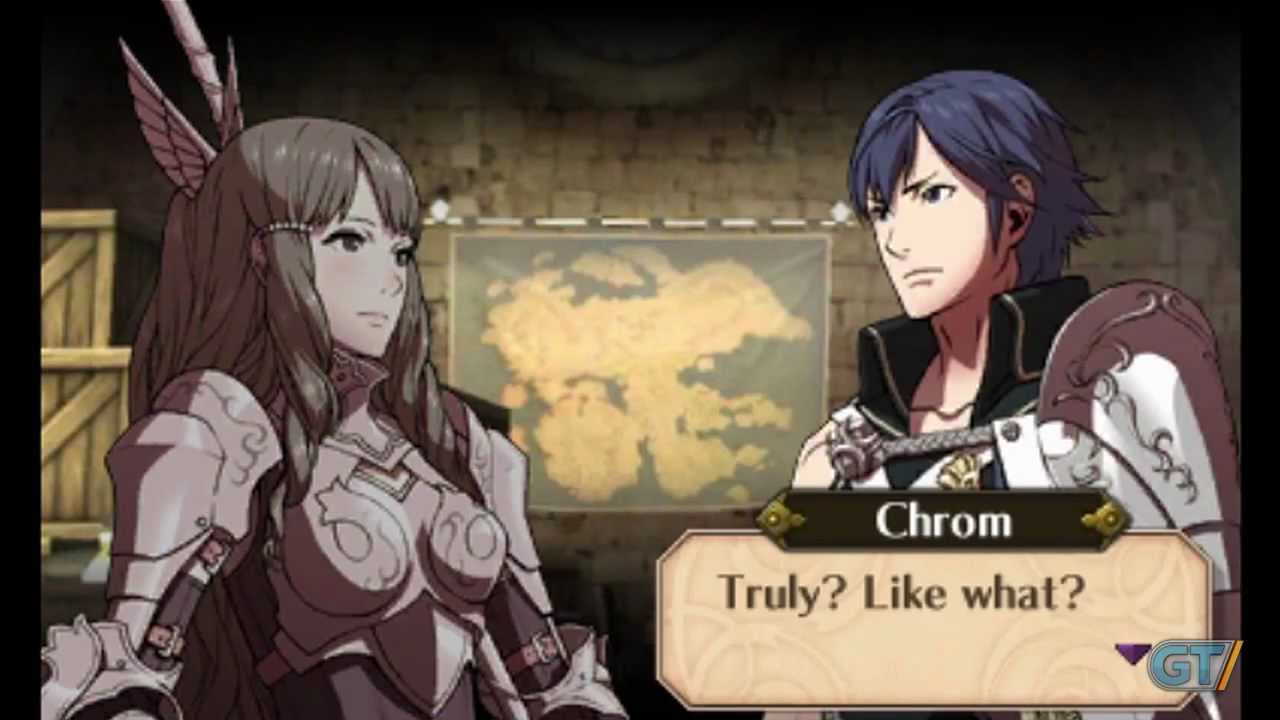
- Support: Every time two of your characters fight alongside each other in a battle, their bond will grow. As the bond grows between them, their abilities in battle will grow stronger through stat boosts. You can track how strong each of your character’s bonds are with each other in the Support section of your main menu. When the support level between two of your characters gains a level, you’ll be treated to some dialogue between them that fleshes out their relationship and the overall story. The support levels start at C-rank and go up to S-rank. If a male and female character reaches S-rank in their support for each other, they will get married. Once two characters marry, a Paralogue mission opens up that introduces a new character who is the new couple’s child, and they will pass one of their passive skills on to their progeny.
The support system in Awakening might be the most significant system in the game outside of making perma-death optional because it affects both story and gameplay. Having two characters fighting together who have an A-rank relationship is much different than two characters who have no relationship. Plus, the dialog interludes you get between missions, even though they’re usually light-hearted and funny, really help flesh out the story and get you invested in the characters.
With all the systems that are at work, and how they interact with each other, it really gives the player incentive to want to improve as many characters in their party as they can and help them reach their potential. Given how many playable characters there are, this means you can spend a lot of time grinding. However, it didn’t get tedious and repetitive because I developed a liking for the characters and wanted to see them all as strong as possible, working as a team, and at their best. It’s been many years since I’ve had this much motivation and fun leveling-up my party in a turn-based RPG.
Given the different systems that are simultaneously working, it gives the player lots of different ways they can raise their party and their individual characters. When you take into consideration that Awakening also offers multiple difficulty levels, it adds a ton of replay value that you don’t typically see in standard J-RPGs. You can put hundreds of hours into Awakening with multiple playthroughs and get a unique experience each time.
However, a significant portion of the Paralogue side missions aren’t available until you start marrying your characters off, and there’s no way to know which character relationships open what Paralogue without a guide. Otherwise, it’s unlikely you’ll be able to unlock all the side content on your own. It’s not straightforward at all, and Intelligent Systems could’ve done a much better job communicating to the player what they need to do to be able to play the whole game, and not just the main story.
Also, there is a significant amount of DLC content, enough to double the size of the game. Unfortunately, if you bought all of it (which you can’t do anymore thanks to Nintendo closing the 3DS eShop), it would cost more than the game itself. Also, there are several Paralogue missions that are only accessible through Nintendo’s 3DS Spotpass feature, which has also been discontinued.
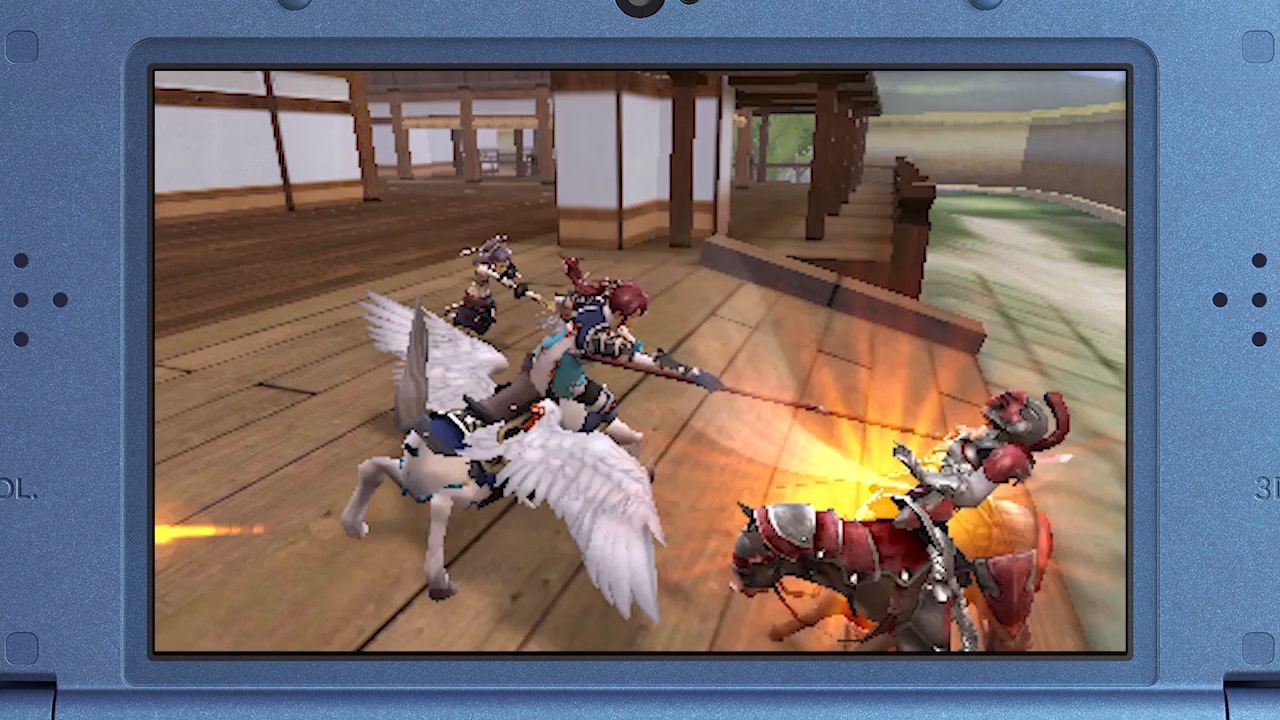
Awakening’s visuals look great for a 3DS game. You spend most of your time looking at either the overworld map or one of the battle maps, but the dialog portraits look great and add a lot to the experience. If you have the 3DS’s 3D depth slider all the way up during battle, it makes the levels look almost like pop-up picture book scenes. The game runs at mostly 60 FPS, but having the 3D depth slider on can significantly affect the framerate during the battle animations. Everything runs much smoother if you have the 3D depth slider off.
Awakening’s music is some of the best in the series. The voice-acting in the game is relegated to exclamations during dialog sequences, so reading is necessary to digest the story.
Fire Emblem Awakening is a really good game. Given how often I hear video game journalists complaining about games being too long, Awakening isn’t going to win them over. It’s a content-rich game with tons of replay value. If you’re new to the series, it’s going to take time to learn the systems and mechanics and how they interact with each other. However, if you like deep gameplay with endearing characters and a good story, Awakening is the best in its genre on the 3DS. In fact, it might be the best game in the whole 3DS library, or close to it, and is one of the best entries in the whole Fire Emblem series to date. The marriage and relationship system significantly enhances the story and characters, while the scalable difficulty makes the gameplay much more accessible and engrossing than past entries in the series. Nintendo needs to release a Switch version of Awakening with all the DLC they paywalled in it so the complete game is playable. Awakening can’t be bought digitally anymore, but at the time of this writing, you can still get a physical copy on the second-hand market at a reasonable price.
If you’re new to the Fire Emblem series, Awakening is superb and a great place to start. If you like strategy RPGs, it’s one of the best games in the genre. Highly recommended.
 The Gamer's Standard