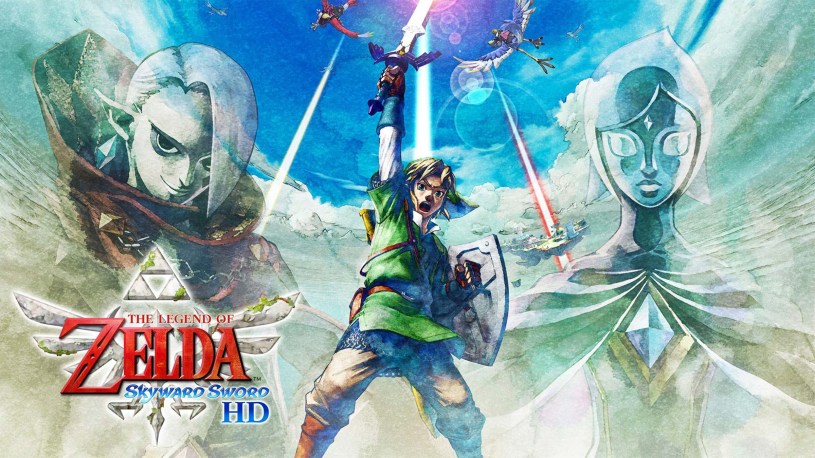
The Legend of Zelda: Skyward Sword had a lot riding on it when it first released on the Wii in 2011. For all of the Wii’s commercial success as a popular console bringing video games to untapped non-gamer markets, it created a big divide in Nintendo’s fanbase, and in the gaming community in general. There were many gamers who were furious at Nintendo for creating a whole video game console around motion-control, which they saw as a gimmick.
With the release of Wii Motion Plus, which was a peripheral to the Wii-mote that enhanced the controller’s motion-control capabilities, Nintendo promised that Zelda: Skyward Sword was going to be the game that validated their faith in motion-controls. Nintendo promised laser-like precision and interactivity that we had not seen before in any video game thanks to the Wii-mote and Wii Motion Plus. Controlling Link in sword combat would be like you were really fighting yourself, with Link mimicking every move you made with the Wii-mote. Pulling back an arrow with Link’s bow would feel like you were doing it yourself.
Many disagreed with Nintendo’s bold claims, as Skyward Sword ended up being a divisive game, and sold less than any 3D Zelda before it, on a system with a user base of over 100 million. Gamers were sending a message loud and clear to Nintendo. In fact, Skyward Sword’s poor reception was likely the catalyst for Nintendo changing direction with the Zelda series completely, and creating something as expansive and wonderful as Zelda: Breath of the Wild six years later. While Breath of the Wild had some light motion-controls, Nintendo has essentially abandoned the idea of it being the future of the Zelda series, at least, for now. What went wrong?
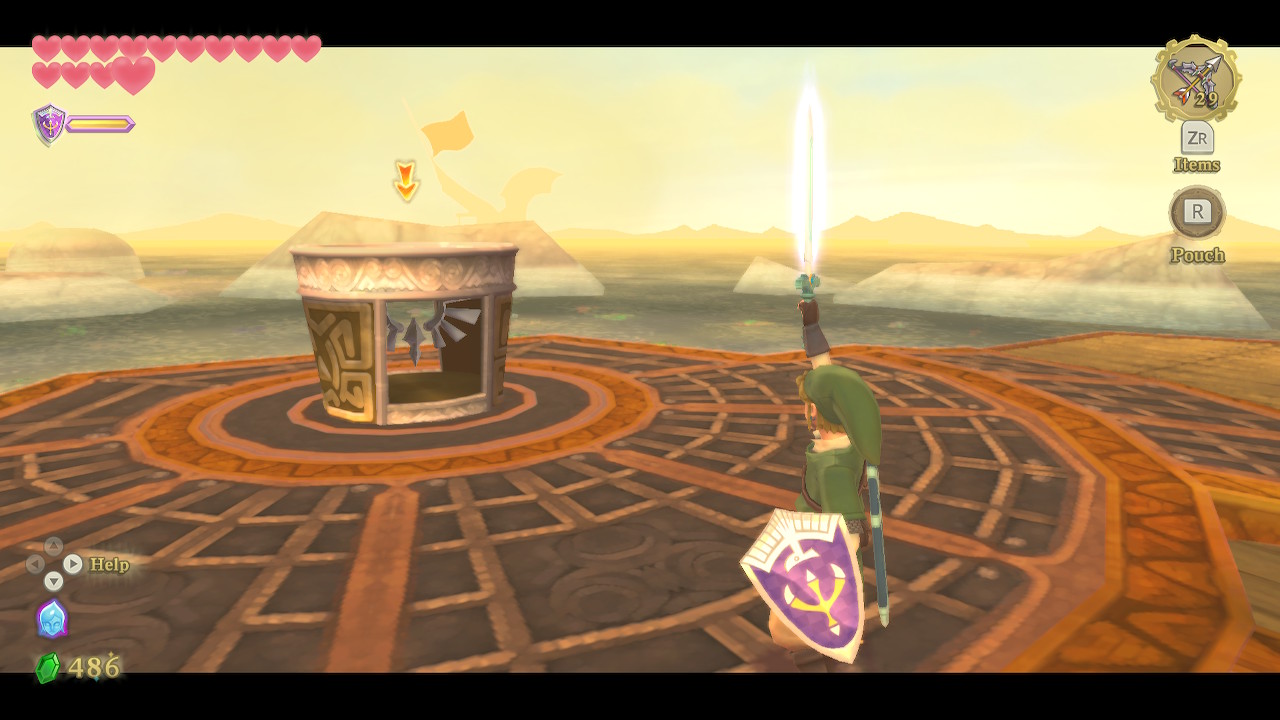
Let’s start with the good first because Skyward Sword has a lot to offer as a game. Especially the HD Switch version, which features more traditional button-and-stick control options and a 60 FPS framerate. The original Wii version had no control options other than motion-controls and ran at 30 FPS. In fact, Skyward Sword HD is currently the only 3D Zelda game that runs at 60 FPS on Switch or any other Nintendo platform – a consistent 60 FPS with no chugging or stuttering during my 145 hours and two playthroughs of the game. This should be the new standard for the Zelda series as Nintendo moves into the Switch 2 era. A smooth framerate makes for a much, much better gameplay experience.
Visually, the game has a water-color look to it. It has character models that are structured more like what’s in Twilight Princess, but with an aesthetic that is closer to Wind Waker. It’s a melding of the two. Some say it has a washed-out look, but the HD version is cleaner and the colors pop off the screen a little more, especially with the added HD resolution and smoother framerate. It definitely has a unique flavor to it. You know immediately what game it is when you see it. You won’t mistake it for any other game after you’ve played it.
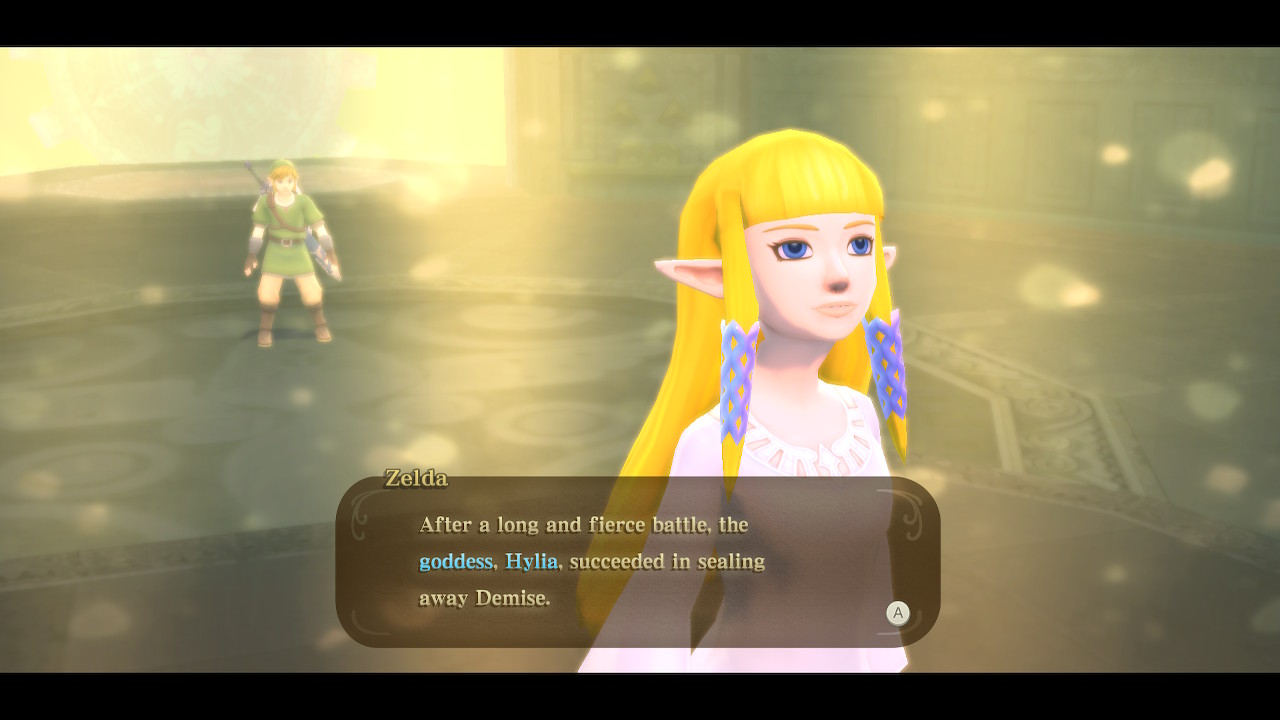
Without a doubt, Skyward Sword has one of the best stories in any Zelda game to date (including Breath of the Wild). It’s a more linear experience than other entries in the series, but a big reason for that is that it’s the most story-driven. Nintendo has a specific story they’re telling in Skyward Sword, it being the first game in the Zelda timeline, and the first chapter in the series. It’s essentially the Legend of Zelda origin story. In fact, after playing all the way through Skyward Sword, I don’t ever want to hear any nonsense from Nintendo or their fans about them not valuing story in their games, or that they’re not capable of putting a good story in their games.
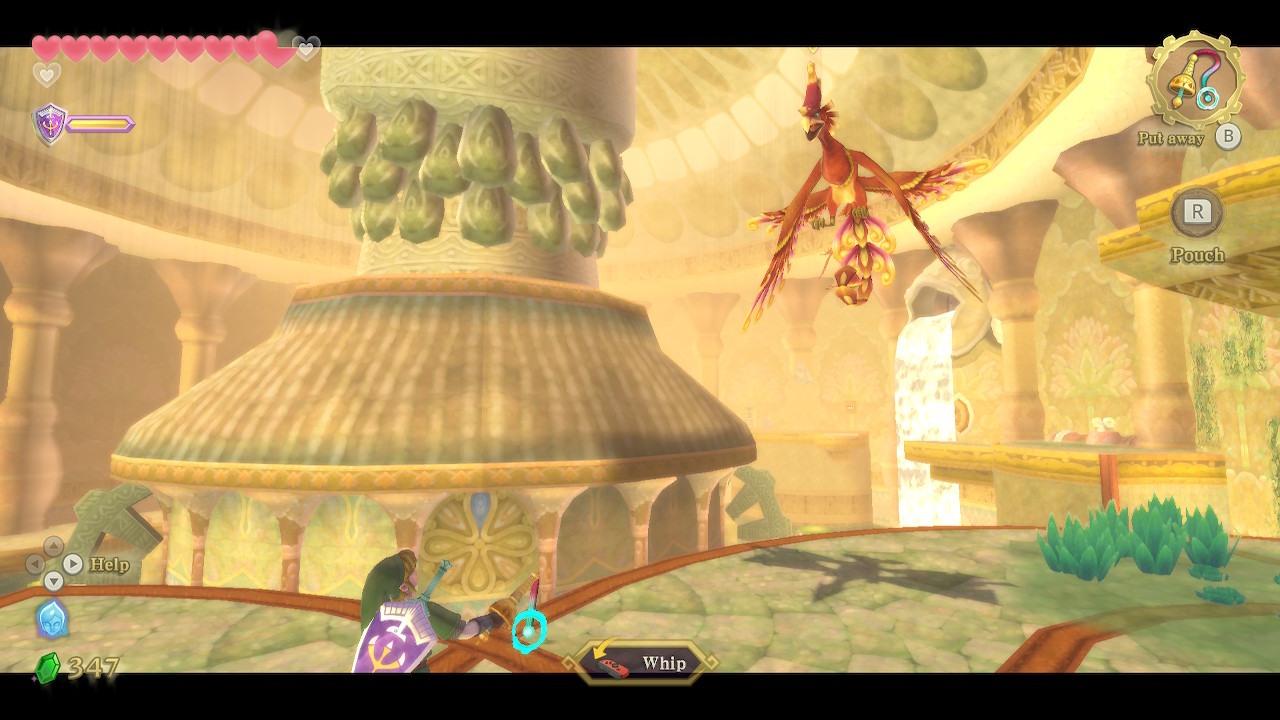
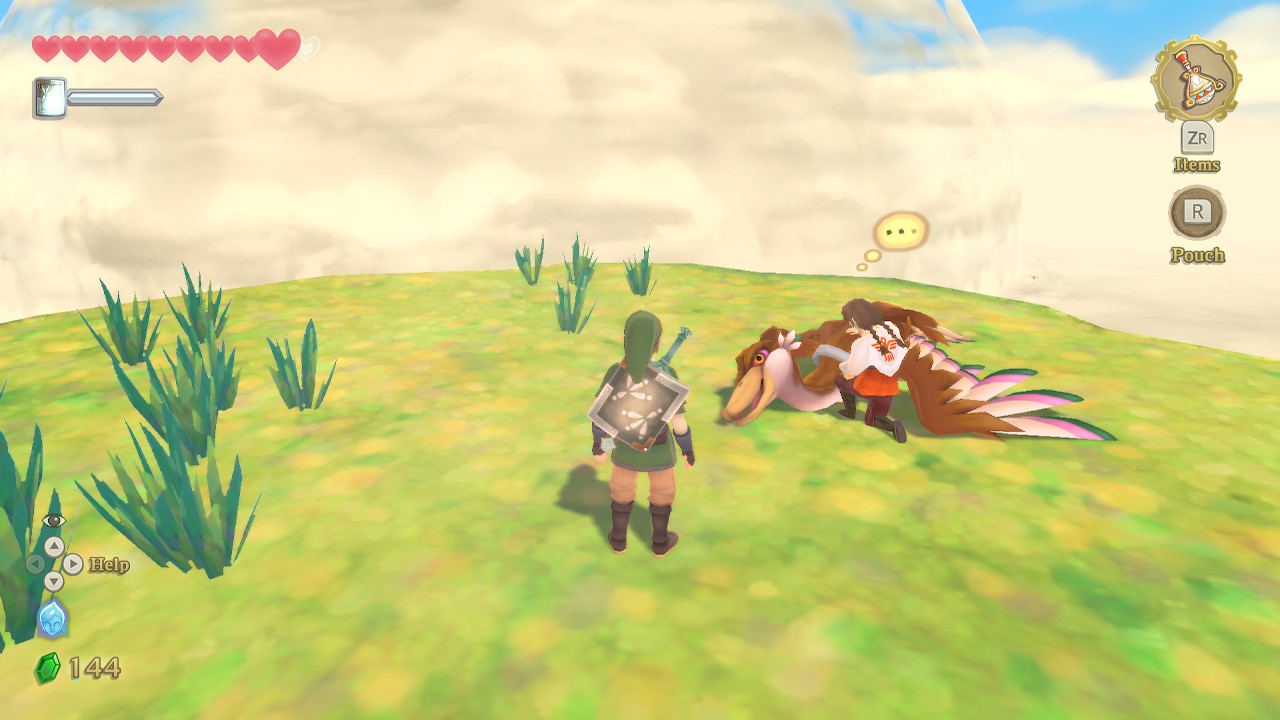
However, with more story comes a lot of talking and dialogue. The game takes a long time to get going, longer than it should, plus you’re trying to adjust to the motion-controls. On top of that, the game is constantly holding your hand. It’s like the writers assumed your only video game experience was waggle Wii Sports casual-fare, and you had never played a Zelda game before. Fi (Link’s companion) is constantly telling Link where to go and what he should be doing next. If he gets too low on life, her icon on the screen will start flashing, only for her to tell Link he’s about to die and he should find some hearts to refill his life. Thanks Fi. The constant beeping I was hearing in my headphones from my low hearts wasn’t enough. I really needed you to point that out to me. I’m glad you’re here to tell us these things. She’s like that the entire game, sometimes repeating instructions that the game had just given you through text or an NPC. From what I’ve read, she was even worse in the Wii version. They toned her down for the HD Switch version.
Also, after spending hundreds of hours in Breath of the Wild and Tears of the Kingdom, games in which the soundtrack was minimal, it was nice playing a Zelda game in which the music was highlighted and more prominent. The different tracks help define what region of the world Link is in and add a lot of atmosphere. They’re thematic and memorable. Overall, Skyward Sword has a strong sound design, from the music, to even the crisp chimes in the main menu before you start playing.
Skyward Sword is a much more linear experience from the Zelda games before it. Exploration is there, but it’s curtailed. Not that Twilight Princess had excessive amounts of exploration either, but it’s a fair criticism of Skyward Sword. Perhaps Nintendo wanted more of a guided experience because of the novelty of this being the first Zelda game with extensive motion-controls so players, especially their new Wii Sports audience, wouldn’t get in over their head, get frustrated, and stop playing. The level design is more linear, but it’s also more dense. Nintendo packed a lot of enemies, secrets, and nooks in what’s there, so the lack of exploration wasn’t bothersome. However, you could say that Skyward Sword is the polar opposite of Breath of the Wild in its overall design. Breath of the Wild is massive and expansive while Skyward Sword is compact and dense, but there are still hints of Breath of the Wild peppered throughout the game.
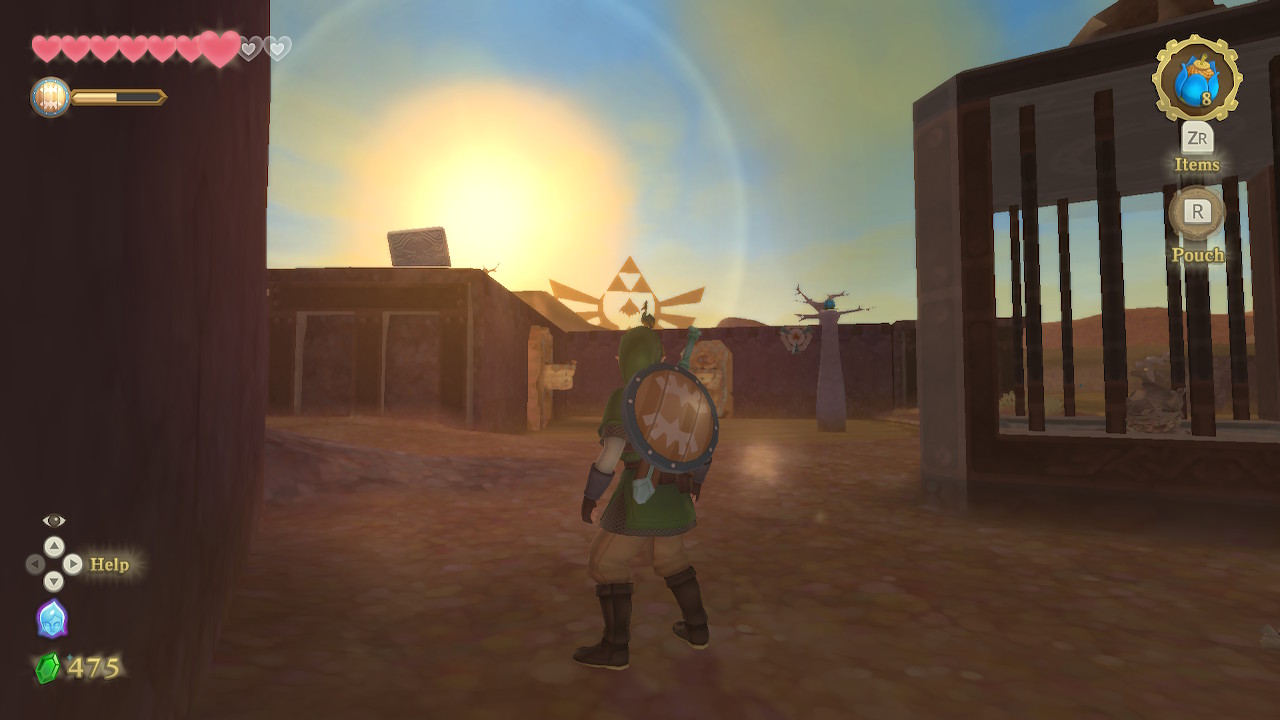
However, many times the dungeon puzzles don’t make sense in the context of the story. For example, Link has to time-travel in one of the dungeons to solve certain puzzles. When he interacts with his environment in the past, it affects that same environment when he travels to the future – but for reasons unknown, the vice-versa is also true: when Link interacts with his environment in the future, for some reason it affects things in the past, which obviously shouldn’t happen since time travels only one way, past to present to future. As a result, the gameplay and the story don’t always mesh and it feels sloppy at times.
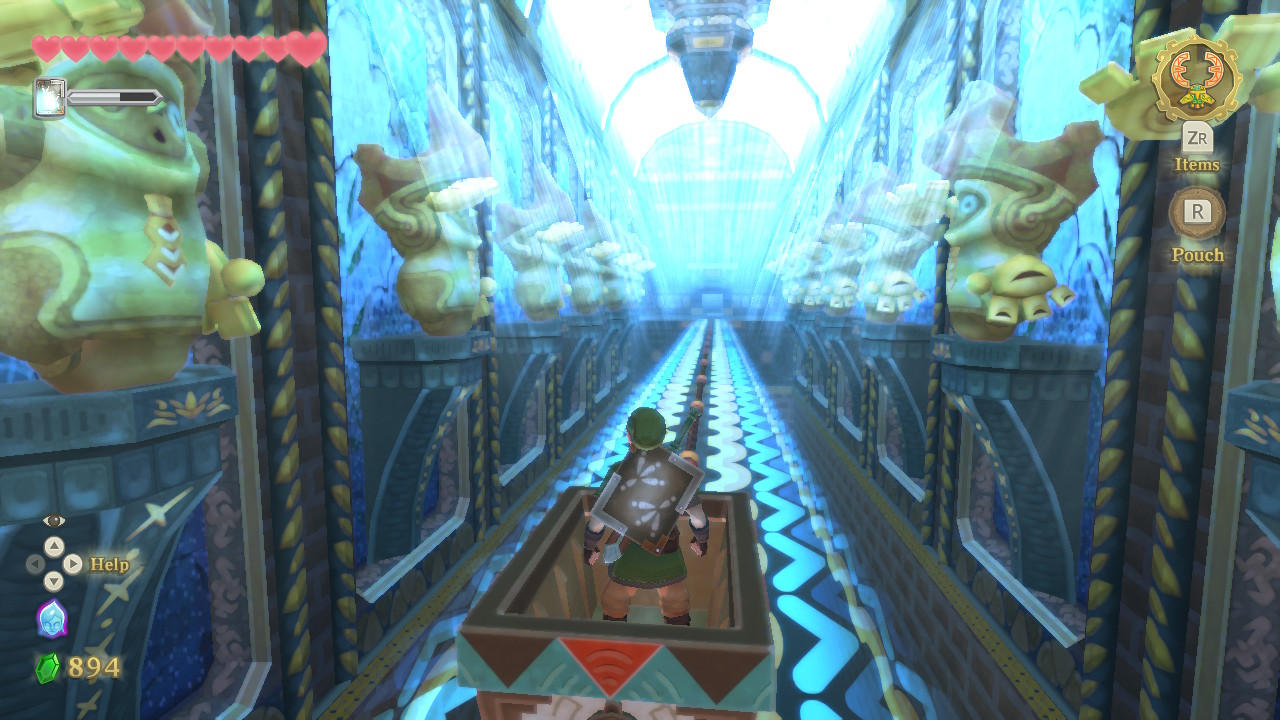
That being said, overall, the dungeons collectively might be the best set of dungeons in a Zelda game since Majora’s Mask.
Too bad the same can’t be said of the motion-controls Nintendo force-fed into Skyward Sword because it absolutely handicaps the game.
Here we go. Time some for tough love, Nintendo!
As I already stated in the intro, Skyward Sword isn’t just another Zelda game. It was Nintendo’s flagship motion-control game (not counting Wii Sports). It’s important to keep that in mind as you’re playing, especially if you’re a Zelda veteran, as many things that you take for granted in other Zelda games, or even in other third-person action games, require relearning because of the motion-controls. You have to be willing to go through the learning process the game requires to enjoy it. Unfortunately, it’s like learning how to play a video game from scratch in a lot of ways, or learning how to play a video game left-handed. For experienced gamers, having to relearn basic mechanics can make you want to pull your hair out, and is the primary reason Skyward Sword has been such a divisive game in the series.
While Nintendo wanted Skyward Sword to be the game that validated their case for motion-controls being the future of gaming, to be fair to them, they had reason to think it would be. They released Metroid Prime 3: Corruption in 2007 featuring some fantastic motion-control, using the IR pointer to move Samus about, and the motion-gesture combat and interaction generally worked pretty well. Not to mention the wild success games like Wii Sports and Wii Play enjoyed, selling tens of millions of copies. Mario Kart Wii was a lot of fun with motion-driving using the Wii Wheel as well. Skyward Sword didn’t fare the same and plays like a game in which Nintendo was doing their best at times to fit a square peg into a round hole.
The sword combat doesn’t live up to the level of precision and immersion Nintendo promised when they released Wii Motion Plus for the Wii. It’s more precise than the days of ‘waggle’ in the Wii’s early days, but the laser-like precision Nintendo promised isn’t there. Side strokes are registered as diagonal strokes way too often (and vice-versa), and doing sword thrusts is almost worthless in combat, as Link will usually just wildly swing his sword when you try it. Doing a vertical stroke is almost just as pointless since anything but a perfect vertical motion with your controller will result in a diagonal stroke, or even a horizontal stroke. That leaves at your disposal horizontal strokes, which is what you’ll likely be using most of the time. Plus, the counter system that made Wind Waker and Twilight Princess’s sword combat so fun is completely gone in Skyward Sword. In its place we have motion-controls, which only changed the combat without improving it.
The gist of the motion-control sword combat is striking the enemy from the correct angle. For example, if the enemy is holding their weapon on the right side of their body, you have to strike from the left. Or if they’re holding their weapon horizontally above their head, you have to strike horizontally to their body. If Link doesn’t strike from the correct angle, his sword will bounce off the enemy’s weapon like a real sword fight. It’s simple enough, and even feels clever at times.
But later in the game, you run across enemies that use electrified melee weapons of some sort. So if Link doesn’t strike from the correct angle, instead of his sword just clanging and bouncing off, he’ll get electrocuted and take damage. Link standing there getting electrocuted for five seconds every time he doesn’t strike at the enemy from just the correct angle gets irritating quickly and kills the flow of the combat.
The main problem with the sword combat is that it tries really hard to be strategic in what kind of sword slashes Link performs: vertical slashes, horizontal slashes, diagonal slashes, etc., but as the game progresses and Link’s sword becomes more powerful (and as a result, it takes less strikes to vanquish an enemy) the strategy becomes less meaningful. At that point, outside of boss fights, Link can take out most enemies in one or two strikes, and as a result, most of the sword combat devolves into the ‘waggle’ fighting where you’re just swinging side to side without having to think about it.
Nintendo seems to have this preoccupation with making the combat in Zelda games more “strategic” recently. That was their whole justification for having breaking weapons in Breath of the Wild, and they’ve done that at the expense of how dynamic Link’s sword skills were starting to become in Wind Waker and Twilight Princess. Yes, the combat is somewhat more strategic than it was, but Nintendo needs to ask themselves, is it more fun?
There’s this constant undercurrent of clunkiness and lack of fluidity in the motion-controls. Nintendo obviously spent time making the game look better visually for the Switch. It would’ve been nice if they had spent more time ironing out the motion-controls as well. Too much was sacrificed to make the motion-controls a reality. It’s not elegant in its execution and Nintendo did nothing in the ten years between Skyward Sword’s Wii release and its HD Switch port to improve them, which is unfortunate because they could really use some tweaking. Nintendo providing a more traditional button-and-stick option that works much better in the Switch HD version is almost a tacit admission by Nintendo that they missed the mark the first time around on Wii.
There’s nothing the game asks from you that isn’t possible, but doing simple actions takes repeated attempts way too often. For example, trying to get Link to do a proper sword thrust at an enemy when you need him to do it. Or trying to pull off a skyward strike at the right moment. Sure, you can do it, but too often it takes repeated attempts. Again, that’s not saying the actions are impossible, but it seriously hinders the flow of the game, having to struggle with actions that would be simple and second-nature in a traditional Zelda game using buttons.
Also, the elegance and ease of switching between Link’s arsenal of weapons and sub-weapons that Nintendo has used since Zelda: Ocarina of Time on the Nintendo 64 is gone. Being able to go into your menu and pick what sub-weapons you want to use, and then assigning them to the face-buttons on the controller has been replaced by an item-wheel you can bring up on screen by holding down the ZR-button. Then you have to use the game’s clunky pointer-controls to choose what sub-weapon you want in real-time, instead of being able to pause the game and choose. Plus, you can only assign one sub-weapon at a time for use, as opposed to the three sub-weapons you could assign to face-buttons in the 3D Zelda games before it.
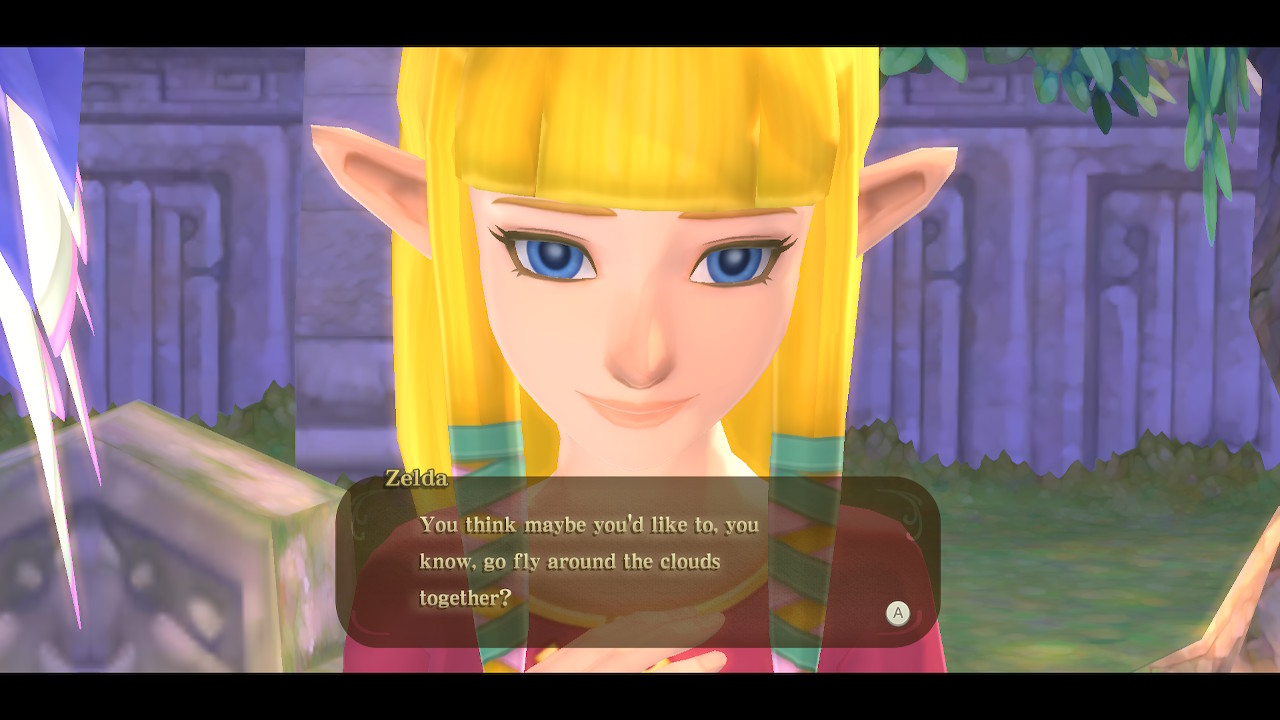
A recurring thought I had while playing Skyward Sword through the first time was ‘this would be so much easier with buttons’. Even the button-and-stick controls weren’t able to erase the tedium and frustration completely. For example, there are still some parts of the gameplay that are more difficult than they should be if you don’t flick your analog stick just right for a directional sword swipe from Link, but it greatly lessened it. In fact, the button-and-stick controls are a night and day difference.
Maybe the biggest advantage using button-and-stick controls was being able to use Link’s sword-thrust consistently. When you’re using motion-controls, trying to do a sword-thrust involves actually thrusting towards the television with your Wii-mote. It didn’t work consistently at all. Sometimes Link would do a thrust, but sometimes the game would interpret your motion as a standard sword swipe. That wasn’t a problem using button-and-stick controls. Every single time I pressed the left analog stick in when Link had his sword drawn, he would do a sword-thrust. Every. Single. Time. It was never an issue, and being able to rely on that move consistently completely changed how I fought. I used the sword-thrust a lot, taking out enemies big and small. It always worked and it made sword combat much more fun and engaging.
The difference between the motion-controls and the button-and-stick controls are massive. The button-and-stick controls require a bit of a learning curve, but once you get used to them, they work 100% of the time without fail.
Are the motion-controls playable? Yes. Are the motion-controls good? No, and I don’t believe a good defense can be made for Skyward Sword’s lack of precision and immersion in its controls. Zelda: Skyward Sword is a great game with controls that are temperamental at best, and objectively bad at worst, and I can’t imagine playing it with no options for button-and-stick controls. If I had bought it on Wii, I probably would’ve asked for a refund. The best I can say about the motion-controls is that they’re usable with a significant amount of patience – and that’s being very generous. What is unfortunate is that it could turn a lot of potential fans from what is otherwise a strong Zelda game.
Skyward Sword isn’t a bad game by any stretch, it’s just not Nintendo at their best. The game design and story are true to what you would expect from a 3D Zelda game, but the motion-controls are too inconsistent, clunky, and at times broken to recommend. The button-and-stick controls in the HD version are much better, but still aren’t as snappy as one would like at times, and can still be frustrating.
There’s a lot wrong with Skyward Sword, but there’s enough that’s right that it mostly overshadows its flaws. I can’t recommend this game on Wii with no options for more traditional controls, but on the Switch, it’s a solid game with some thoughtful and creative gameplay ideas, a great story, and a flawless 60 FPS framerate with sharp, cleaned-up visuals. Try the motion-controls if you like, but the button-and-stick controls make for a much, much better experience. They’re not perfect, but a massive improvement over the alternative. Skyward Sword comes with some caveats, but is worth your time and money with some patience.
 The Gamer's Standard