
I don’t know Geoff Keighley. I’ve never met Geoff Keighley. I don’t know anything about him other than what I’ve heard from him through The Game Awards, Summer Game Fest, and a few interviews on video game podcasts I listen to. He seems sincere enough in his love for video games and the video game industry. However, his years-long insistence, going back to the Spike Video Game Awards of the early 2000s, if not longer, that the video game industry needs an awards show like the film industry, the music industry, and the TV industry, makes me not quite trust him. Mainly because he’s never given a compelling, convincing reason why. There’s always a part of me that can’t shake the feeling that I’m listening to a salesman or a politician tell me why I should vote for them or buy their product.
The first question that then pops into my mind is, what does Geoff actually do? He courts advertisers and publishers for The Game Awards. We know he’s chummy with Hideo Kojima. And? Who pays him? He puts on two events a year, The Game Awards in December and Summer Game Fest in July. What does he do the rest of the year? Again, it reminds me of a politician getting paid to do very little or almost nothing at all.
Then there’s the whole idea of a video game awards show that Geoff champions at every opportunity, always telling us how important it is. Yet when the The Game Awards come around, it seems less and less about the actual awards and more and more about the new game announcements and trailers that are premiered at the show. The awards themselves are almost an afterthought. So I ask myself, why are we doing this? Who is benefiting from this…other than Geoff Keighley? Who really cares about these awards…other than Geoff Keighley?
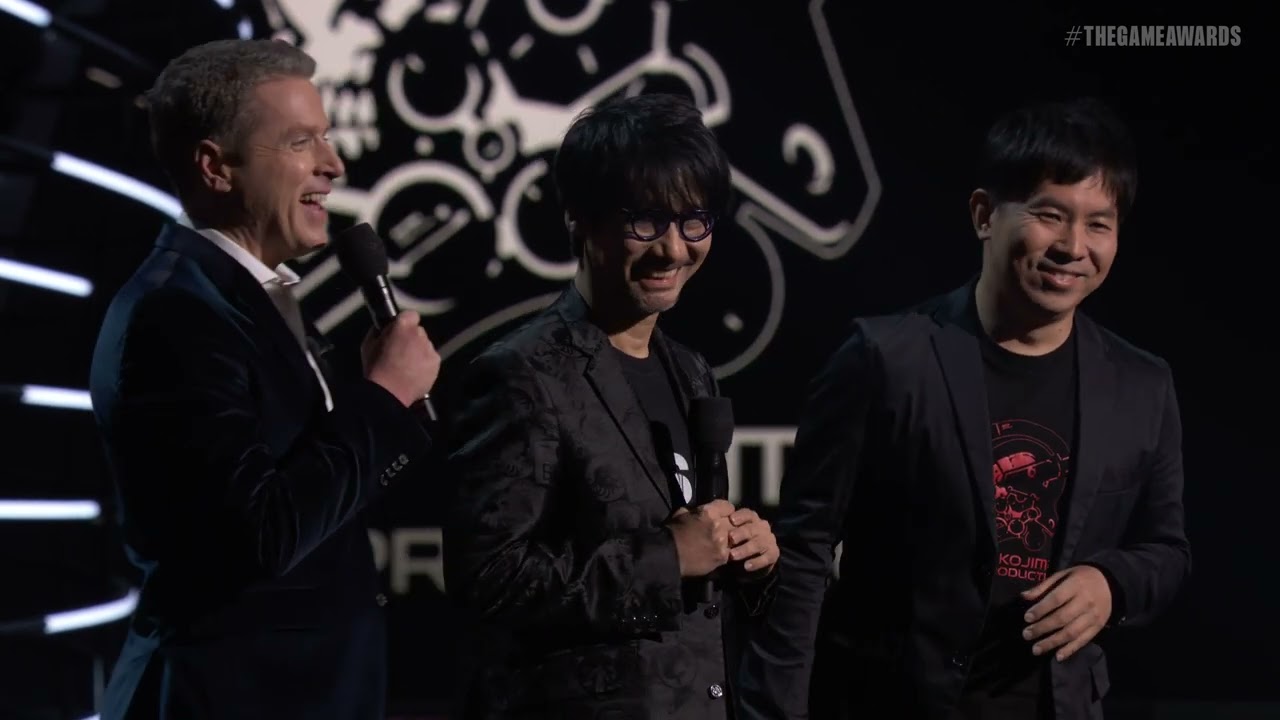
He loves to tout the viewership numbers of The Game Awards after every show, but the first question that always pops into my mind is, what would those viewership numbers look like if all the announcements and trailers for new games were stripped away? Could The Game Awards survive just on its awards alone? No, of course not. I think everyone knows that. Take all those trailers and put them into one Nintendo Direct-like presentation and very few would miss the actual awards at all. There have been video game awards in some form for decades, but people who actually play video games – actual gamers – usually don’t give them a second thought.
Geoff is always insisting the game industry needs an annual singular event to rally around to celebrate video games. Well, we had that for many years. It was called E3, which Geoff stopped supporting when he started Summer Game Fest, an event in which he is front and center as the host every year.
Gamers need to ask themselves if they really want the video game industry mimicking the Hollywood film, TV, and music industries, which as we’re finding out thanks to the arrests of Jeffrey Epstein and P. Diddy, probably isn’t a pattern we want video games emulating. One of its unique aspects is how decentralized it is. There isn’t a geographical center of power for gaming like there is in Hollywood or the music industry. Video games are global and gamers, having such a strong sense of identity, they immediately identify with each other through their love of games and the internet, no matter their ethnicity or where they live. Gamers tend to be an outspoken bunch and usually have their own personal Game of the Year picks in any given year, and it tends to be good conversation for podcasts, message boards, and social media amongst them. That being said, they should consider if they want an awards show whose awards are mostly dictated by an increasingly corrupt video game journalistic media speaking for them and the industry, and whether we really need, or want, an ‘Oscars for video games’.
Another consideration is how politicized video games are becoming and the role video game awards shows are playing in their politicization. The Harry Potter game, Hogwarts Legacy, sold an impressive 24 million units in 2023, yet somehow didn’t earn a single nomination at The Game Awards or The Golden Joystick Awards. Why? Because of Harry Potter author J.K. Rowling’s outspoken statements against the trans community, that’s why. It had nothing to do with the quality of the game, which by any metric, was one of the best games of 2023, not to mention one of the best-selling. J.K. Rowling had nothing to do with the development of Hogwarts Legacy, but the outrage against the game for weeks and months before it released was the queer community’s attempt to silence and cancel someone who is too popular, and has too much money at this point, to cancel.

Granted, 2023 was a phenomenal year for video games. A lot of very good titles came out last year and it could be argued that the competition was too great for even a game like Hogwarts Legacy to stand out. That’s a valid point, but to not even get one nomination at either The Game Awards or The Golden Joystick Awards raised some eyebrows, as well it should have. Even the disappointing Starfield got a nomination at The Game Awards, and got multiple nominations at The Golden Joystick awards, and won Xbox Game of the Year. I don’t think there are many people out there who are going to argue that Starfield was a better game in 2023 than Hogwarts Legacy. Everyone who played Hogwarts Legacy without a bone to pick with J.K. Rowling, or without a political agenda to champion, came away with nothing but glowing things to say about it. Starfield was almost exactly the opposite.
I know many of these points have been raised before about The Game Awards. I’m sure Geoff himself has heard the objections I’ve raised in this piece many times. I’m not urging anyone to boycott The Game Awards, nor am I urging gamers to go after Geoff Keighley, cancel him, or any of that nonsense. However, I am urging gamers to view them both with a critical eye. I don’t trust him because he hasn’t earned my trust, and he’s become too chummy with people I trust even less than him: big publishers, advertisers, and the media.
Gamers run the video game industry. Gamers. Not developers. Not publishers. Certainly not the journalists, certainly not the activists, and certainly not Geoff Keighley. Keep the video game industry by gamers – for gamers.
 The Gamer's Standard