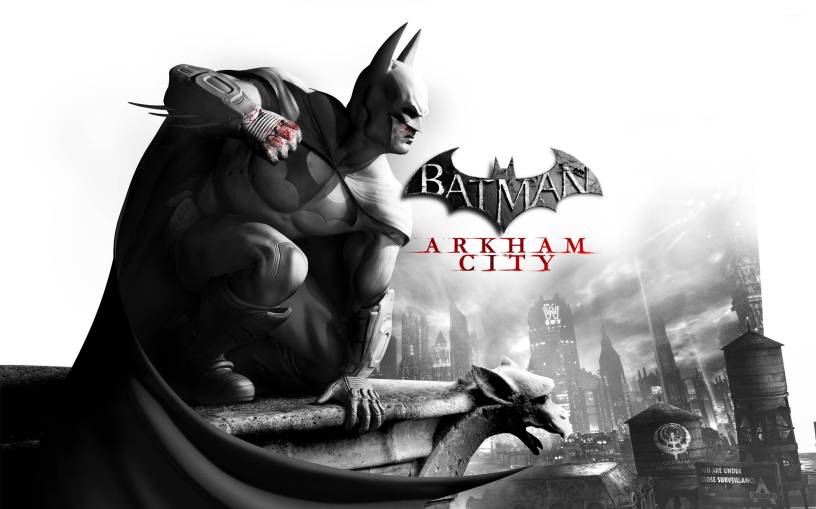
In 2009, Batman: Arkham Asylum turned Rocksteady Studios into one of the most beloved developers in the world. It captured the spirit and zeitgeist of Batman like no game before it ever had. Its mechanics and presentation, especially the voice-acting, were superb and it had a hand-to-hand combat system that was incredibly addicting. Rocksteady did everything right with Arkham Asylum and made what was at the time, the greatest superhero game ever made. How do you follow that up? You just build on it, which is exactly what Rocksteady did with Batman: Arkham City.
I reviewed Arkham Asylum a few years ago, which can be read here. Pretty much everything I said about Arkham Asylum applies to Arkham City. Rocksteady took all the mechanics and systems they created for the first game and took it outdoors. While Arkham Asylum takes place mostly indoors, the sequel takes place mostly in the cold, harsh confines of Arkham City, which is the primary difference between the two games.
With a more open-world comes more things for Batman to do: more people to save, more enemies to deal with, whether they’re common thugs or super-villains. While Arkham Asylum is more of an action game, Arkham City lets you explore. Batman can grapple onto just about anything and can get anywhere he needs to go fairly quickly using his Batclaw. He’s very mobile, and the traversal is seamless. Anything that’s too far away for him to latch onto he can use his cape to glide towards and then latch onto.
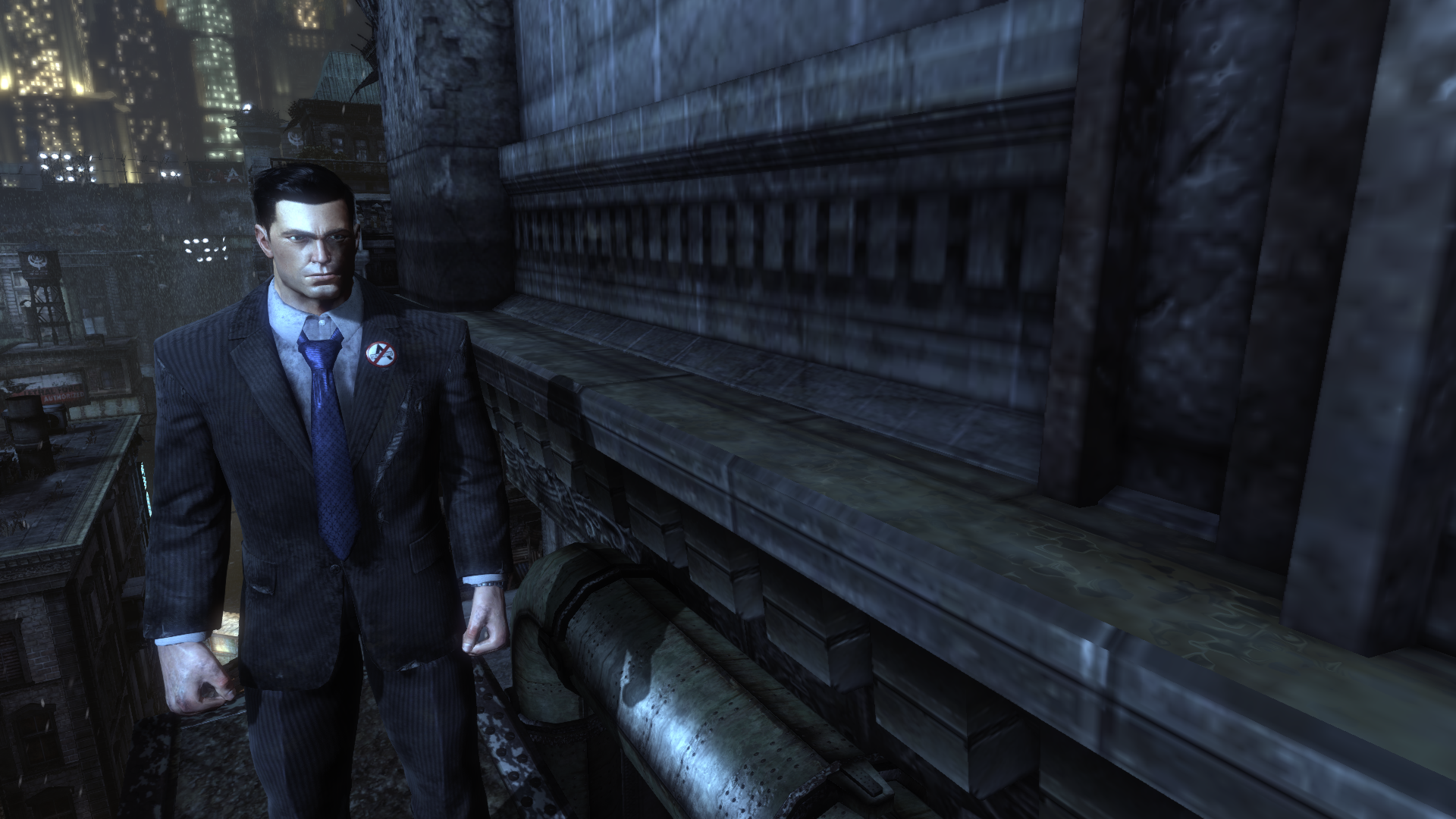
Arkham City is dense and there isn’t any wasted space in the confines of Gotham’s prison-city. It doesn’t have the wide-open feel of Zelda’s or Asssassin Creed’s open-worlds, but there are nooks and crannies everwhere to explore, and it’s very easy to get distracted from your main objective and get pulled into fighting off thugs, or solving one of Riddler’s puzzles, or helping a political fugitive who’s getting brutalized, or tackling any other sidequest that’s put in Batman’s way.
However, since Batman does so much gliding around with the Batclaw from one building and structure to another, the auto-targeting that determines what building or structure he will move to comes into play a lot. Also, auto-targeting comes into play during combat whenever Batman uses the quick-shot function for some of his weapons. In both situations, the auto-targeting can be spotty. Like when Batman has a building right in front of him you want him to move towards, and instead, the auto-targeting has him flying off to another ledge a quarter mile off. Or when you try to use Batman’s quick-shot on an enemy that’s standing right in front of him, and instead he shoots a guy that’s nowhere close to him. It’s not consistent, it affects the gameplay, and can get frustrating as a result. When you’re trying to get to a building with no enemies and instead Batman ends up on another building that happens to have thugs walking around with guns, that’s a problem. Giving Batman the ability to manually aim his Batclaw should’ve been a given.
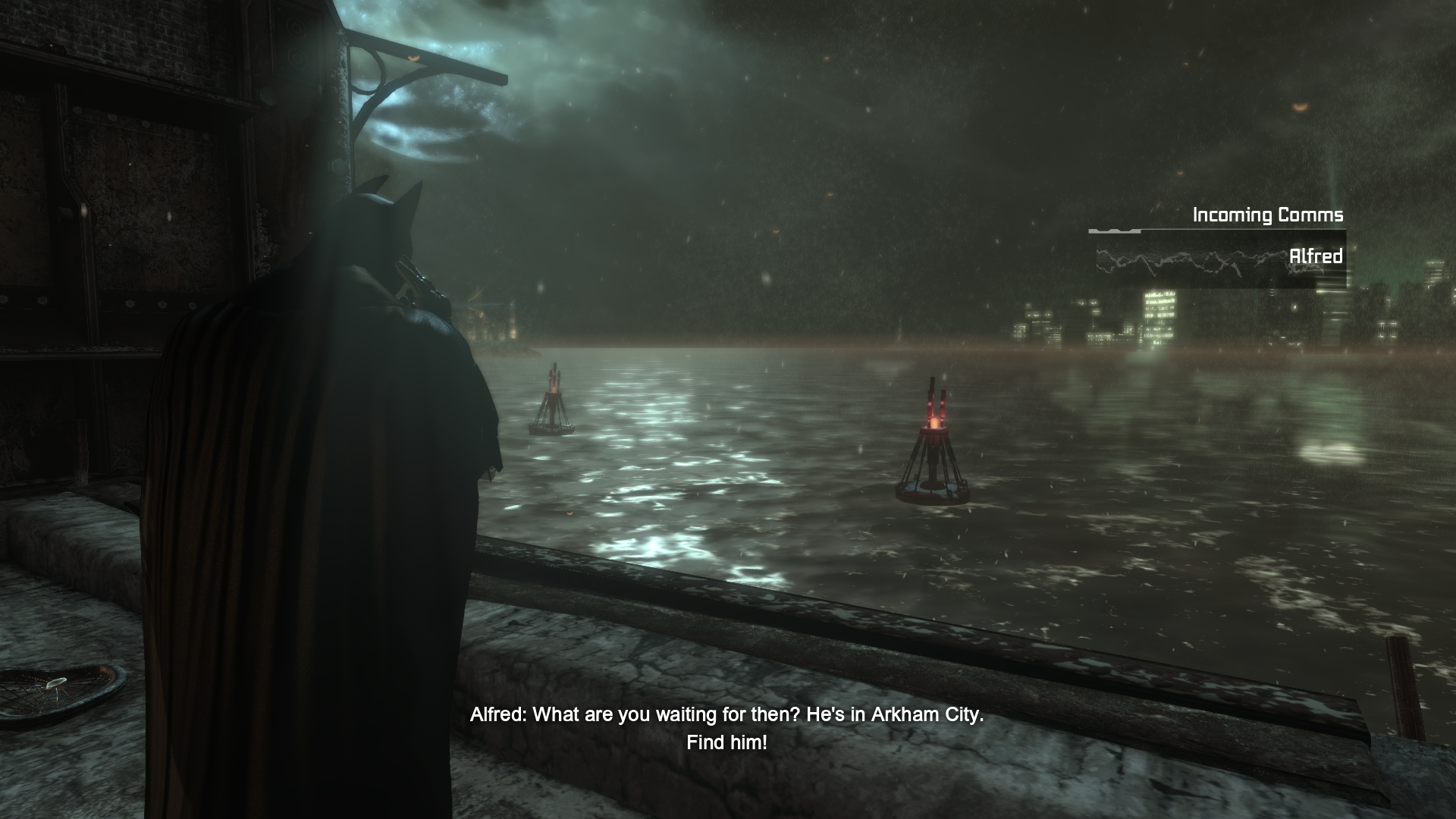
Just like Arkham Asylum, Arkham City’s presentation is superb. The voice-acting is fantastic. However, Arkham City is also a very chatty game. In fact, I don’t think I’ve played a game with more spoken dialog than Arkham City. It’s a game that never stops talking. If you get thirty seconds of silence when no one is speaking, it’s rare. The voice-acting budget must have been astronomical given the amount of non-stop talking that goes on while you’re playing, not to mention the cutscenes and even the interviews and recordings you can listen to in the menus. A good amount of it is street thugs repeating the same lines, but most of it is unique dialog. Every group of thugs Batman gets close to is having a conversation with each other, and he can hear all of it. It gets to the point where you have different dialog lines talking over each other from different groups of thugs. More than once I wanted the game to stop yammering so much. While it adds a lot of flavor to the game listening to random thugs talk about Batman, Joker, Penguin, Catwoman and all the other characters that make up Gotham City’s underworld, the non-stop chatter can get grating as well. It got overbearing at times.
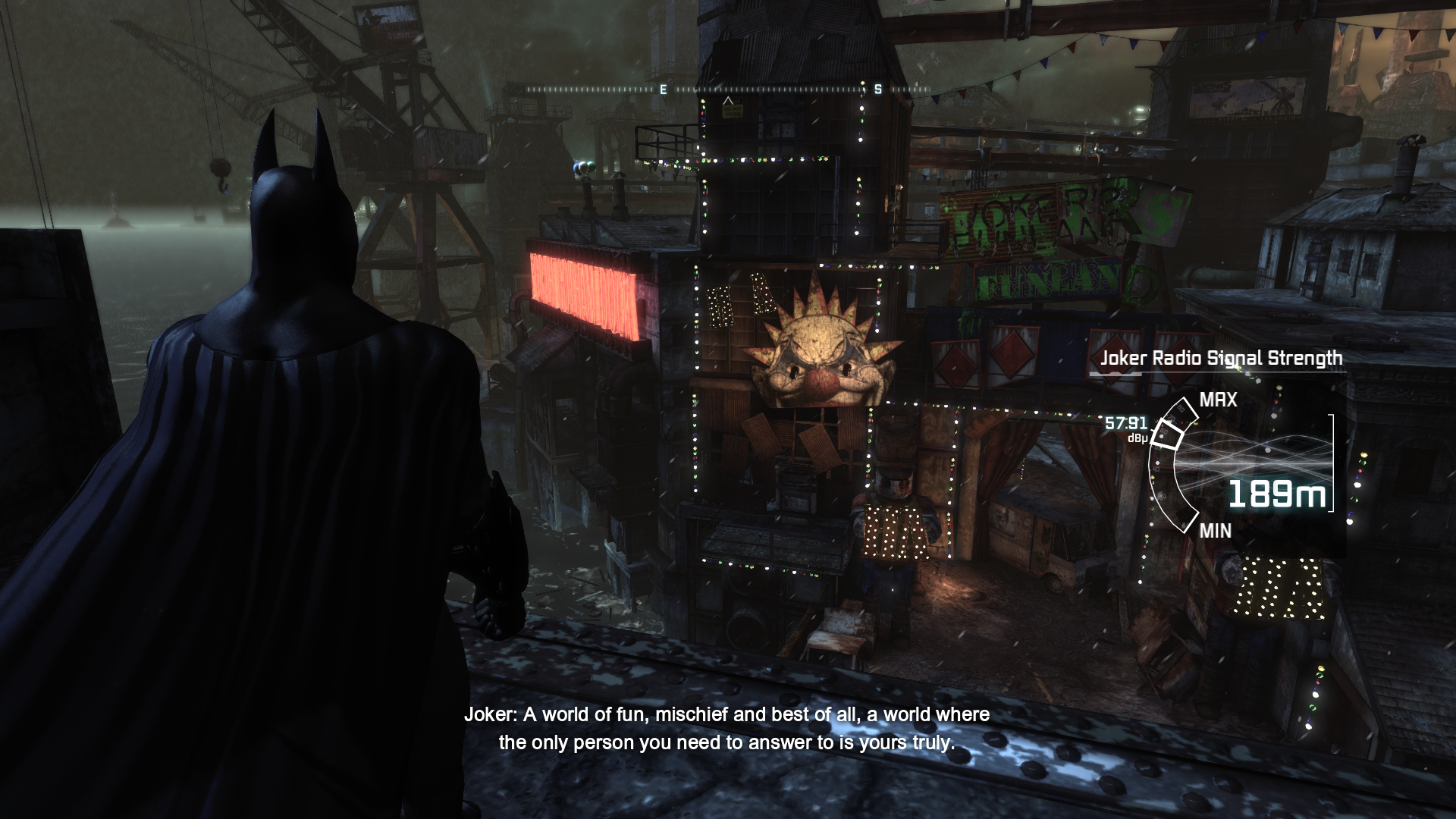
That being said, it’s hard to complain too much about all the talking when all of the voice-acting is so good – and I mean all of it. Mark Hamill is back again as the Joker, but many other arch-villains show up as well, and all of the voicing is superb. In fact, I didn’t hear one poorly delivered line throughout the whole game.
The Batman: Arkham games have an addicting hand-to-hand combat system. It’s simple to learn, but hard to master if you want to get really good at it. It’s mostly fun and challenging having Batman take out a dozen thugs that are coming at him at once, pulling off counter after counter taking them down.
However, there are some caveats:
The whole battle system is predicated on Batman fighting a bunch of bad guys, and one of them getting brave and taking a swing at Batman. As Batman engages that enemy, other enemies come from behind to try and punch and kick him. It’s that over and over again. So basically, the enemy’s whole fighting strategy is to try and find strength in numbers, and then take cheap shots at Batman from behind over and over again – and over and over and over and over. If you’re not constantly hammering the counter button when there’s a lot of enemies, someone’s going to land a punch or a kick. Thugs with shields can come right up to Batman and ram him, and he can’t counter them at all. Same with enemies with shock sticks. The whole ‘land a cheap shot on Batman when his back is turned’ battle strategy can feel pretty cheap at first. When there’s a lot of enemies, they just swarm like locusts. As soon as you follow up a counter on one of them, three more try to punch him in the head from behind. The idea is for Batman to rack up as many hits as he can before taking a punch or a kick himself. As he does that, his attacks become faster and more powerful, plus he can pull off special moves.
However, you’ll feel yourself getting better as you improve at using Batman’s special moves, and get better at using his weapons in combat, but the auto-targeting issues I mentioned before become an issue when Batman is fighting a whole roomful of enemies at once in Challenge Mode. The enemies swarm, and when you barely have time for Batman pull out his weapon, and then he targets the wrong enemy, it adds to the difficulty of something that’s already plenty difficult.
Yeah, I know: get good. I did get good. I beat the game twice, once in hard mode. It’s a good system but when Batman is fighting twenty enemies at once, it can make you want to put your controller down and never come back. Especially in Challenge Mode which gets significantly more difficult.
Challenge Mode is just what it sounds like: a series of combat and stealth challenges for Batman to take on. Each challenge has a set of medals to collect for completing certain objectives or achieving a high score. It’s addicting and fun, adds a lot of replay to the experience after you beat the game, and does a great job of teaching you the nuances of what Batman can do. You can play as Batman, Robin, Catwoman, or Nightwing, and they all have their own movesets that force you to attack the challenges differently. There are hundreds of medals to collect between them.
VERDICT
The Batman: Arkham games are heavily influenced by The Legend of Zelda and Metroid in its level design and mechanics. In fact, they’re the best non-Zelda Zelda games I’ve played. If you like 3D action-adventure games and the Batman: Arkham games have slipped under your radar, you should consider them must-plays. They adopt a lot of the DNA from The Legend of Zelda to the point that even Nintendo borrowed from them when they made Breath of the Wild and Tears of the Kingdom with the paragliding and solving puzzles to pick up Riddler trophies – or in Zelda’s case, Korok seeds. They have incredibly tight mechanics and the level design, and overall game design, is very well thought-out and cohesive. The voice-acting in Arkham City, while excessive, is maybe the best I’ve ever heard in a video game, and the overall presentation is superb. Given that the series is a few years old now, you can get the Arkham games at a fairly inexpensive price, especially on PC where you can get them for five dollars a pop on a Steam sale. Highly recommended.
 The Gamer's Standard