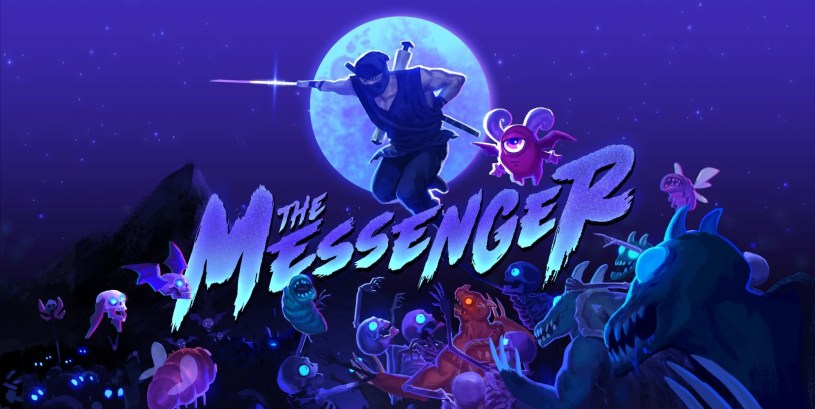
In video games, nostalgia is powerful, and it motivates a lot of what we see come out of the indie community. Pixel-art graphics and chip-tune soundtracks reminiscent of the golden age of NES-era classics is common, but also mechanics from games we grew up loving and cherishing, for better or worse. The Messenger falls in this category of being a love-letter to one very specific series, which is the Ninja Gaiden games on the NES. Let’s take a look:
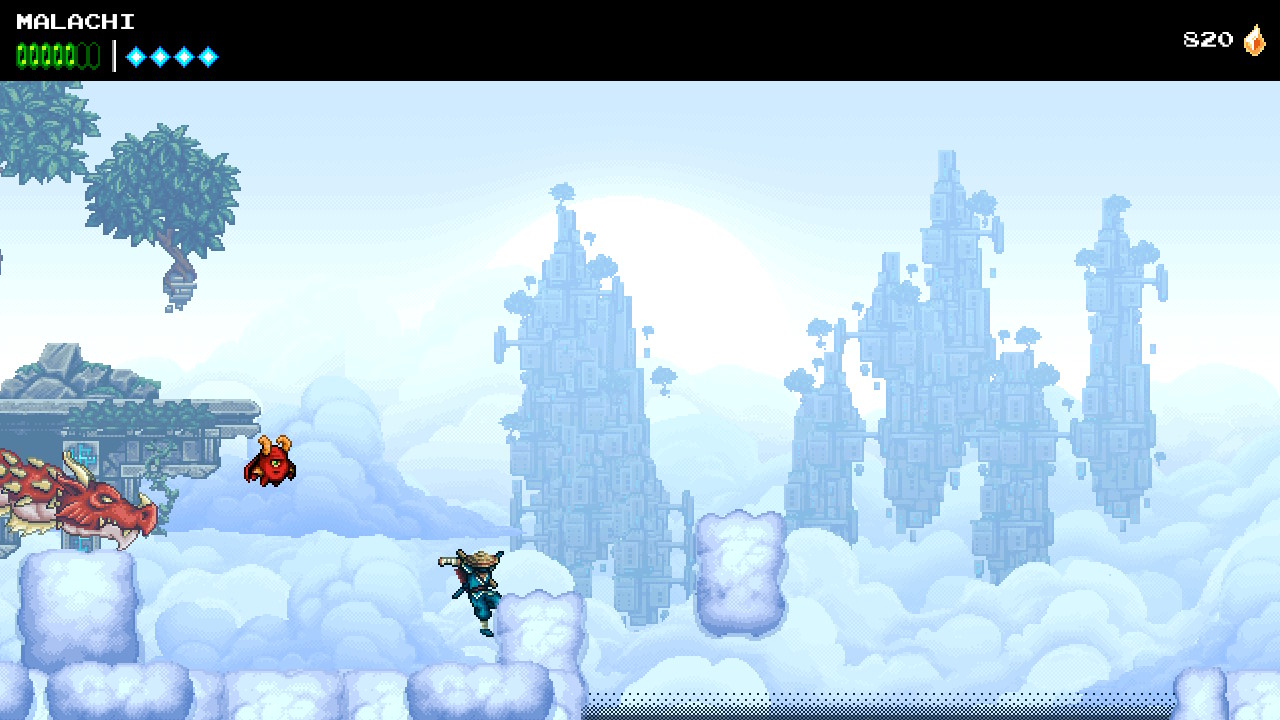
What you see from The Messenger right away is it looks fantastic. The pixel art is pulled off expertly, and without spoiling anything, it looks better as you get further in. I never got tired of looking at the visuals and the art. Your quest takes you from forests to caves, icy mountains to underground depths full of lava, and more, and they all look great.
The music might be even better than the graphics. The Messenger’s soundtrack is absolute fire. Every single track pushes you along in your quest, and is one of the best collection of tunes I’ve heard in any game, indie or otherwise, in a while.
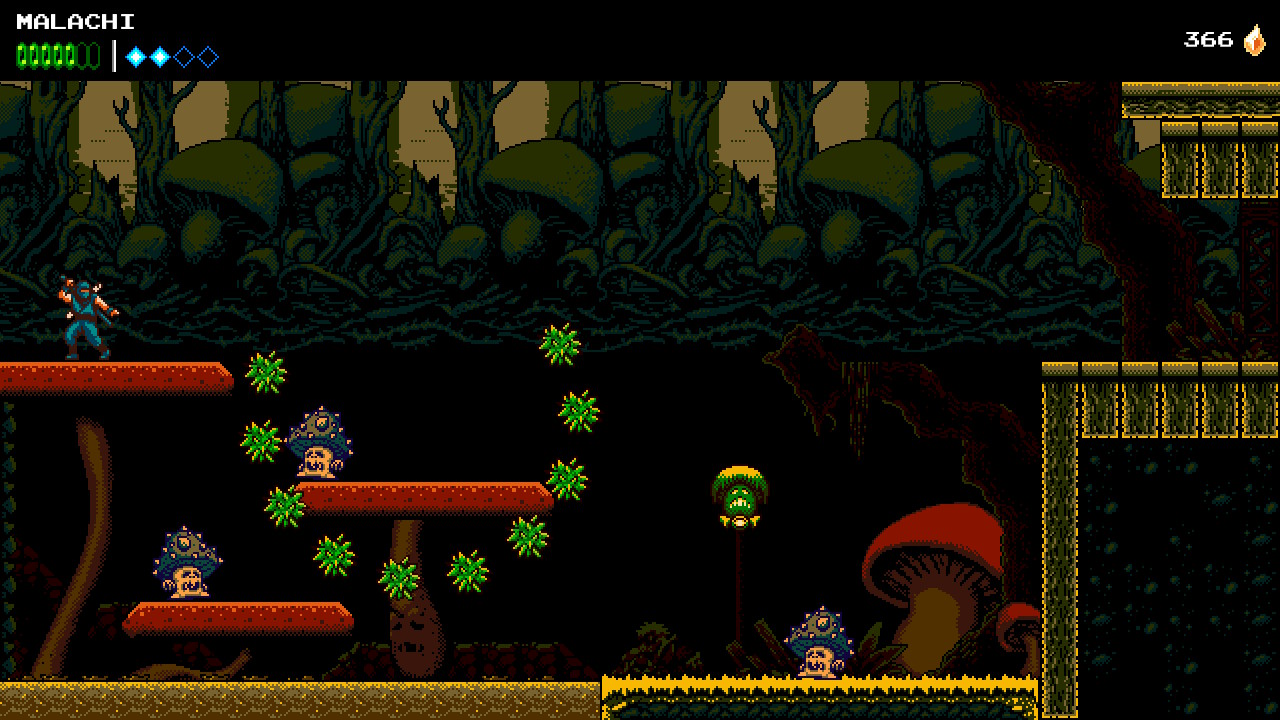
The first half of the game is somewhat bland, but it was good enough to keep me playing. A lot of that had to do with how good the music was. I was genuinely curious to see what I would get to listen to when I got to the next area, and was never disappointed. The gameplay just felt like kill-rooms, with a lot of repetition in the types of enemies I was fighting. However, about halfway through, something happens in the story that changes how you play the game. I don’t want to go into details because of spoilers, but it’s a nice surprise and a fun mechanic that’s used for the rest of the campaign. It’s very well done and the level design itself opens up and turns into more of a classic Metroidvania, which I also appreciated. No spoilers on the surprise mechanic though, as I’ve never seen it in a game before, so maybe you haven’t either.
Maybe the best aspect of The Messenger’s gameplay is the ability the main character gets at the very beginning of the quest to attack-jump. Anytime he strikes an enemy with his sword, he can jump coming out of the attack. He can do this as many times as you can manage without landing as long as there are enemies or wall-torches to swing at. This opens up a lot more options for traversal, not to mention you’re expected to use it to complete all the side platforming challenges. There’s another power-up later on that compliments the attack-jump nicely, and when used in combination, it makes overall traversal in the game quite fun.
However, combat and enemy variety is maybe the biggest failing of The Messenger. It felt like I was fighting the same ten enemies all the way through the game. It becomes extremely repetitive, especially when they’re constantly respawning, which is another problem. Most of the enemies only take one hit to kill so there’s very little skill involved. Your weapons get somewhat more powerful, but never change. You’re using the same weapon at the end of the game that you started with at the beginning. A better weapon upgrade system could’ve made the combat much more dynamic and fun, and less repetitive.
Maybe the most grating aspect of The Messenger is its respawning enemies. They won’t just respawn if you go into the next room. They’ll respawn seconds after you’ve killed them if the screen scrolls a few pixels past them off the screen. At times, it’s useful if you need them to attack-jump to a platform you can’t get to on your own, but overall, the respawning seems to exist for artificial difficulty.
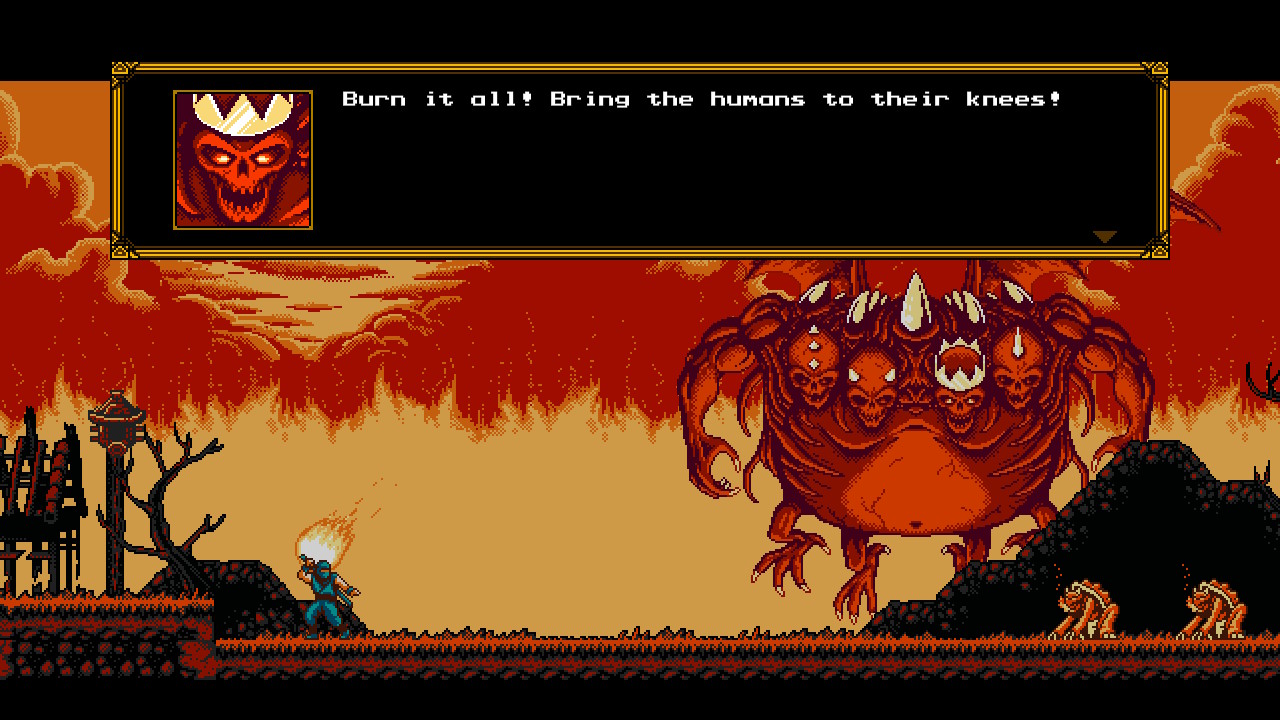
Then there’s the story: it’s nonsense, at least in how it’s told. It’s not often I say this about a game, but the story in The Messenger was bad enough that it detracted from the overall experience. They tried to compensate for it by throwing in way too much humor like something out of the MCU movies, with the characters not taking what’s going on around them seriously, or as seriously as they should be, and always cracking jokes. It’s tiresome and played out, and I absolutely loathe that style of writing. The story wasn’t good and the jokes weren’t funny.
The tragic aspect of The Messenger’s story is that it does get somewhat interesting at the very end. You’re shown a cutscene in the opening, but none of the important details are given until the game is beaten, or close to beaten. In the meantime, you’re treated to lots of bad prose and jokes that don’t land. It seemed like the developers didn’t care about the story and were just making it up as they went along. However, at the end, when the story decides to tell you what’s really going on, I couldn’t help but wonder where this was during the actual gameplay. It would’ve been much better to find a way to communicate the real story you’re told at the end of the game to the player while they’re playing instead of holding it all back. It ended up being an interesting, but poorly told, tale and you have to tolerate a lot of nonsense for the payoff in the meantime. Contemporary slang and fourth wall-breaking occurs regularly. I know Devolver Digital likes humor in the games they publish, but humor is only good when it’s funny, and The Messenger isn’t that funny despite trying to be. I found the writing grating and disappointing.
There are side-quest platforming challenges hidden throughout the world. They’re usually hidden behind a wall that can be smashed or a room off the beaten path. Your map eventually will tell you where they all are, which makes having to look for them a non-issue, which is helpful. However, the challenges themselves don’t have to necessarily be mastered to be beaten. Many times, I fumbled my way through them to the end. While I appreciated the leniency from the game to not force me to completely master the challenge to get to the end, many times it didn’t leave me with a sense of accomplishment either. Meanwhile, your reward for completing the challenge is a green token. Completing every challenge and collecting every green token grants you the ability to unlock a chest with a special secret item inside. I won’t say what the item is, but it proved to be utterly anticlimactic. In fact, I ended up just looking online to see what the item was before going to the trouble of collecting all the tokens, and I’m glad I did.
VERDICT
The Messenger is one of those indie games that feels like an indie game. While it isn’t anywhere close to being the broken mess of a game that NES Ninja Gaiden is, it embraces enough of its bad habits that it holds it back from true greatness. The soundtrack is superb and the visuals are fantastic, but when you strip away the impressive visuals and music, there’s little left that it excels at: bland, repetitive combat, repetitive and overused enemies, a shallow upgrade system, and a story that’s poorly told. While not outright bad by any stretch, and definitely good enough to keep me playing, if the gameplay was as good as its music and visuals, I would’ve given it a better score. The platforming and traversal are fun, but it’s not enough to completely carry the game. This is another indie I wanted to like more than I did, and was expecting more from. Yes, it’s better than classic Ninja Gaiden, but that’s not saying much. I was happy this one was over and don’t expect I’ll go back to it except to listen to the music, which does a lot of the heavy lifting.
The Messenger is highly recommended for classic Ninja Gaiden fans. For the rest, there are definitely worse action-platformers out there, but also better.
 The Gamer's Standard