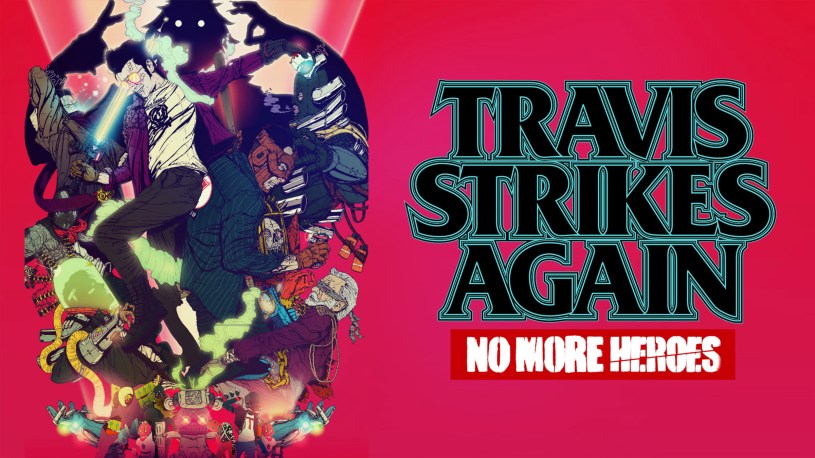
Travis Strikes Again: No More Heroes was the first No More Heroes game in nine years. No More Heroes and No More Heroes 2: Desperate Struggle were made for the Wii in 2007 and 2010. They adhered closely to Grasshopper Manufacture’s philosophy of making punk-rock video games (Punk’s Not Dead!). They featured Travis Touchdown, an otaku who is obsessed with anime, video games, and pro wrestling who sets out to become the world’s greatest assassin. They were well-received even on Nintendo’s very family-friendly Wii console despite their profanity and M-rated levels of blood and violence. The series went dormant for nine years after that, but was revived in 2019 with a spin-off called Travis Strikes Again: No More Heroes.
At its core, Travis Strikes Again is a basic hack-and-slash RPG. Travis has a normal attack, a strong attack, a jump, and a dodge, plus four special abilities that can be mapped as well. As Travis collects experience points, levels-up, and progresses further, he’ll collect more special moves. Enemies vary enough to keep things interesting, but can be brute-forced without too much trouble on the default difficulty. There are bosses and sub-bosses that provide more challenge, but as a whole, the game doesn’t necessarily wow with its gameplay. It’s fun enough, but pretty basic, repetitive, sometimes tedious, and significantly different from the first two No More Heroes games.
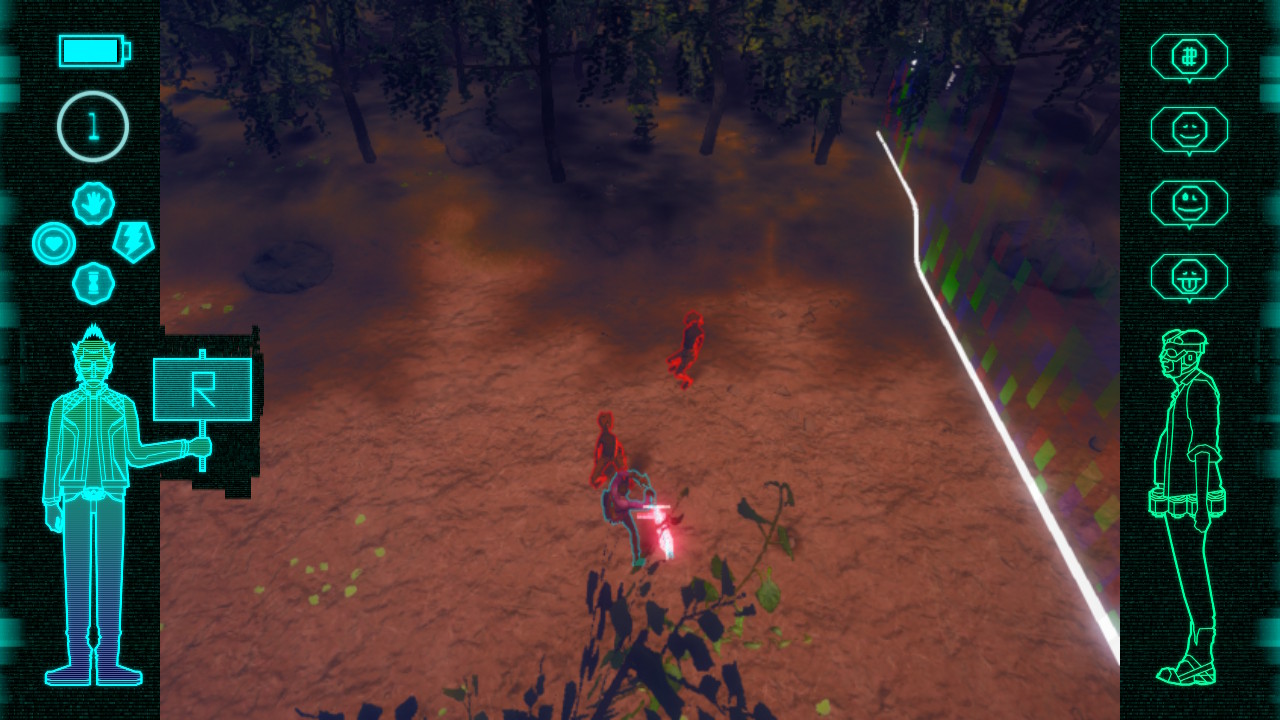
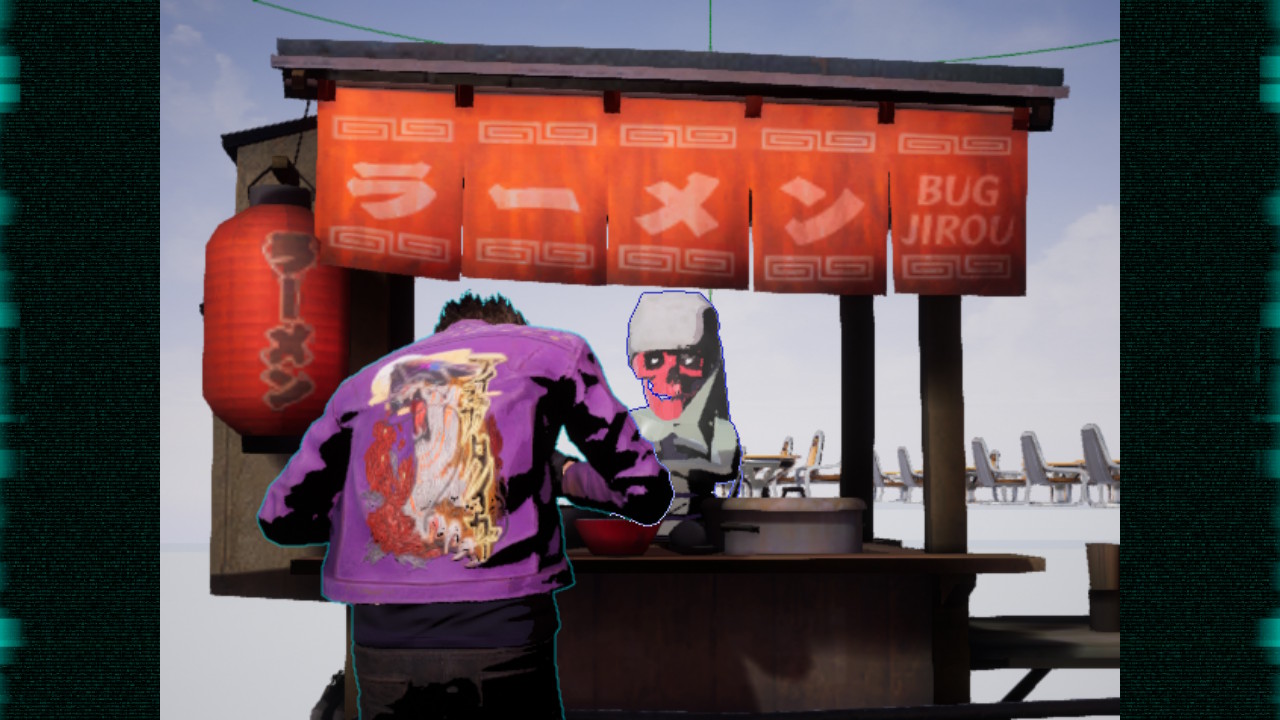
There’s no city to explore either. Instead Travis is playing inside a series of video games on a console that is being used to clone human beings and turn them into zombies to take over the world. Travis is trying to collect the Death Balls for each game in the console to prevent it from doing that. I know, it’s crazy, but pretty hilarious. The enemies in the game are bugs. Not insects, but gaming bugs that take physical form inside of the game whom Travis has to do battle with. Along the way, Travis will collect currency he can use to buy t-shirts like in past games. There are also ramen stands he can power-up with and skill chips that will give him additional special skills he can equip.
Also, since Travis’s enemies are only gaming bugs and not real people, the violence and bloodshed has been significantly toned down. There are no heads being lopped off and Travis leaving showers of blood in his wake.
There are light motion-controls, but Travis Strikes Again doesn’t lean as heavily on them as the first two games did. On the Switch, any motion-controls are automatically mapped to the buttons in handheld mode. These entail the occasional special move Travis pulls off, finishers when he beats a boss, and powering up his beam-katana.
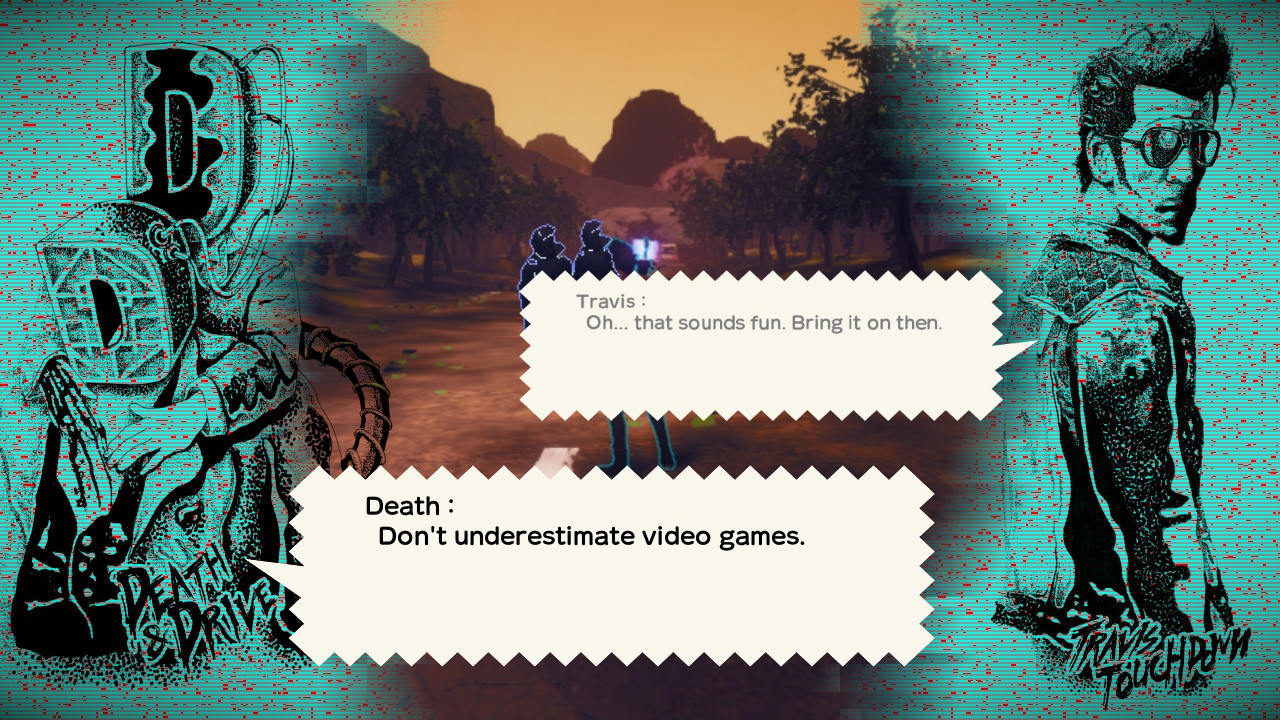
Travis Strikes Again’s biggest strength is its story and presentation. If the gameplay doesn’t quite hold up, stylistically Travis Strikes Again is No More Heroes to its bones. Fans of Goichi Suda (Suda51) and Grasshopper’s games will feel right at home. It’s insane, very punk, very Japanese, and just as zany, wacky, and oozing with punk attitude as past No More Heroes games. However, the story requires a good amount of reading, as it’s told mostly through text. There are a couple fantastic cut-scenes which probably took half the game’s budget on their own, but other than that, it’s a lot of dialog bubbles. It’s very No More Heroes, just told in a different way. This game was obviously lower-budget, but Grasshopper was creative in their presentation and how they told their story. Travis’s voice-acting is sorely missed, but the story is good nonetheless. It’s like playing the comic book version of a No More Heroes game.
The visuals are pretty much like the rest of the game: not great, not bad. They get the job done and serve their purpose. The game is technically sound running on the Unreal Engine. No slowdown, bugs, or long load times were present. Travis Strikes Again has a level of polish that the first two games in the series didn’t have.
After its story, the next-best thing about Travis Strikes Again might be its music. There are some seriously good moments because of some well-placed audio tracks. If you’ve ever wondered what Japanese hip-hop sounds like, Travis Strikes Again has you covered. It has a combination of electronic, rock, and even what sounds like a little folk, some of it in English, some in Japanese. The music is pretty eclectic overall and stood out from the rest of the game.
Travis Strikes Again is a game I wanted to like more than I did. I wanted to really like it, but it was only good enough to keep me playing, and a lot of that was due much more to the story and presentation rather than the gameplay. It’s not a game for newcomers who likely won’t understand the style, humor, characters, or story of Travis Touchdown’s world. When you strip all that away, what’s left is a somewhat pedestrian gameplay experience. It’s serviceable enough as a spin-off for No More Heroes fans who loved the first two games, but anyone buying it shouldn’t expect a full-blown No More Heroes game, because that’s not what Travis Strikes Again is. It’s got all the humor and attitude of the series in its story and presentation, but not the scope, spectacle, and violence in its gameplay, which isn’t a good representation of what the other entries in the series are like.
Travis Strikes Again is not a great game, nor is it a bad game. It’s right in the middle. It’s a spin-off game for No More Heroes fans, but for anyone other than that, I would recommend starting with the original No More Heroes and going from there.

