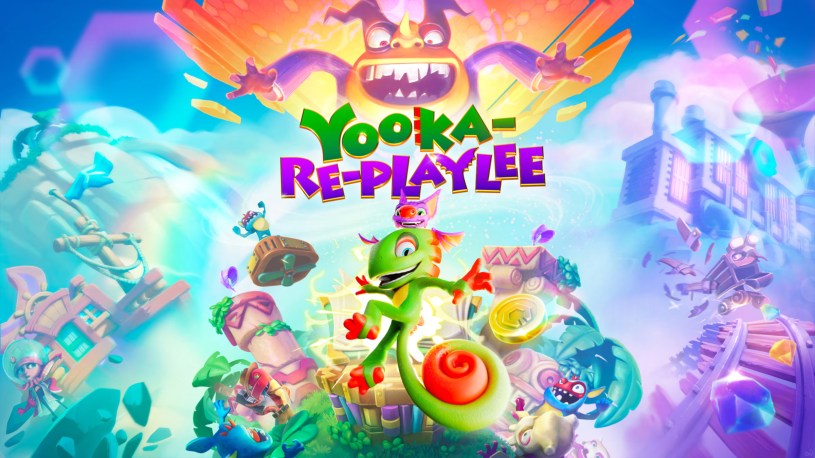
The original Yooka-Laylee released in 2016 to some high expectations. It was billed as a classic 3D platformer by the newly-formed Playtonic Games, a small development team made up of former Rare members who worked on some of the most memorable games on the Super Nintendo and Nintendo 64 in the mid/late 1990s. Yooka-Laylee was to be a buddy-duo collect-a-thon platformer with the same spirit as Banjo-Kazooie and Banjo-Tooie – a spiritual successor, as they call it.
While Playtonic did deliver a 3D collect-a-thon platformer that has Banjo-Kazooie’s spirit with Yooka-Laylee, they unfortunately didn’t deliver a game that has its gameplay. Long story short: there were a lot of problems. The controls, camera, pacing, etc. all needed work.
After releasing the strong Yooka-Laylee and the Impossible Lair a couple years later, Playtonic did the unexpected: they went back to the original Yooka-Laylee and attempted to improve it. Almost apologetically, they released a new trailer, but this time billed it as Yooka-Replaylee. Essentially, this was Playtonic Games coming with hat in hand and asking for another chance. As frustrated and disappointed as I was by Yooka-Laylee, I knew its issues were fixable (and said so in my review, which you can read here). Plus, Yooka-Laylee and the Impossible Lair, which was quite good, gave me hope that maybe Playtonic had worked out the rust and gotten their chops back.
So, somewhat apprehensively, I decided to jump in again.
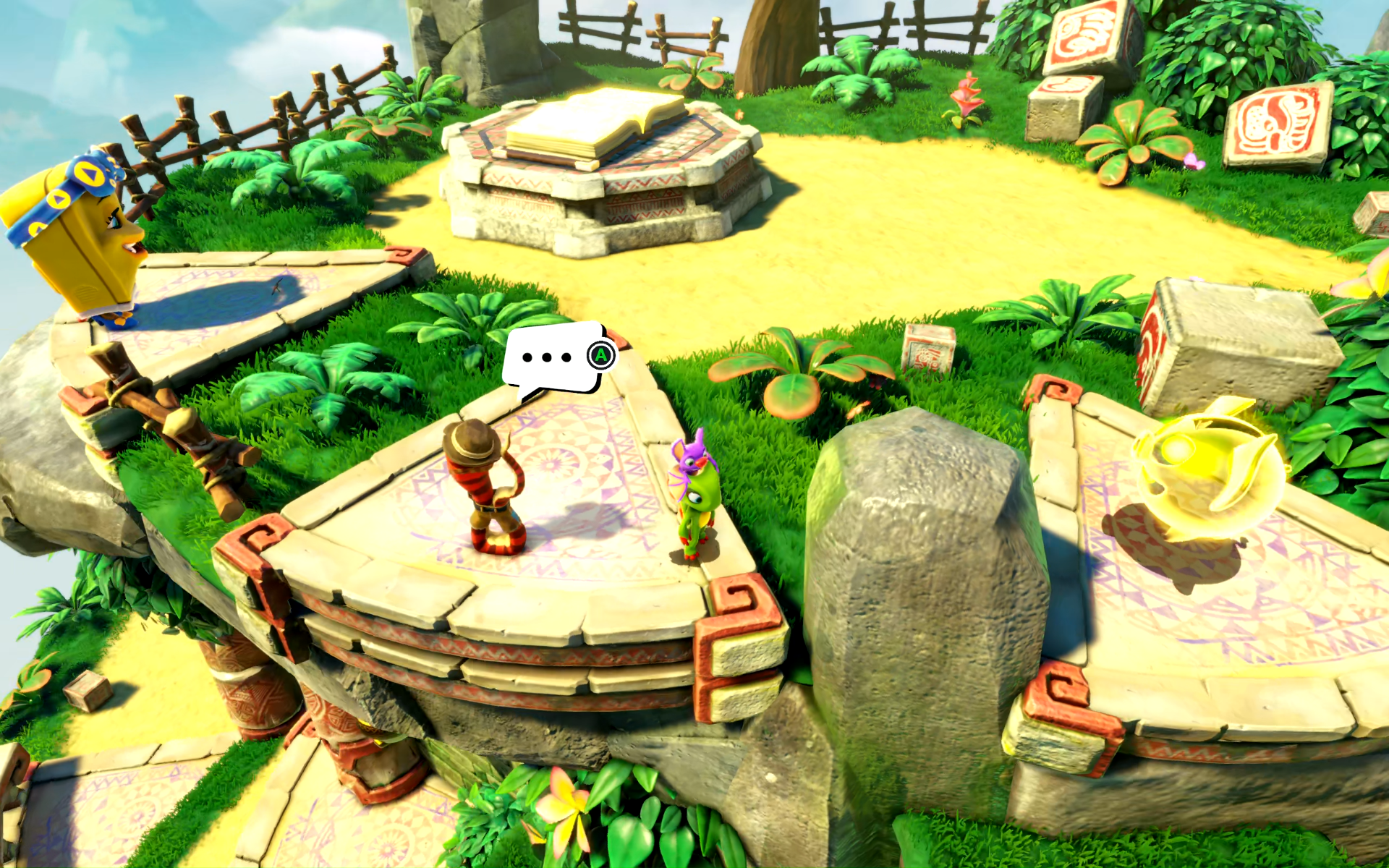
I’ll get right to it: Yooka-Replaylee is like playing a different game from the original. It’s been improved in almost every way imaginable: gameplay, controls, visuals, pacing, presentation, difficulty, quality-of-life features, and even the end boss-fight have all been either vastly upgraded or completely reworked. The only aspect that seems untouched is the basic layout of each world. However, even that has been improved: in the original Yooka-Laylee, each world opened up gradually as you progressed. With Yooka-Replaylee, the whole world is open for exploration right away. It’s much more streamlined and simple.
Many of the frustrating minigames have been removed, and the ones that remain are much more fun and engaging. This makes for a much easier experience, as far as difficulty, but also makes for a better game overall.
Perhaps the most significant change is the addition of a Pagie location system. For a small fee of in-game tokens, you can have the location of a Pagie marked on your map. This was sorely needed, as in the original Yooka-Laylee you would find yourself wandering around not knowing where to go next. Now you can have every Pagie marked on your map if you choose and get right to where you want to go next.
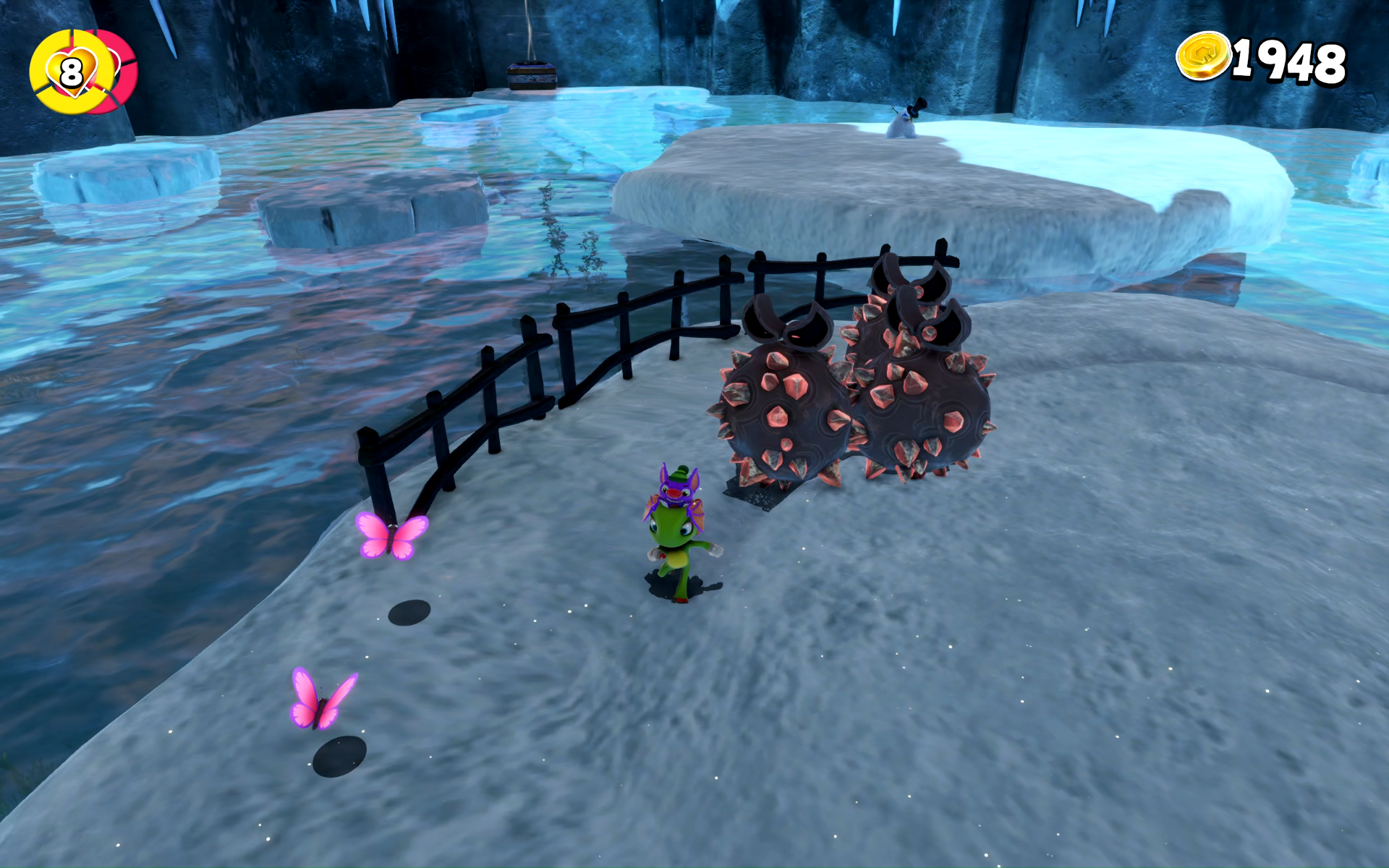
While I had a lot of complaints with the original Yooka-Laylee, the visuals wasn’t one of them. They weren’t spectacular, but still serviceable. Apparently, Playtonic thought differently because Yooka-Replaylee got a massive visual overhaul, and it might be one of the best-looking 3D platformers ever. That includes Super Mario Odyssey and Nintendo’s other offerings. Granted, I was playing the PC version running at 1600p/120 FPS, but I haven’t been this impressed with the graphical fidelity in a 3D platformer since…well…Banjo-Kazooie and Conker’s Bad Fur Day decades ago. The snow in Glitterglaze Glacier looks like real, fine snow, complete with beautiful snow crystals peeking out everywhere. Yooka makes his own snow trails as he runs around and I never got tired of looking at it. The texture work and NPC character models in every stage are really done well, and I found myself looking around and marveling a lot in the 26 hours I spent with it.
The camera was another major frustration in Yooka-Laylee. The sections that required flying were wonky and erratic. I believe I stated that trying to fly and land in a specific location was like trying to land Maverick’s plane in Top Gun on the NES because of the camera, and I didn’t understand how the flying in Banjo-Kazooie could feel so effortless while in Yooka-Laylee it was the opposite. Well, it’s been fixed, partly because any sections in the game that required any precision landing were removed, and partly because the camera feels and operates much better.
Another major issue in Yooka-Laylee was the currency system. You were required to purchase moves with feathers as the adventure progressed. The problem was that you could easily have all of the purchaseable moves bought in the first half of the game. That left hundreds of leftover feathers that were useless. I’m happy to report all that has been done away with in Yooka-Replaylee. You have all of Yooka and Laylee’s moves from the very start. You still collect feathers that you can spend on various upgrades and cosmetic outfits if you choose. However, the main currency is not the feathers, but tokens that you get when you defeat enemies and for completing other simple tasks. You can use these tokens for tonics, some of which alter the gameplay, but many of which are cosmetic, much like the outfits you get for Mario in Super Mario Odyssey.
The cost of all these changes and improvements is difficulty. Yooka Replaylee is a pretty easy game. It’s not going to put your skills to the test if you have experience with 3D platformers. It’s a breezy fun time in worlds that look beautiful and are full of comical characters. In that sense, it absolutely nails the spirit of the classic Rare 3D platformers, and is exactly what I wanted. That being said, if you want more challenge, there are tonics you can buy and equip, or choose not to buy and equip, that will make the game harder, but these have more to do with how much damage Yooka can take. It doesn’t make the platforming more difficult.
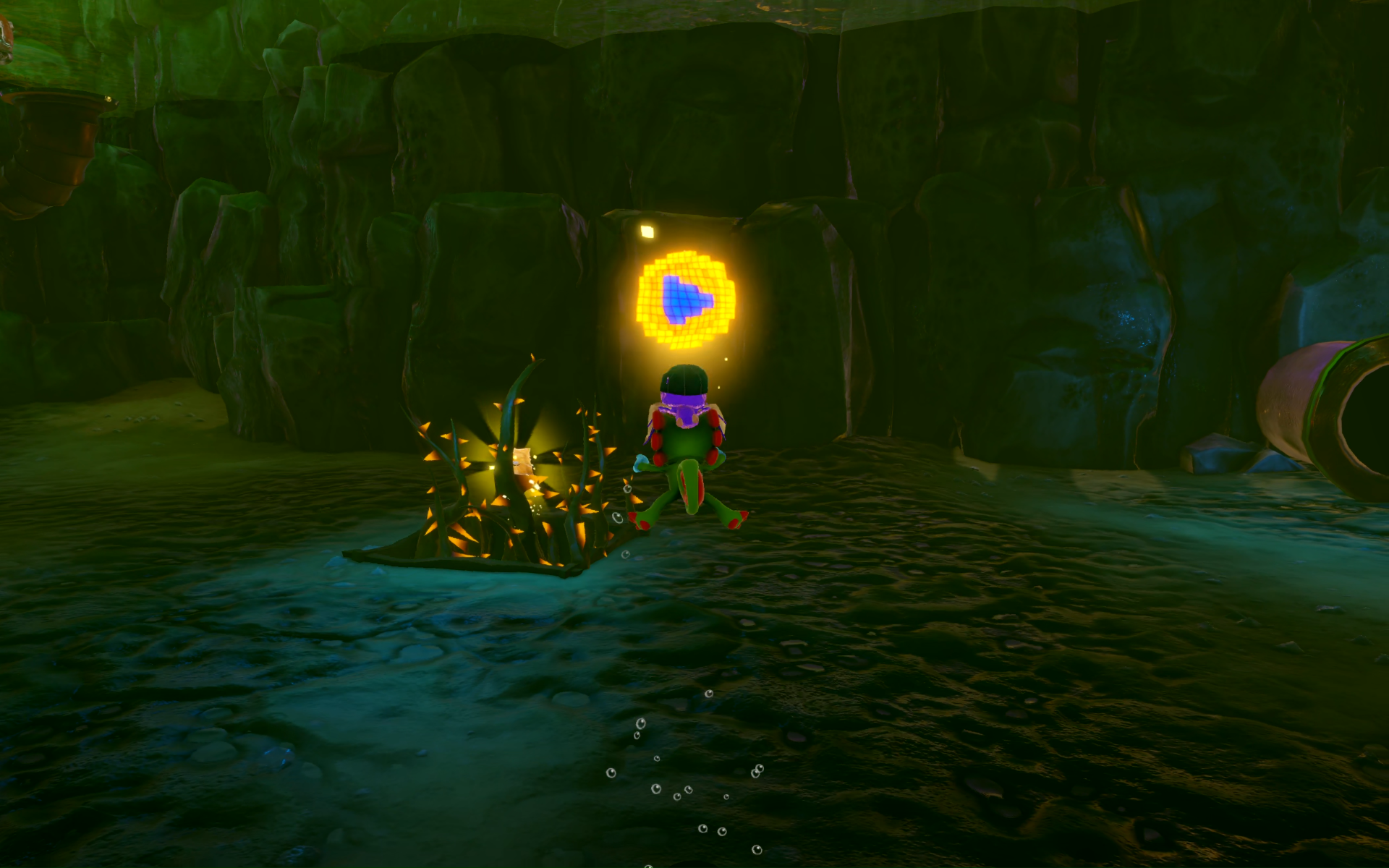
However, if there’s going to be Yooka-Laylee 2, adding some challenge and difficulty certainly wouldn’t hurt. I’ll probably regret asking for this given how much I was pulling my hair out in Yooka-Laylee and the Impossible Lair’s platforming challenges, but it’s the right direction to go for the gameplay, and could give it appeal to platformer enthusiasts who aren’t as interested in collect-a-thon nostalgia.
For me personally, it was a testament to how much improved Yooka-Replaylee is when I got to the fourth stage of the game. I won’t say what it is for spoilers, but playing Yooka-Laylee, it was when I knew without a doubt the game had major problems and I was absolutely not enjoying what I was playing. That was gone in Yooka-Replaylee. It was so much easier to engage and interact with the level. Pagies were easier to find, how to get them was a lot more fun, and I was never wandering around wondering where to go next. In Yooka-Laylee, it was my least-favorite stage. In Yooka-Replaylee, it was close to the top.
Yooka-Replaylee follows in the footsteps of the classic Rare platformers, but does it improve upon them? Other than visuals, Banjo-Kazooie remains the king of collect-a-thon platformers, but Yooka-Replaylee’s improvements with pacing put it above Banjo-Tooie, which had real problems in that area. I can’t bring myself to put it above Conker’s Bad Fur Day either, but I would give Yooka-Replaylee the nod over Donkey Kong 64.
More collectibles, more stages, more enemy variety, some extra difficulty for platformer veterans, more moves, and fresh ideas to move the genre forward could take Yooka-Laylee 2, if it’s ever announced, to the next level of 3D platformer prowess.
VERDICT
I doubt anyone at Playtonic actually read my Yooka-Laylee review from 2023, but it feels like they did because they addressed almost every one of my complaints. This is the game Banjo-Kazooie fans wanted from Playtonic when Yooka-Laylee was first announced in 2015. It took much longer than we expected, but it’s finally here.
If you got burned with Yooka-Laylee like I did, consider giving Yooka-Replaylee a chance. You can get it for a discount if you already own Yooka-Laylee and I think you’ll agree it’s a much better experience. Even though it relies heavily on nostalgia for a bygone era in video games and Rare’s history, and doesn’t bring a lot that would considered new to the genre, just about every aspect has been improved while leaving intact the characters and writing, which were somewhat altered as well, but still had me laughing out loud. Couple that with beautiful overhauled visuals and a strong soundtrack from Grant Kirkhope (with some help from David Wise), and you have a solid platforming adventure here. Well done, Playtonic.

